CM Sai backs nano fertilisers for Chhattisgarh farmers
Synopsis
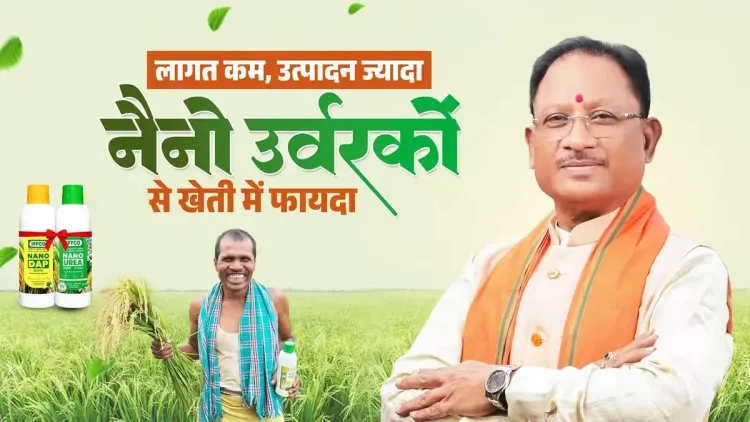
Chhattisgarh Chief Minister Vishnu Deo Sai on 17 June 2026 publicly backed nano DAP and nano urea after farmers on DD Chhattisgarh's 'Kisan Samvad' programme reported reduced input costs, higher production, and better crop quality — reinforcing the state's alignment with India's national nano-fertiliser push.
Key Takeaways
CM Vishnu Deo Sai endorsed nano fertilisers on 17 June 2026 , citing direct farmer feedback from DD Chhattisgarh's 'Kisan Samvad' programme.
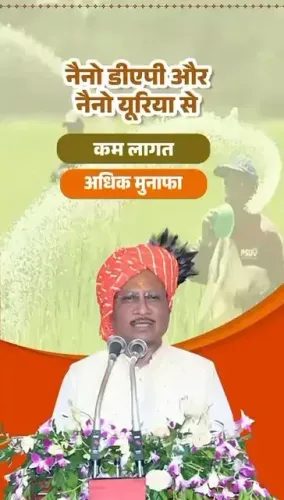
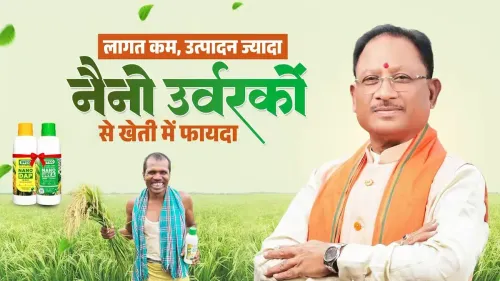
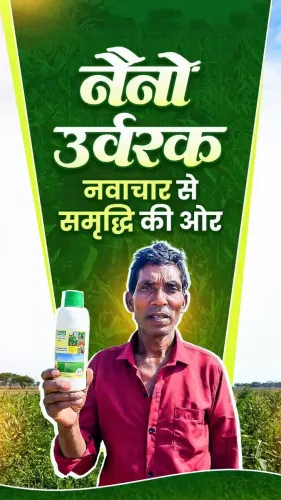
Farmers reported three benefits: lower input costs, increased production, and improved crop quality after using nano DAP and nano urea .
IFFCO pioneered commercial nano urea production in 2021 ; the Central government notified it under the Fertilizer Control Order the same year.
Chhattisgarh integrated nano fertilisers into state agriculture training and demonstration modules in 2023-24 under the Atmanirbhar Bharat fertilizer framework.
The Chief Minister framed raising farmer incomes and modernising agriculture as a core commitment of his 'good-governance government.' Analysts will watch for nano fertiliser provisions in Chhattisgarh's 2026-27 agriculture budget and district-level adoption data.
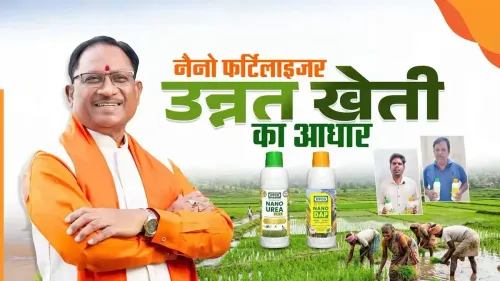
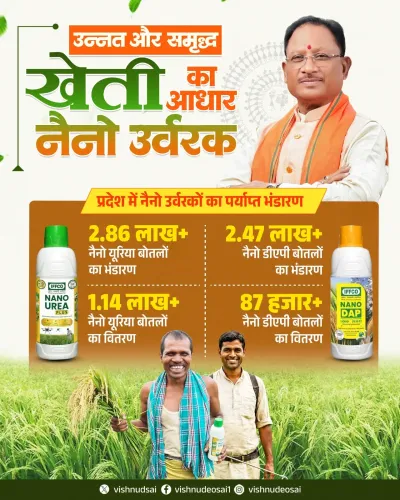
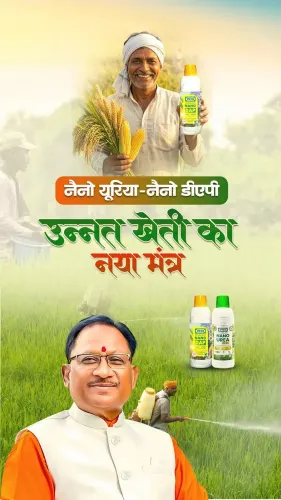
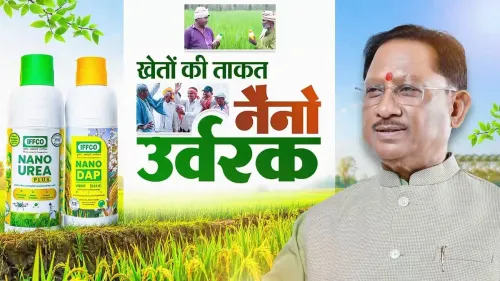
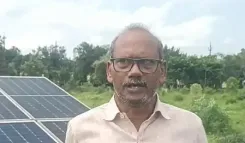
Chhattisgarh Chief Minister Vishnu Deo Sai on Wednesday, 17 June 2026 expressed support for nano fertilisers as a transformative tool for farmers in the state, citing positive feedback from progressive farmers who appeared on the regional public broadcaster's special programme 'Kisan Samvad'. The Chief Minister said farmers reported lower input costs, higher yields, and improved crop quality after switching to nano DAP and nano urea.
Context
Posting on X, CM Sai wrote in Hindi: 'Nano urvaarak pradesh ke kisaanon ke liye unnat aur laabhakaari kheti ka sashakt madhyam ban rahe hain' — 'Nano fertilisers are becoming a powerful medium of advanced and beneficial farming for the farmers of the state.' He added that learning about cost reductions and production increases from farmers on the DD Chhattisgarh programme gave him 'great pleasure,' and called on farmers across the state to adopt modern agricultural technologies. The Chief Minister concluded that raising farmers' incomes and making agriculture prosperous is the 'resolve of the good-governance government.'
Policy Backdrop
The push for nano fertilisers has national roots. The Central government notified nano urea under the Fertilizer Control Order in 2021, driven by the goal of cutting costly urea imports and improving nitrogen-use efficiency in Indian soils. IFFCO — the Indian Farmers Fertiliser Cooperative Limited — pioneered commercial production of nano urea in 2021 and subsequently developed nano DAP, making India one of the first countries to commercialise these liquid nutrient concentrates at scale.
Chhattisgarh incorporated nano fertilisers into state agriculture demonstration and training modules in 2023-24, aligning with the Centre's Atmanirbhar Bharat fertilizer self-reliance goals. Nano urea and nano DAP are applied in liquid form via foliar spray, requiring far smaller quantities than conventional granular fertilisers and reducing the risk of chemical runoff into soil and water bodies.
Stakeholders and Impact
The primary beneficiaries are Chhattisgarh's farming communities, who face persistent pressure on margins from rising input costs. Conventional DAP and urea prices have been a long-standing concern for smallholder farmers across the state's agrarian districts. Nano variants, being highly concentrated liquids, require smaller volumes per acre, which proponents argue directly reduces per-crop expenditure.
The state's agriculture extension machinery and DD Chhattisgarh's outreach programmes such as Kisan Samvad serve as key conduits for awareness, particularly in rural and semi-urban belts where digital access to agricultural information remains limited. The Chief Minister's public endorsement through social media is expected to amplify the programme's reach beyond the television audience.
What's Next
Observers will watch whether Chhattisgarh's 2026-27 agriculture budget formalises support for nano fertilisers through state-level subsidies or procurement schemes. The agriculture department may also release district-wise adoption and yield data to substantiate the gains cited by farmers on the Kisan Samvad episode. Broader adoption will depend on the availability of nano fertiliser stocks through cooperative and government distribution channels across the state's farming blocks.
Point of View
The Chief Minister keeps the narrative grounded in ground-level credibility while avoiding the risk of overpromising on unverified yield data. The move also fits a broader pattern among BJP-governed states of using media outreach and social platforms to build visibility for agricultural modernisation ahead of the kharif season. The real test will come when the state agriculture department publishes verifiable adoption and productivity figures that can be independently assessed.
NationPress
16 Sept 2026
Frequently Asked Questions
What are nano urea and nano DAP and how are they different from regular fertilisers?
Nano urea and nano DAP are liquid fertilisers developed by IFFCO in which nutrients are encapsulated at the nanometre scale, allowing foliar application in very small quantities. Unlike conventional granular urea or DAP, they require far less volume per acre and are designed to improve nutrient absorption directly through plant leaves, reducing soil runoff and lowering per-crop input costs.
What did Chhattisgarh CM Vishnu Deo Sai say about nano fertilisers?
On 17 June 2026 , CM Vishnu Deo Sai said nano fertilisers are becoming a 'powerful medium of advanced and beneficial farming' for Chhattisgarh farmers. He cited feedback from farmers on DD Chhattisgarh's 'Kisan Samvad' programme who reported lower costs, higher yields, and better crop quality after using nano DAP and nano urea.
What is DD Chhattisgarh's Kisan Samvad programme?
Kisan Samvad is a special farmer outreach programme aired on DD Chhattisgarh , the regional Doordarshan channel, designed to connect progressive farmers with policymakers and disseminate information about modern agricultural practices and government schemes.
When did India launch nano urea and who produces it?
India launched nano urea commercially in 2021 , with the Central government notifying it under the Fertilizer Control Order the same year. IFFCO — the Indian Farmers Fertiliser Cooperative Limited — pioneered its production and subsequently developed nano DAP as well.
Is Chhattisgarh providing subsidies on nano fertilisers?
As of June 2026 , Chhattisgarh has incorporated nano fertilisers into state agriculture training and demonstration modules since 2023-24 , but specific state-level subsidy notifications for nano fertilisers have not been confirmed. Observers expect the 2026-27 agriculture budget may formalise such support.