CM Sai Champions Nano DAP, Nano Urea for Chhattisgarh Farmers
Synopsis
Chhattisgarh Chief Minister Vishnu Deo Sai on 23 June 2026 publicly championed Nano DAP and Nano Urea as tools to cut input costs, improve crop nutrition, preserve soil fertility, and reduce chemical fertilizer dependence — calling innovation-led farming the bedrock of long-term agricultural prosperity.
Key Takeaways
CM Vishnu Deo Sai publicly endorsed Nano DAP and Nano Urea on 23 June 2026 ahead of the Kharif sowing season in Chhattisgarh .
He stated that nano fertilizers provide farmers 'higher production at lower cost' and help maintain soil fertility while reducing chemical fertilizer dependence.
IFFCO first commercialised Nano Urea in 2021 and Nano DAP subsequently, under the Atmanirbhar Bharat initiative.
Nano fertilizers deliver nutrients at the cellular level via foliar spray, requiring far smaller volumes than conventional urea or DAP.
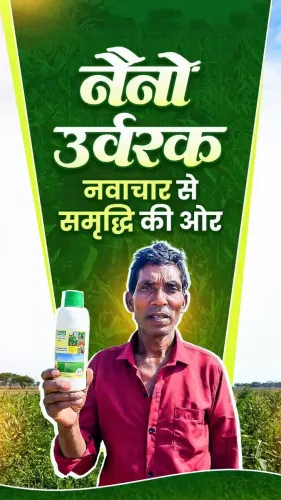
Smallholder and tribal farmers in Chhattisgarh are the primary target beneficiaries of the state's push toward nano-fertilizer adoption.
Concrete procurement targets, budget allocations, and IFFCO supply agreements for the Kharif season will determine the on-ground impact of the Chief Minister's policy signal.
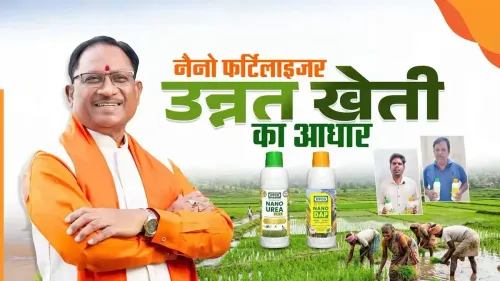
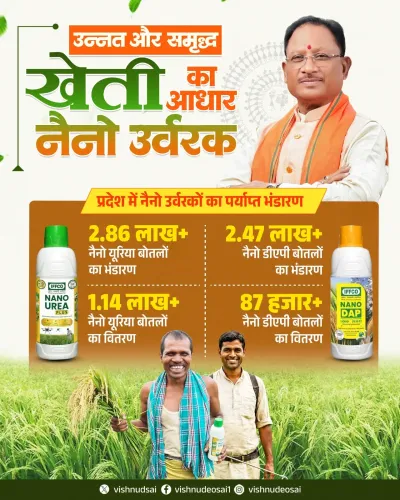
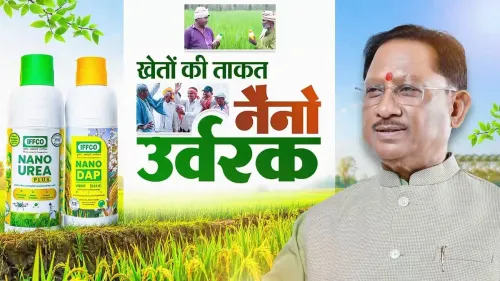
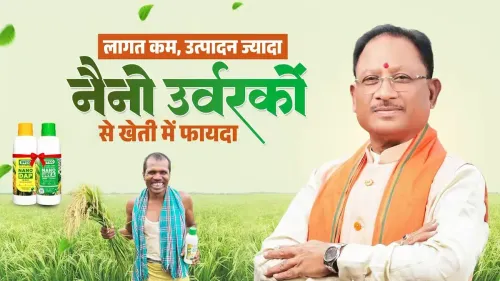
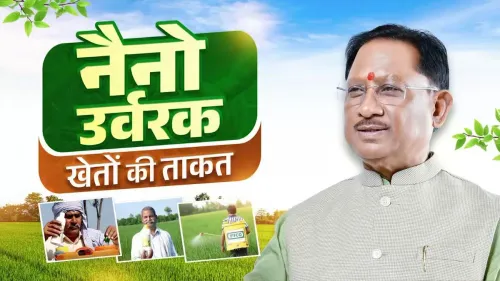
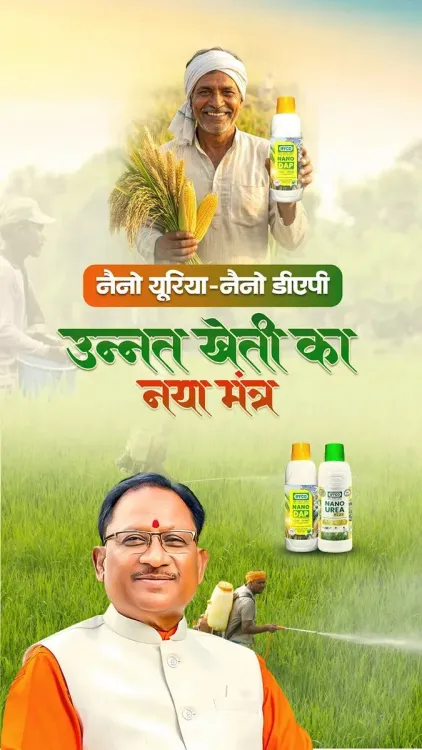
Chhattisgarh Chief Minister Vishnu Deo Sai on Tuesday, 23 June 2026, called nano fertilizers the new identity of modern agriculture, highlighting how Nano DAP and Nano Urea are giving farmers the opportunity to achieve higher output at lower cost.
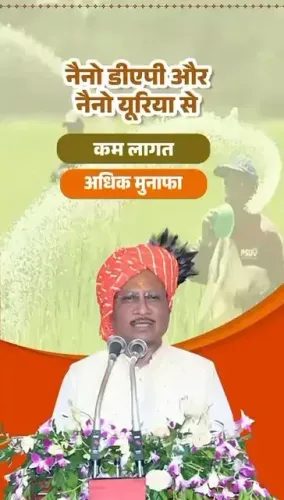
Writing in Hindi on X, CM Sai stated: 'नैनो डीएपी एवं नैनो यूरिया किसानों को कम लागत में अधिक उत्पादन का अवसर प्रदान कर रहे हैं' — 'Nano DAP and Nano Urea are providing farmers the opportunity for higher production at lower cost.' He added that these inputs play a crucial role in giving crops balanced nutrition, maintaining soil fertility, and reducing dependence on chemical fertilizers. The Chief Minister concluded that 'innovation-empowered farming is the foundation of farmers' income growth and the long-term prosperity of the agriculture sector.'
Context
Chhattisgarh is a predominantly agrarian state in central India, home to a large population of smallholder and tribal farmers who are particularly sensitive to input costs. The Chief Minister's statement comes ahead of the Kharif 2026 sowing season, when fertilizer procurement and distribution decisions are critical for the state's farming communities. By publicly endorsing nano fertilizers at this juncture, CM Sai is signalling a clear policy direction for the season.
Policy Backdrop
IFFCO (Indian Farmers Fertiliser Cooperative Limited) commercially launched Nano Urea in 2021, followed by Nano DAP, as part of the central government's push for indigenous nano-fertilizer technology under the Atmanirbhar Bharat initiative. The products are designed to deliver nutrients at the cellular level through foliar spray, drastically reducing the volume of conventional urea and DAP required per acre. Since the early 2020s, the Government of India has systematically promoted nano fertilizers to lower import dependence, reduce soil and water pollution, and support precision nutrient management across states.
Several states have already integrated Nano Urea and Nano DAP into their agricultural extension programmes and subsidy frameworks. Chhattisgarh's alignment with this national push reflects a broader pattern of state governments adopting centrally developed agri-technology to improve farmer incomes while meeting sustainability targets.
Stakeholders and Impact
The primary beneficiaries of wider nano-fertilizer adoption are Chhattisgarh's smallholder and tribal farming communities, who stand to gain from lower per-acre input costs and reduced soil degradation over time. Fertiliser cooperatives, particularly IFFCO, stand to see expanded distribution networks as state governments actively promote their products through official channels. Reduced reliance on conventional chemical fertilizers also carries environmental benefits, including lower nitrogen runoff into water bodies and improved long-term soil health.
For the broader agricultural ecosystem, a shift toward nano inputs could ease pressure on the conventional urea and DAP supply chain, which has historically been vulnerable to global price shocks and import disruptions.
What's Next
Attention will now turn to Chhattisgarh's Kharif season procurement and distribution targets for nano fertilizers, and whether the state government follows the Chief Minister's public endorsement with concrete budget allocations or fresh supply agreements with IFFCO. Agricultural extension departments will be key to translating the policy signal into ground-level farmer awareness and adoption. The coming months will indicate whether CM Sai's push for innovation-led farming translates into measurable gains in farmer income and input cost reduction across the state.
Point of View
Lending state-level political weight to a technology push that began with IFFCO's 2021 Nano Urea launch. By framing nano inputs as the 'new identity of modern agriculture' ahead of the Kharif sowing season, Sai is signalling to his administration and to distribution networks that this is a priority, not merely an aspiration. The timing also serves a dual political purpose: it positions the BJP government in Chhattisgarh as farmer-friendly on cost reduction while simultaneously advancing a sustainability narrative. Whether the rhetoric is backed by procurement targets and extension outreach will determine whether this becomes policy or remains positioning.
NationPress
21 Sept 2026
Frequently Asked Questions
What are Nano DAP and Nano Urea and how do they help farmers?
Nano DAP and Nano Urea are liquid nano-particle based fertilizers developed by IFFCO that deliver nutrients directly at the cellular level through foliar spray. They require significantly smaller quantities than conventional fertilizers, lowering input costs for farmers while maintaining or improving crop yields and reducing chemical runoff into soil and water.
What did Chhattisgarh CM Vishnu Deo Sai say about nano fertilizers?
On 23 June 2026, CM Sai stated on X that Nano DAP and Nano Urea are giving farmers the opportunity for higher production at lower cost, play a key role in balanced crop nutrition and maintaining soil fertility, and that innovation-empowered farming is the foundation of long-term agricultural prosperity.
Who developed Nano Urea in India?
IFFCO (Indian Farmers Fertiliser Cooperative Limited) developed and commercially launched Nano Urea in 2021, followed by Nano DAP, under the central government's Atmanirbhar Bharat initiative to promote indigenous nano-fertilizer technology.
How does Nano Urea differ from conventional urea?
Conventional urea is applied in large granular quantities to the soil, much of which is lost to volatilisation and runoff. Nano Urea is a liquid spray applied directly to leaves, delivering nitrogen at the cellular level in far smaller doses, which reduces waste, lowers per-acre cost, and decreases soil and water pollution.
Which farmers in Chhattisgarh benefit most from nano fertilizers?
Smallholder and tribal farming communities in Chhattisgarh, who are most sensitive to rising input costs, stand to benefit most from the lower per-acre expenditure and reduced soil degradation associated with Nano DAP and Nano Urea adoption.