CM Sai Champions Nano Urea, Nano DAP for Chhattisgarh Farms
Synopsis
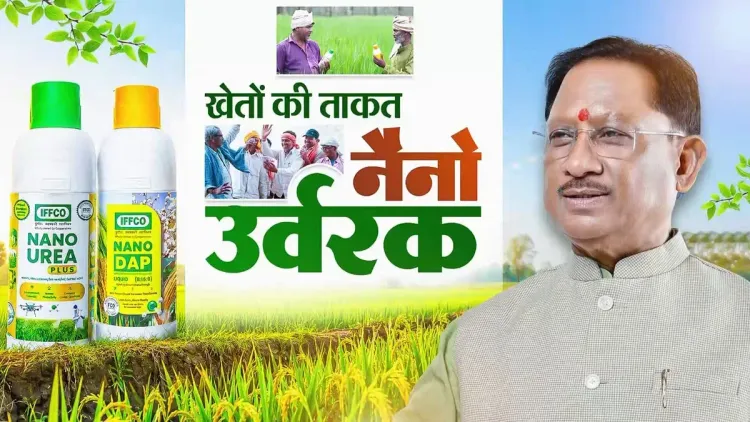
Chhattisgarh Chief Minister Vishnu Deo Sai on 22 June 2026 backed Nano Urea and Nano DAP as game-changers for state farming, tying precision fertilizer adoption to his Vikasit Chhattisgarh vision of a prosperous farmer and a self-reliant rural economy.
Key Takeaways
CM Vishnu Deo Sai publicly endorsed Nano Urea and Nano DAP on 22 June 2026 as central to Chhattisgarh's agricultural modernisation drive.
Nano Urea is a liquid nitrogen fertilizer launched commercially by IFFCO in 2021 ; Nano DAP offers higher phosphorus efficiency at lower application volumes.
The Union government incorporated nano fertilizers into the Fertiliser Control Order subsidy framework from 2022 , providing national policy support.
Key beneficiaries include small and marginal farmers and tribal farming communities in districts such as Bastar and Surguja .
CM Sai's stated goal is a prosperous farmer, advanced agriculture, and a self-reliant rural economy under the Vikasit Chhattisgarh agenda.
Concrete follow-through — distribution targets, training modules, and budget allocations — in Chhattisgarh's 2026-27 agriculture policy will be the key metric to watch.
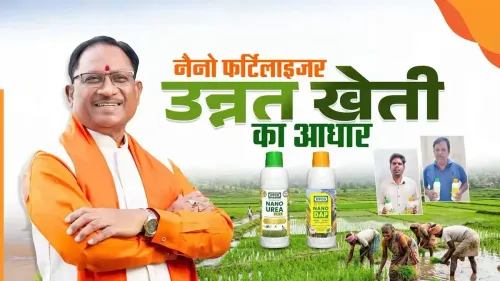
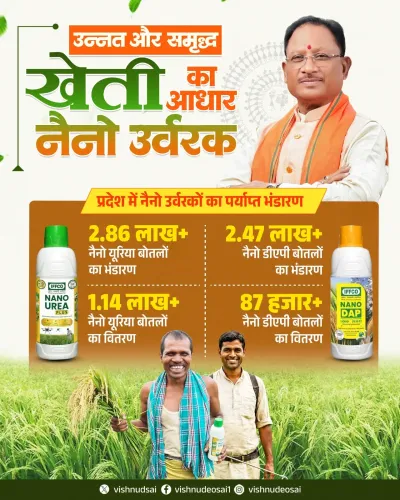
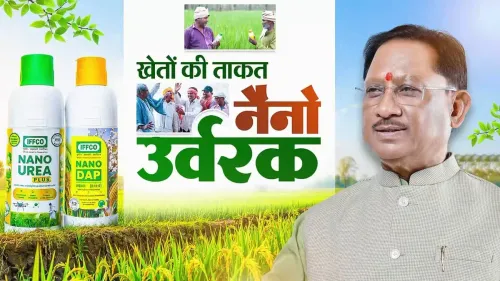
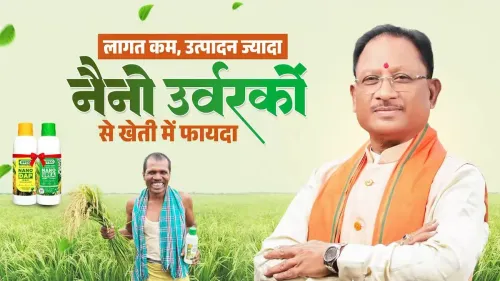
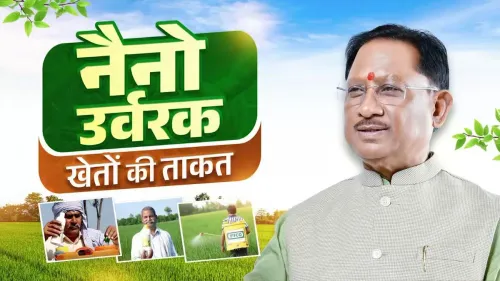
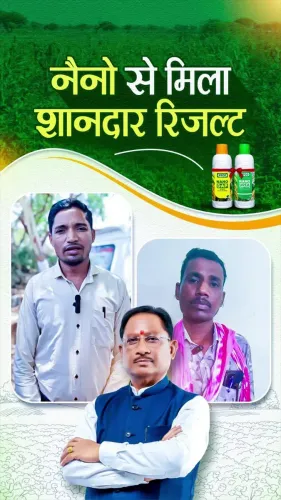
Chhattisgarh Chief Minister Vishnu Deo Sai on Monday, 22 June 2026, publicly championed the adoption of Nano Urea and Nano DAP as transformative tools for the state's agricultural sector, calling them the new face of innovation in farming. Posting on X, the Chief Minister framed precision nano fertilizers as central to his government's vision of a prosperous, self-reliant rural economy under the Vikasit Chhattisgarh agenda.
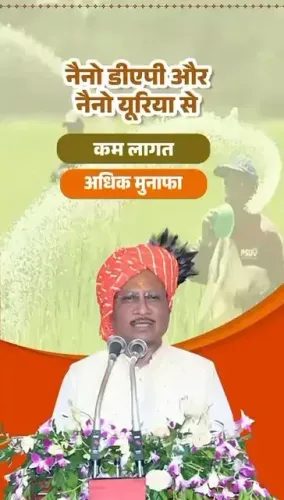
In his post, CM Sai wrote: 'kam maatra mein adhik prabhav' — meaning 'greater impact in smaller quantities' — positioning Nano Urea and Nano DAP as instruments of better nutritional efficiency, lower cost, ease of use, and environmental balance. He stated that the integration of technology and innovation in agriculture is simultaneously empowering farmers and laying a strong foundation for a developed Chhattisgarh. His stated goal: 'samridh kisan, unnat krishi aur atmanirbhar gramin arthvyavastha' — a prosperous farmer, advanced agriculture, and a self-reliant rural economy.
Context
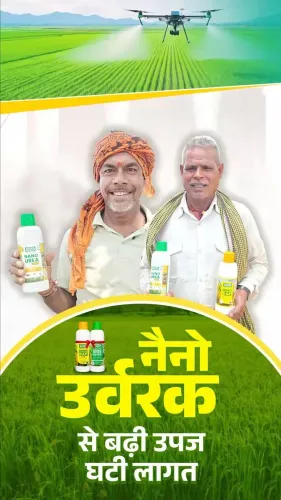
Nano Urea is a liquid nitrogen fertilizer developed using nanotechnology by IFFCO (Indian Farmers Fertiliser Cooperative Limited), launched commercially in 2021 to improve nutrient uptake efficiency and reduce dependence on conventional urea. Nano DAP is a nanotechnology-based variant of Di-Ammonium Phosphate, engineered for higher phosphorus efficiency at significantly lower application volumes. Both products are applied as foliar sprays rather than soil-broadcast granules, reducing runoff and input costs for smallholder farmers.
Chhattisgarh is a central Indian state with a predominantly rural population, large tribal farming communities, and significant cultivation of rice, pulses, and maize — crops that stand to benefit from precision nutrient management. The state's farming sector has historically relied on heavily subsidised conventional fertilizers, making the shift to nano alternatives both an economic and environmental priority.
Policy Backdrop
The Union Ministry of Agriculture incorporated nano fertilizers into amendments to the Fertiliser Control Order and related subsidy frameworks from 2022 onwards, creating a national policy scaffold for their large-scale rollout. This move was aligned with India's broader Atmanirbhar Bharat strategy — reducing urea import dependence, cutting the national fertilizer subsidy bill, and curbing chemical runoff that degrades soil health over time.
CM Sai's public endorsement signals state-level alignment with these central priorities. Since taking office in December 2023, the BJP leader has consistently linked agricultural modernisation to the 'Vikasit Chhattisgarh' framework — a state-level echo of the national 'Viksit Bharat' development narrative. Promoting nano fertilizers fits squarely within that messaging architecture.
Stakeholders and Impact
The primary beneficiaries of a successful nano fertilizer push would be small and marginal farmers and agricultural cooperatives across Chhattisgarh, who currently bear significant input costs for conventional urea and DAP. A single bottle of Nano Urea is designed to replace one bag of conventional urea for many crop applications, offering a tangible reduction in per-acre expenditure. Environmental gains — reduced nitrogen leaching and lower greenhouse gas emissions from soil — would benefit the broader rural ecosystem.
Agricultural cooperatives, including those affiliated with IFFCO, are positioned as key distribution and training partners. Tribal farming communities in districts such as Bastar, Surguja, and Korba represent a critical adoption frontier, where low-cost, easy-to-use inputs could have an outsized productivity impact if outreach and training infrastructure are adequately deployed.
What's Next
Analysts and farm-sector observers will watch closely for concrete follow-through: state-level distribution targets, farmer training modules, and dedicated budget allocations for nano fertilizers in Chhattisgarh's 2026-27 agriculture policy documents or kharif procurement plans. The Chief Minister's post, while aspirational in tone, sets a clear political benchmark — one that will be measured against ground-level adoption rates and farmer income data in the seasons ahead.
If Chhattisgarh can demonstrate measurable gains in nutrient-use efficiency and farm income through nano fertilizer adoption, it could serve as a replicable model for other agrarian states pursuing sustainable intensification without expanding the conventional subsidy burden.
Point of View
Particularly among smallholder and tribal farming communities who are sensitive to input cost pressures. However, the gap between social-media advocacy and ground-level distribution infrastructure remains the critical test: Chhattisgarh's tribal belt poses genuine logistical challenges for any new input rollout. If the state follows through with measurable budget commitments in its 2026-27 agriculture documents, the endorsement gains policy weight; absent that, it risks remaining aspirational rhetoric.
NationPress
20 Sept 2026
Frequently Asked Questions
What is Nano Urea and how does it help farmers?
Nano Urea is a liquid nitrogen fertilizer developed by IFFCO using nanotechnology, launched commercially in 2021. It improves nutrient uptake efficiency in crops and is designed to replace conventional urea bags at a fraction of the volume, reducing input costs and chemical runoff for farmers.
What did Chhattisgarh CM Vishnu Deo Sai say about Nano DAP?
CM Vishnu Deo Sai said on 22 June 2026 that Nano DAP and Nano Urea offer better nutritional efficiency, lower cost, ease of use, and environmental balance, calling them the new identity of innovation in the agriculture sector and key to a self-reliant rural economy.
What is Vikasit Chhattisgarh?
Vikasit Chhattisgarh is the Chhattisgarh government's development framework, mirroring the national Viksit Bharat vision, aimed at accelerating economic growth, agricultural modernisation, and rural prosperity in the state under CM Vishnu Deo Sai's BJP government.
Who makes Nano Urea and Nano DAP in India?
IFFCO — Indian Farmers Fertiliser Cooperative Limited — pioneered the commercial production of Nano Urea in India in 2021 and subsequently developed Nano DAP. The Union government has supported their scale-up through Fertiliser Control Order amendments since 2022.
Which Chhattisgarh farmers benefit most from nano fertilizers?
Small and marginal farmers and tribal farming communities — particularly in districts like Bastar, Surguja, and Korba — stand to benefit most, as lower input costs and easier application of nano fertilizers can improve productivity and profitability for rice, pulses, and maize growers.