Chhattisgarh CMO backs Nano Urea, Nano DAP for farm growth
Synopsis
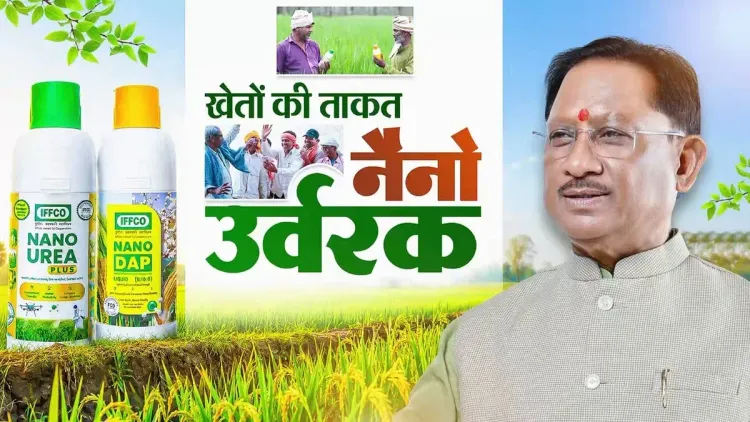
The Chhattisgarh Chief Minister's Office on 22 June 2026 championed Nano Urea and Nano DAP as precision agriculture innovations promising lower costs, better nutrient efficiency, and environmental sustainability — targeting a prosperous farmer and a self-reliant rural economy.
Key Takeaways
The Chief Minister's Office of Chhattisgarh publicly endorsed Nano Urea and Nano DAP on 22 June 2026 .
Nano Urea, developed by IFFCO , was commercially launched in 2021 and can reduce conventional urea use by up to 50 per cent .
The state's goal, as stated by the CMO, is a 'prosperous farmer, advanced agriculture, and a self-reliant rural economy.' The push aligns with the Union government's PM-PRANAM scheme to cut chemical fertilizer consumption and subsidy burden.
Chhattisgarh's smallholder and tribal farmers stand to gain most from lower costs and easier application of liquid nano fertilizers.
Concrete state-level procurement and subsidy integration announcements are awaited to assess actual programme scale.
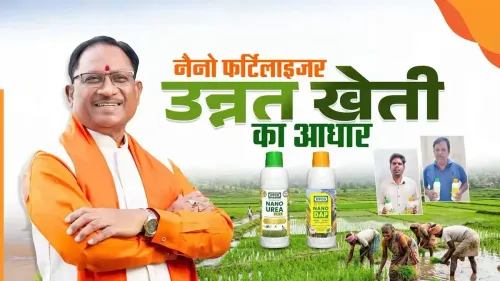
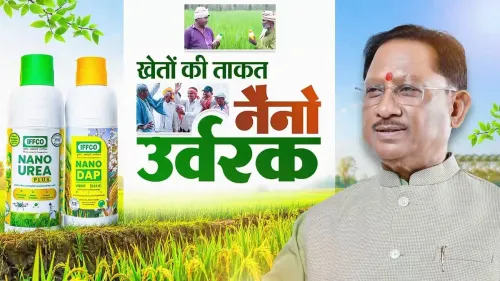
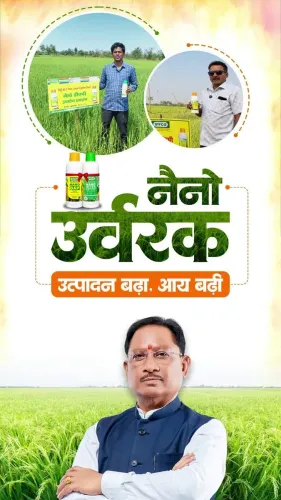
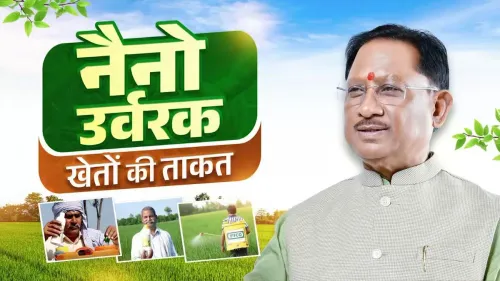
The Chief Minister's Office of Chhattisgarh on Monday, 22 June 2026 publicly endorsed Nano Urea and Nano DAP as transformative inputs for the state's agriculture sector, highlighting their potential to make farming more productive, profitable, and environmentally sustainable.
The post, shared in Hindi, declared: 'कम मात्रा में अधिक प्रभाव' ('More impact in lesser quantity') — framing nano fertilizers as the new face of agricultural innovation. The office stated its goal as a 'prosperous farmer, advanced agriculture, and a self-reliant rural economy.'
Context
Nano fertilizers are liquid, nanotechnology-based nutrient solutions that deliver plant nutrients at the cellular level, dramatically improving absorption efficiency. Nano Urea, a liquid nitrogen fertilizer, was commercially launched by IFFCO (Indian Farmers Fertiliser Cooperative) in 2021 from its plant at Kalol, Gujarat — marking India's first large-scale entry into this technology. Nano DAP, a phosphorus-based counterpart, received expanded regulatory approvals by 2023 under the Fertilizer Control Order.
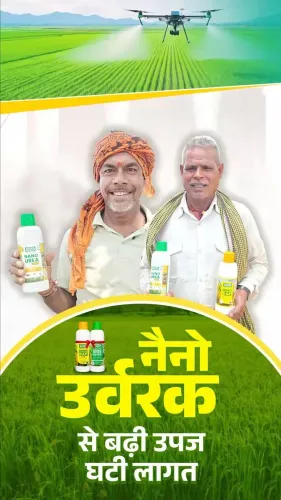
These products can reduce conventional fertilizer application by up to 50 per cent, lowering input costs for farmers while cutting environmental runoff into soil and water bodies. A single 500 ml bottle of Nano Urea is designed to replace one bag of conventional urea in many crop applications.
Policy Backdrop
The Chhattisgarh CMO's messaging aligns squarely with a national push, accelerated since 2021, to reduce India's dependence on imported urea, ease the government's fertilizer subsidy burden, and curb soil degradation caused by excess chemical nutrient application. The Union government's PM-PRANAM scheme — which incentivises states to reduce chemical fertilizer consumption — has further encouraged state governments to mainstream nano alternatives through existing agricultural extension frameworks.
Chhattisgarh, a central Indian state with a predominantly agriculture-dependent economy anchored in rice and minor millet cultivation, has smallholder farmers who stand to benefit most from lower input costs and easier-to-transport liquid fertilizer formats. The state government's endorsement signals intent to integrate these products into its input delivery and outreach programmes.
Stakeholders and Impact
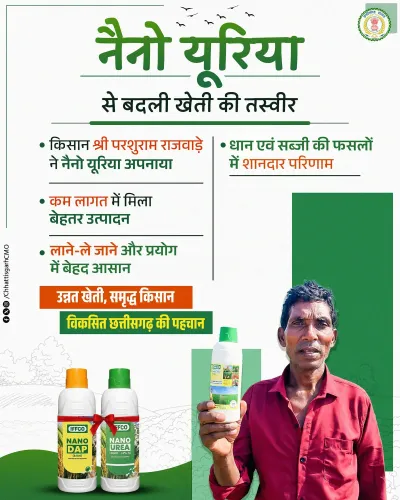
Small and marginal farmers, who form the backbone of Chhattisgarh's rural economy, are the primary intended beneficiaries. Nano fertilizers require no heavy bags, reduce transportation costs, and can be applied through existing spraying equipment — advantages that are especially meaningful for remote and tribal farming communities in the state.
Rural cooperatives and state-level agricultural extension workers are key intermediaries in the rollout. Wider adoption could also reduce the fiscal pressure on state and central governments from conventional fertilizer subsidies, freeing resources for other rural welfare initiatives aligned with the Atmanirbhar Bharat vision.
What's Next
Observers will watch for Chhattisgarh's follow-through: whether the state issues procurement tenders for nano fertilizers, launches field demonstration programmes for farmers, or formally integrates these products into existing fertilizer subsidy or PM-PRANAM implementation frameworks. The CMO's public communication suggests a policy direction, but concrete programme announcements and budget allocations will determine the scale of impact on the ground.
If Chhattisgarh moves decisively toward nano fertilizer integration, it could serve as a model for other agriculture-heavy central Indian states navigating the balance between input affordability, soil health, and rural income growth.
Point of View
The messaging dovetails with the Union government's fiscal imperative to reduce the urea import bill and subsidy outgo — making this as much a political alignment exercise as an agricultural one. The real test will be whether Chhattisgarh backs the communication with procurement, extension reach, and farmer-level training, or whether it remains aspirational messaging. States that have moved from endorsement to structured rollout have seen measurable uptake, but the gap between policy communication and ground-level adoption in central Indian agrarian states remains a persistent challenge.
NationPress
20 Sept 2026
Frequently Asked Questions
What is Nano Urea and how is it different from regular urea?
Nano Urea is a liquid nitrogen fertilizer developed by IFFCO using nanotechnology that delivers nutrients directly at the plant-cell level, improving absorption efficiency and potentially reducing conventional urea application by up to 50 per cent compared to traditional granular urea bags.
What is Nano DAP and what are its benefits?
Nano DAP is a nanotechnology-based liquid phosphorus fertilizer that offers higher nutrient absorption rates and significantly lower environmental runoff into soil and water compared to conventional Di-Ammonium Phosphate (DAP) fertilizer.
Why is Chhattisgarh promoting Nano Urea and Nano DAP?
The Chhattisgarh Chief Minister's Office has endorsed these nano fertilizers to help smallholder farmers reduce input costs, improve crop productivity, and support the state's goal of a self-reliant rural economy, in line with the national push under schemes like PM-PRANAM.
Who makes Nano Urea in India?
Nano Urea is produced by IFFCO (Indian Farmers Fertiliser Cooperative), India's largest fertilizer cooperative, which commercially launched it in 2021 from its plant at Kalol, Gujarat.
How does Nano Urea help reduce government subsidy burden?
Because Nano Urea can replace a significant portion of conventional urea consumption, it reduces the volume of subsidised urea the government must procure and distribute, directly easing the fertilizer subsidy bill and reducing dependence on urea imports.