CM Sai Pushes Nano Fertilisers to Boost Chhattisgarh Farm Income
Synopsis
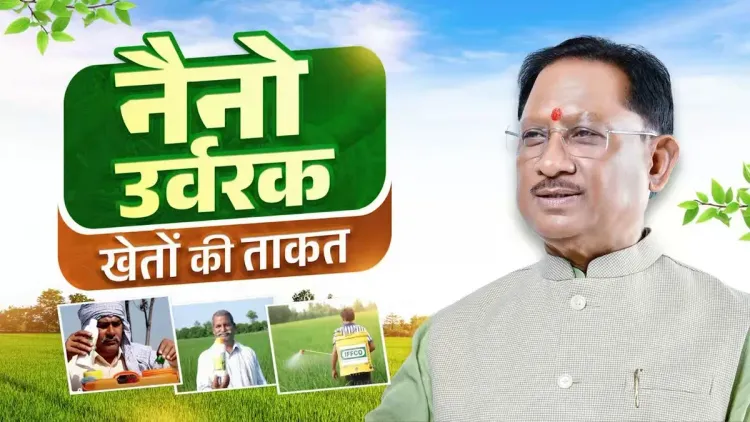
Chhattisgarh Chief Minister Vishnu Deo Sai on 8 June 2026 announced his government is actively promoting Nano Urea and Nano DAP to lower farming costs and boost incomes for the state's small and marginal farmers, aligning with the national push for self-reliance in agricultural inputs.
Key Takeaways
CM Vishnu Deo Sai declared nano fertilisers the 'foundation of advanced agriculture' in Chhattisgarh on 8 June 2026 .
The state government is expanding availability and use of Nano Urea and Nano DAP to raise farmer incomes.
Nano fertilisers reduce costs on transportation, storage, and labour compared with conventional fertiliser bags.
IFFCO commercialised Nano Urea in 2021 ; the Union government began subsidising nano fertilisers from 2022-23 .
Chhattisgarh's 2023-24 agriculture policy had already mandated integration of nano inputs into extension services.
Small and marginal farmers in Chhattisgarh's remote and tribal districts are the primary intended beneficiaries.
Chhattisgarh Chief Minister Vishnu Deo Sai on Monday, 8 June 2026 said his government is actively promoting nano fertilisers as a pillar of modern, scientific farming in the state, with the explicit goal of raising farmers' incomes.
Context
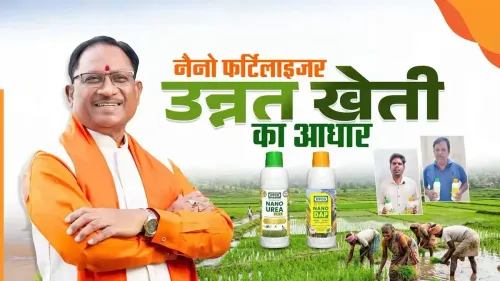
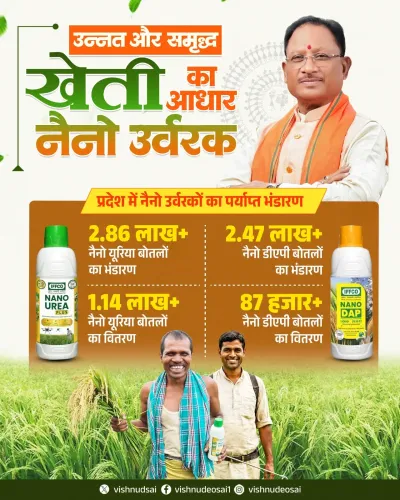
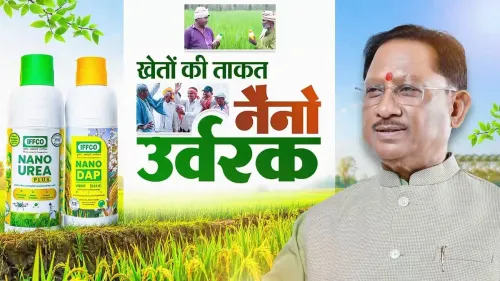
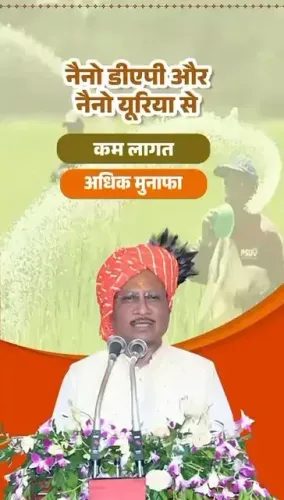
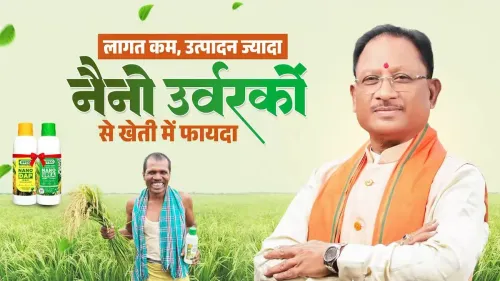
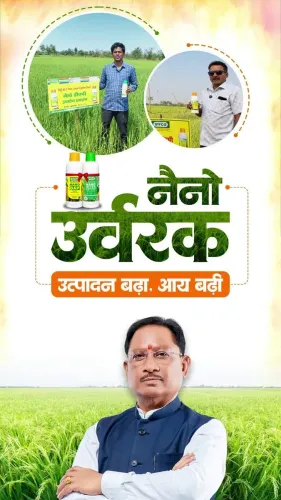
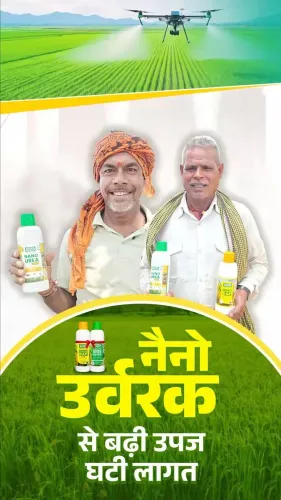
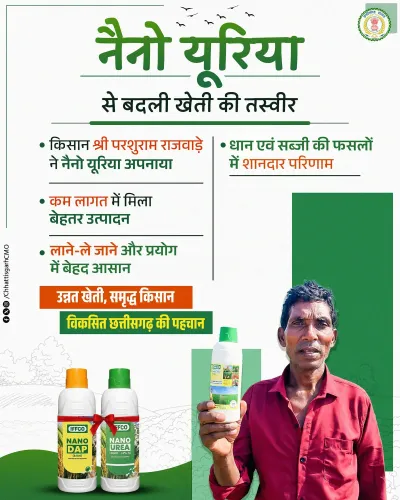
Posting on X, CM Sai declared: 'नैनो उर्वरक बन रहे उन्नत कृषि का आधार' ('Nano fertilisers are becoming the foundation of advanced agriculture'). He stated that the Chhattisgarh government is continuously expanding the availability and use of nano fertilisers by connecting farmers to scientific and modern farming methods. The post specifically highlighted Nano Urea and Nano DAP as cost-effective alternatives that deliver better yields at lower input costs.
According to the Chief Minister, adoption of these products also reduces expenditure on transportation, storage, and labour — three cost centres that weigh heavily on small and marginal farmers in Chhattisgarh.
Policy Backdrop
IFFCO commercialised Nano Urea in 2021 following field trials, marking the first large-scale deployment of nanotechnology in Indian fertilisers. The Government of India began subsidising nano fertilisers from 2022-23 to reduce import dependence on conventional urea and DAP, and to lower the overall fertiliser subsidy burden on the exchequer.
Chhattisgarh's 2023-24 agriculture policy document, framed after the BJP returned to power in the state in December 2023, emphasised integrating nano inputs into extension services. CM Sai, who previously served as Union Minister of State for Agriculture, brings direct familiarity with the national push for nano fertiliser adoption. His post reflects the continuation of that Atmanirbhar Bharat framework at the state level.
Stakeholders and Impact
Chhattisgarh is a central Indian state with a large rural and tribal population whose livelihoods depend significantly on agriculture. Small and marginal farmers stand to benefit most from reduced input costs, as conventional Urea and DAP bags involve significant freight and handling expenses across the state's dispersed village network.
Nano fertilisers are delivered in liquid form in small bottles, dramatically cutting logistics costs compared with bulky conventional fertiliser bags. Wider adoption ahead of the 2026 kharif season could translate into measurable savings for cultivators, particularly in remote and tribal districts.
What's Next
Observers will watch for state procurement orders and village-level distribution camps for nano fertilisers as the kharif sowing window approaches. Any new agreements between the Chhattisgarh government and manufacturers such as IFFCO would signal the scale of the state's commitment. CM Sai's emphasis on 'farmer prosperity and self-reliance' suggests the government intends to embed nano fertiliser use within its broader agricultural extension and income-support framework going forward.
Point of View
Championing nano fertilisers carries added credibility and reinforces the BJP's farmer-welfare narrative ahead of the kharif season. The emphasis on cost reduction — transportation, storage, and labour — is politically astute in a state where small and marginal farmers form a critical vote bloc. If distribution targets are met, the policy could serve as a template for other BJP-governed states with similar agrarian profiles.
NationPress
23 Oct 2026
Frequently Asked Questions
What are Nano Urea and Nano DAP?
Nano Urea and Nano DAP are liquid nano-fertilisers developed to deliver nitrogen and phosphorus nutrients directly to crops at the cellular level, requiring far smaller quantities than conventional granular fertilisers and cutting logistics and storage costs significantly.
Why is Chhattisgarh promoting nano fertilisers in 2026?
Chhattisgarh CM Vishnu Deo Sai has stated that the state government is promoting nano fertilisers to lower input costs for farmers and raise their incomes, in line with both the state's 2023-24 agriculture policy and the national push for self-reliance in farm inputs.
Who developed Nano Urea in India?
IFFCO (Indian Farmers Fertiliser Cooperative) developed and commercialised Nano Urea in 2021 after extensive field trials, making India one of the first countries to deploy nanotechnology in fertilisers at scale.
How do nano fertilisers benefit small farmers in Chhattisgarh?
Because nano fertilisers are delivered in small liquid bottles rather than heavy bags, small and marginal farmers save on transportation, storage, and handling costs — expenses that are especially burdensome in Chhattisgarh's dispersed rural and tribal areas.
What is the government's subsidy policy on nano fertilisers?
The Government of India began subsidising nano fertilisers from 2022-23 to reduce dependence on imported conventional urea and DAP and to lower the overall fertiliser subsidy outgo for the exchequer.