Chhattisgarh CMO Spotlights Sarguja Farmer's Nano Fertilizer Gains
Synopsis
The Chief Minister's Office of Chhattisgarh shared a Sarguja farmer's testimony that Nano Urea and Nano DAP have cut his farming costs and improved harvests, framing the shift as part of the state's push for scientific and sustainable agriculture under its good-governance agenda.
Key Takeaways
Chhattisgarh CMO posted on 3 June 2026 citing Sarguja farmer Parshuram Rajwade Farmer reports lower input costs and better yields with Nano Urea and Nano DAP State frames the shift as part of scientific and sustainable farming push Nano Urea was commercially launched by IFFCO in 2021, followed by Nano DAP Policy aim includes trimming urea subsidy and reducing chemical runoff Watch for training programmes and subsidies in upcoming Kharif and Rabi seasons
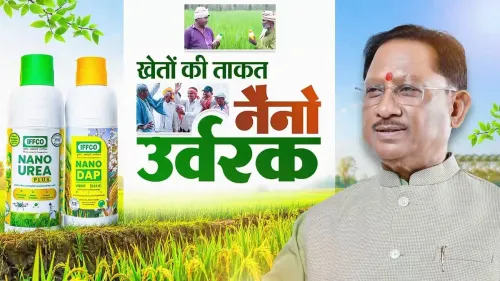
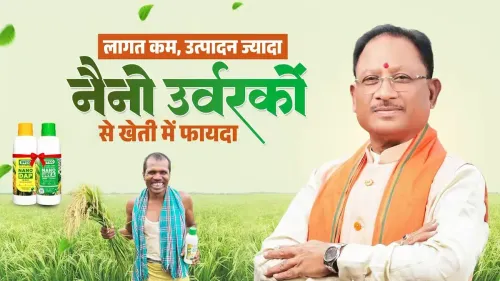
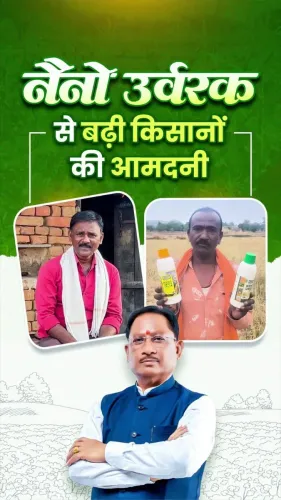
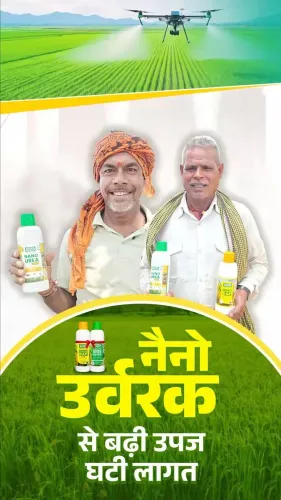
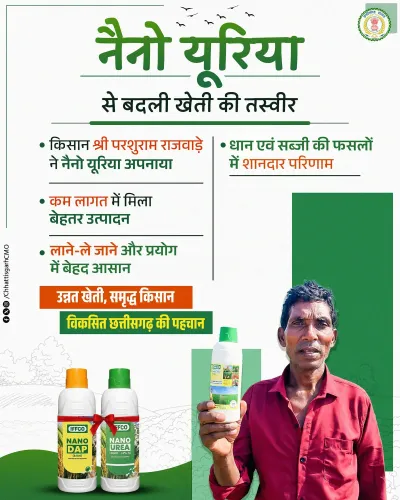
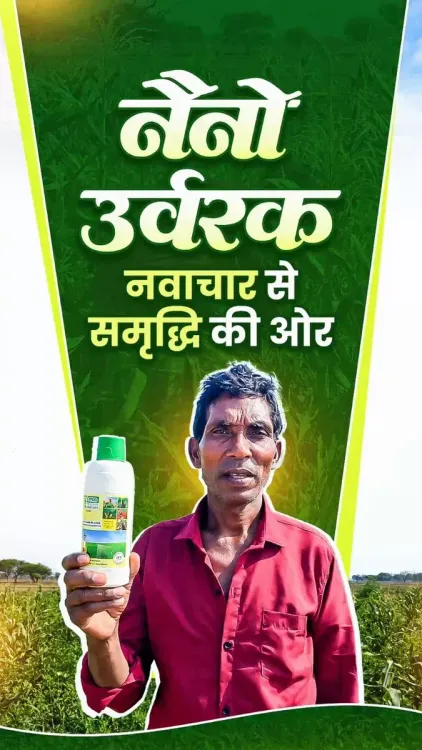
The Chief Minister's Office of Chhattisgarh on Wednesday, 3 June 2026, showcased the experience of a cultivator from Sarguja district who said adoption of Nano Urea and Nano DAP had lowered his input costs and improved crop output. The post, accompanied by a video testimonial, was part of the state government's continuing outreach on scientific and sustainable farming.
Quoting farmer Parshuram Rajwade, the CMO wrote in Hindi that 'pehle kheti mein khaad par zyada kharch hota tha, lekin ab nano urea aur nano DAP ke upyog se laagat kam hui hai aur behtar fasal ho rahi hai' — 'earlier, expenditure on fertilizers in farming was higher, but now with the use of nano urea and nano DAP the cost has come down and the harvest is better.' The office added that the 'Sushasan Sarkar' (good-governance government) was nudging farmers towards 'scientific and sustainable agriculture' so that 'higher returns and prosperous farming can be achieved at lower cost.'
Context
Sarguja, a northern district of Chhattisgarh with a significant tribal population and largely rain-fed agriculture, has been a focal point for state-led extension campaigns. The CMO's framing positions individual cultivators as evidence of policy traction on the ground, a communication style the office has used through 2025 and 2026 to reinforce farm-sector messaging.
The post does not specify the crop, the season, or the quantum of savings reported by the farmer. It instead centres on the directional claim — that nano fertilizers are reducing per-acre cash outgo while sustaining yield.
Policy backdrop
Nano Urea, a liquid nano-formulation commercialised by the Indian Farmers Fertiliser Cooperative Limited (IFFCO) in 2021, was launched as a partial substitute for conventional granular urea. Nano DAP, a nano-phosphorus product, followed soon after, completing a two-nutrient nano package intended for foliar application.
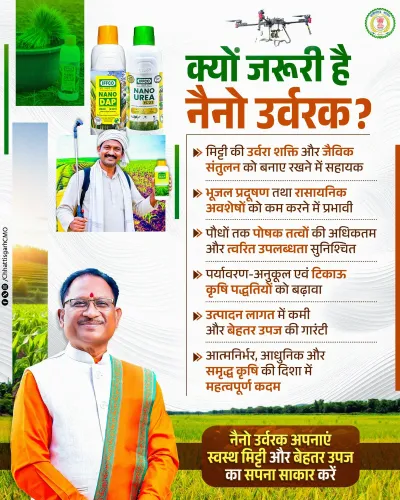
The central rationale has been threefold: trimming India's large urea-subsidy bill, reducing dependence on imported feedstock, and curbing chemical runoff into soil and water bodies. State agriculture departments have been folding nano fertilizers into their advisories alongside existing instruments such as soil-health cards and the PM-KISAN income-support framework.
Chhattisgarh, a major paddy-producing state, has aligned its extension network with this push, citing farmer testimonials in official communications as a way to widen acceptance among smallholders who are typically risk-averse about switching inputs.
Stakeholders and impact
The primary stakeholders are small and marginal cultivators across Chhattisgarh, particularly in tribal-majority belts like Sarguja, Bastar and Surguja division blocks where cash-constrained farming makes input costs a decisive variable. For such households, even a modest reduction in fertilizer spending can translate into improved net margins.
Cooperatives and private retailers carrying nano formulations stand to expand their footprint as awareness grows. Agricultural universities and Krishi Vigyan Kendras, which conduct demonstration plots, are central to building farmer confidence in the new products.
At the macro level, wider nano-fertilizer uptake feeds into the Centre's effort to cap the fertilizer subsidy outgo, which has remained one of the larger items on the Union budget in recent years.
What's next
Attention will turn to whether the state rolls out structured training programmes and any targeted subsidies for nano-fertilizer application during the coming Kharif and Rabi cycles. Uptake data from district agriculture offices, particularly in Sarguja, will indicate whether the testimonial-led campaign is converting into sustained on-field use.
For the Chief Minister's Office of Chhattisgarh, the post fits a broader narrative of pairing welfare delivery with productivity reform — a positioning that is likely to remain central to the government's rural communication in the months ahead.
Point of View
Where a single cultivator's voice is used to validate a national input-reform push at the state level. It dovetails with the Centre's multi-year effort to wean Indian agriculture off heavily subsidised granular urea, and Chhattisgarh's framing signals continued alignment with that arc. The absence of quantified savings in the post is notable — it keeps the message aspirational rather than auditable. Whether nano fertilizers achieve scale will depend less on social-media testimonials and more on extension capacity, retail availability, and farmer-level field data over successive seasons.
NationPress
21 Oct 2026
Frequently Asked Questions
What are Nano Urea and Nano DAP?
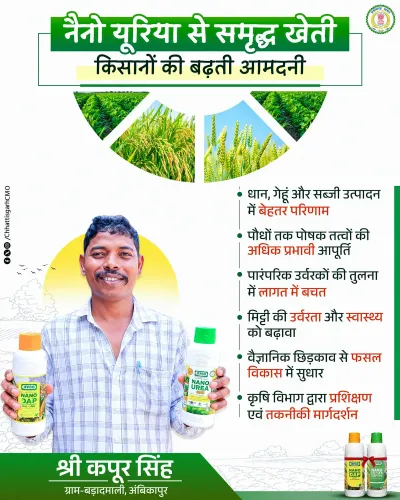
They are liquid nano-formulations of nitrogen and phosphorus fertilizers developed and commercialised by IFFCO as partial substitutes for conventional granular urea and DAP. They are applied as a foliar spray and aim to deliver nutrients more efficiently while reducing the volume of fertilizer used.
Who is Parshuram Rajwade?
Parshuram Rajwade is a farmer from Sarguja district in Chhattisgarh whose testimonial was shared by the Chief Minister's Office. He is quoted as saying that switching to nano fertilizers reduced his cultivation costs and improved his crop output.
When was Nano Urea launched in India?
IFFCO commercially launched Nano Urea in 2021 after field trials across the country. Nano DAP was introduced subsequently to provide a complementary nano-phosphorus option for farmers.
Why is the Chhattisgarh government promoting nano fertilizers?
The state is promoting nano fertilizers as part of a wider push for scientific and sustainable agriculture. The stated goals are lower input costs for farmers, better yields, and reduced chemical runoff, in line with the Centre's effort to cut the urea subsidy bill and import dependence.
How can Chhattisgarh farmers access Nano Urea and Nano DAP?
The products are typically distributed through IFFCO outlets, cooperative societies and authorised retailers, and are featured in state agriculture department advisories. Farmers can also seek guidance from local Krishi Vigyan Kendras and block-level agriculture offices on application methods.