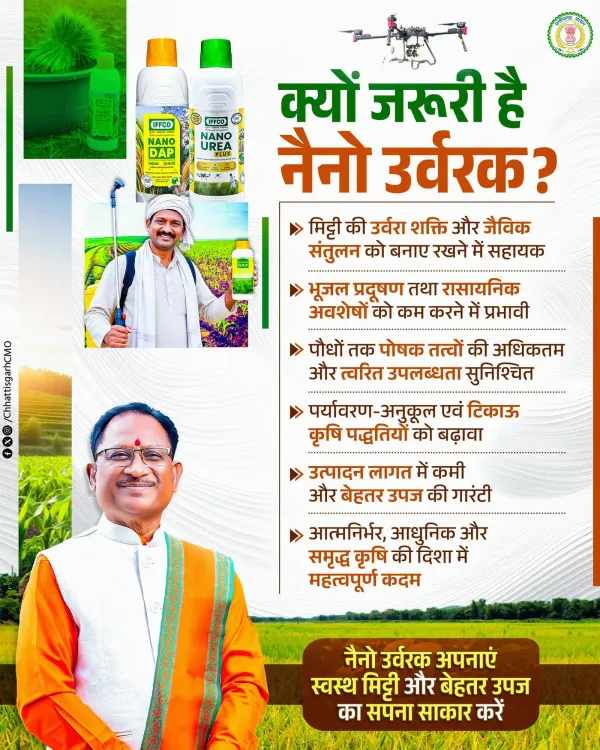
Chhattisgarh CMO backs Nano Urea, Nano DAP for farmers
Synopsis
The Chhattisgarh CMO on 31 May 2026 promoted Nano Urea and Nano DAP as tools to lower input costs and preserve soil fertility for farmers, aligning the state with India's national push toward precision, eco-friendly agriculture under the Atmanirbhar Bharat fertilizer strategy.
Key Takeaways
The Chhattisgarh CMO on 31 May 2026 publicly backed Nano Urea and Nano DAP as core tools in the state's agricultural innovation agenda.
Nano Urea , developed by IFFCO , can reduce conventional urea consumption by up to 50 percent by delivering nitrogen more efficiently at the cellular level.
Over 80 percent of Chhattisgarh's rural population depends on agriculture, making input-cost reduction a high-priority policy goal.
The Government of India approved Nano Urea commercially in 2021 under the Atmanirbhar Bharat fertilizer strategy; multiple states followed with adoption programmes between 2022 and 2024.
Environmental benefits include reduced soil degradation and lower groundwater pollution compared to conventional chemical fertilizer application.
Kharif season acreage data and soil-health card results from Chhattisgarh districts will be the key metrics to assess real-world programme impact.
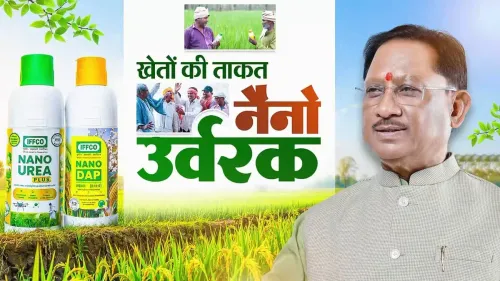
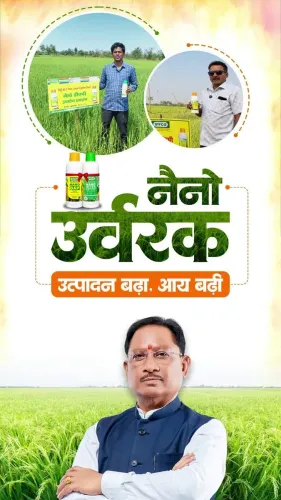
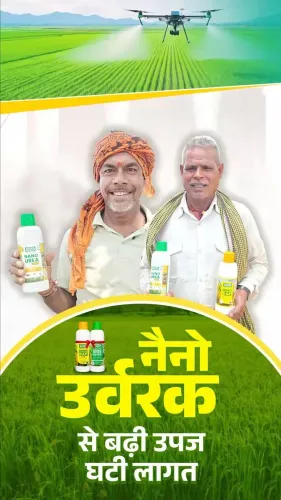
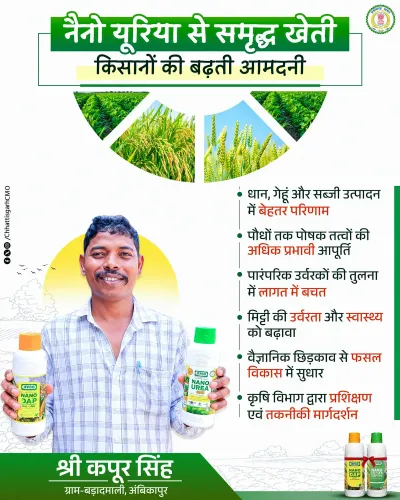
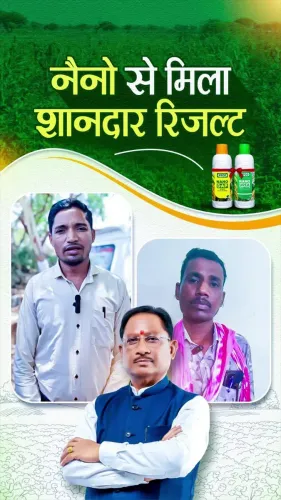
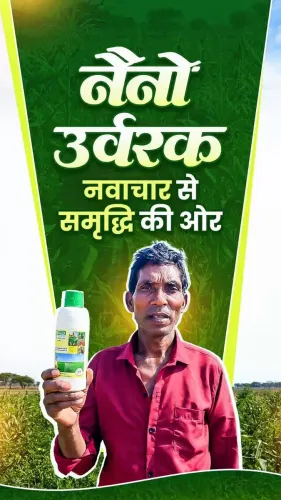
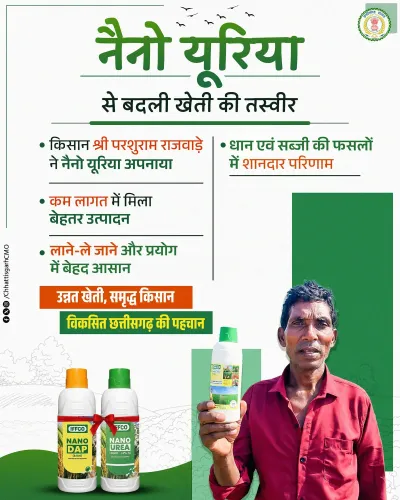
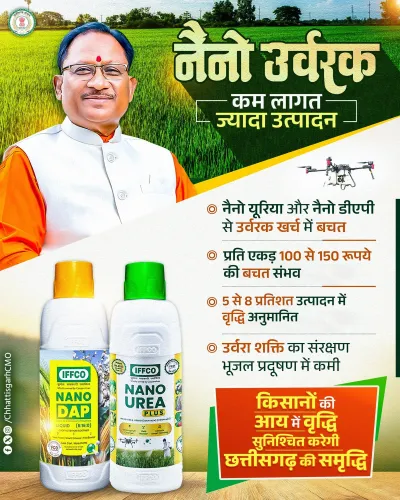
The Chief Minister's Office of Chhattisgarh on Sunday, 31 May 2026 highlighted the state government's push to promote nano-fertilizer technology — specifically Nano Urea and Nano DAP — as a means of reducing input costs for farmers while preserving soil fertility across the state.
Posting under the hashtag #SushasanSarkar ('Good Governance Government'), the CMO stated that the initiative is helping farmers achieve 'better production at lower cost' and 'maintain soil fertility' through environment-friendly agricultural practices. The post frames nano-fertilizers as central to the state's broader agenda of agricultural innovation.
Context
Chhattisgarh is a predominantly agrarian state in central India, with over 80 percent of its rural population dependent on agriculture — chiefly paddy, maize, and pulses. Soil health and the high cost of conventional fertilizers have long been pressing concerns for small and marginal farmers in the region. The CMO's communication positions nano-fertilizer adoption as a direct response to both challenges.Policy Backdrop
Nano Urea is a nanotechnology-based liquid fertilizer developed by IFFCO (Indian Farmers Fertiliser Cooperative), India's largest fertilizer cooperative, designed to deliver nitrogen more efficiently and reduce conventional urea consumption by up to 50 percent. Nano DAP is a complementary nano-phosphorus formulation that improves phosphate uptake while lowering the volume of traditional DAP required per acre. The Government of India approved commercial use of Nano Urea in 2021 as part of the Atmanirbhar Bharat fertilizer strategy, and between 2022 and 2024 multiple states began incorporating both products into farmer training and input-support programmes. Chhattisgarh's current push aligns with this national trajectory toward precision and climate-resilient agriculture.Stakeholders and Impact
The primary beneficiaries are small and marginal farmers across Chhattisgarh who bear disproportionate input costs under the conventional fertilizer regime. Agricultural cooperatives serving as distribution intermediaries are also key stakeholders in rolling out nano-fertilizer supplies at the ground level. Beyond farm economics, the shift carries environmental significance. Excessive application of conventional urea and DAP has been linked to soil degradation and groundwater pollution in Indian agricultural belts. Nano-fertilizers, by delivering nutrients at the cellular level in smaller quantities, are designed to mitigate these side-effects while keeping per-acre expenditure lower for cultivators. At the national level, reducing dependence on conventional urea also eases pressure on India's substantial fertilizer import and subsidy bill — a fiscal concern that has driven central policy interest in the nano-fertilizer transition.What's Next
The immediate indicator to watch is the coverage of Nano Urea and Nano DAP in Chhattisgarh's upcoming kharif season, when paddy sowing dominates the agricultural calendar. State-level data on acreage covered, changes in fertilizer subsidy expenditure, and soil-health card results from individual districts will provide the clearest measure of on-ground adoption. If the programme scales effectively, Chhattisgarh could emerge as a reference model for other paddy-dominant states navigating the same tension between farmer affordability and soil sustainability.Point of View
The government is deliberately linking technological adoption to its political identity ahead of the kharif season. The move also signals that states are increasingly willing to absorb the communication and distribution work required to shift farmer behaviour away from deeply entrenched conventional fertilizer habits. The real test, however, will come in acreage numbers and subsidy savings — metrics that will determine whether this remains a messaging exercise or becomes a measurable policy shift.
NationPress
16 Oct 2026
Frequently Asked Questions
What is Nano Urea and how does it help Chhattisgarh farmers?
Nano Urea is a liquid nitrogen fertilizer developed by IFFCO using nanotechnology. It delivers nutrients directly at the plant-cell level, reducing the quantity of conventional urea needed by up to 50 percent, which lowers input costs for farmers in Chhattisgarh.
What is Nano DAP and how is it different from regular DAP?
Nano DAP is a nano-phosphorus formulation that improves phosphate uptake in crops while requiring a smaller volume than conventional DAP fertilizer. It is designed to be more cost-effective and less damaging to soil health over time.
Who makes Nano Urea and Nano DAP in India?
Both Nano Urea and Nano DAP are produced by IFFCO — the Indian Farmers Fertiliser Cooperative — which is India's largest fertilizer cooperative. Commercial production of Nano Urea began after government approval in 2021.
Why is Chhattisgarh promoting nano fertilizers?
Chhattisgarh has a large rural farming population dependent on paddy, maize, and pulses. High conventional fertilizer costs and soil degradation are major concerns, and nano fertilizers offer a way to cut input expenses while preserving long-term soil fertility.
What is the national policy behind nano fertilizers in India?
The Government of India approved Nano Urea in 2021 as part of the Atmanirbhar Bharat fertilizer strategy, aimed at reducing India's dependence on imported conventional urea and cutting the national fertilizer subsidy bill while promoting sustainable agriculture.