Anurag Thakur Hails Roshibina Devi's Asian Games Silver
Synopsis
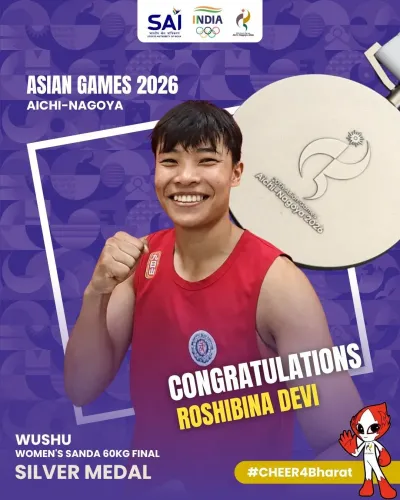
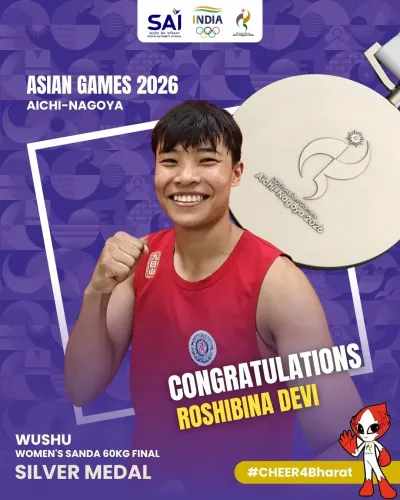
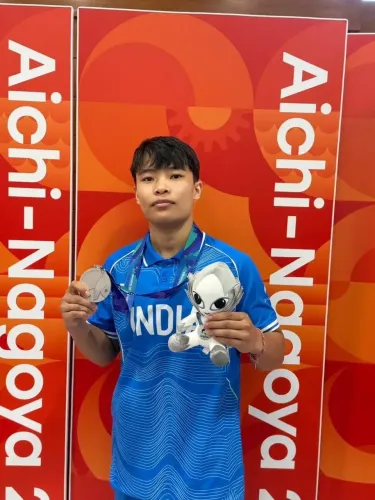
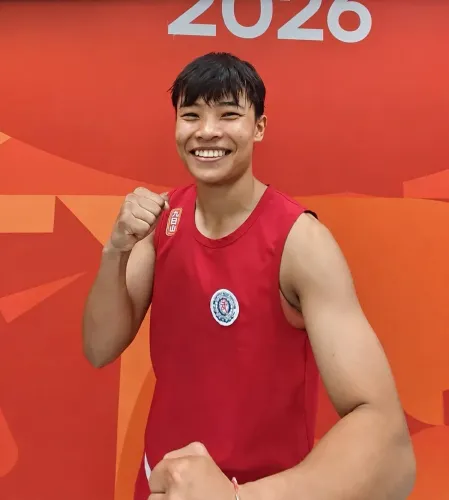
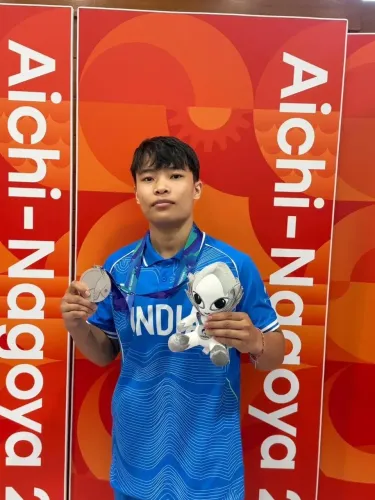
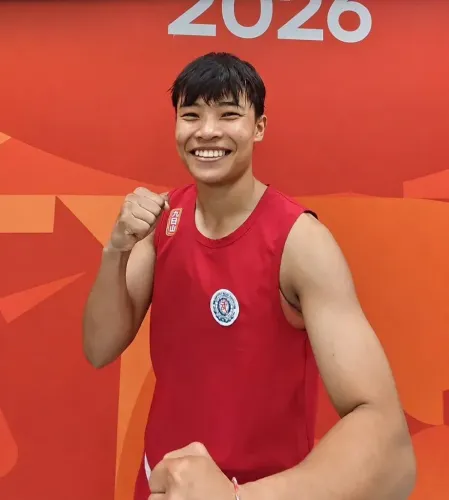
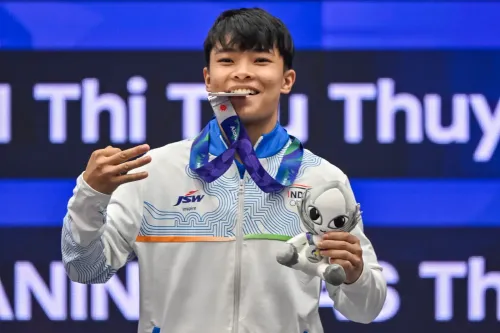
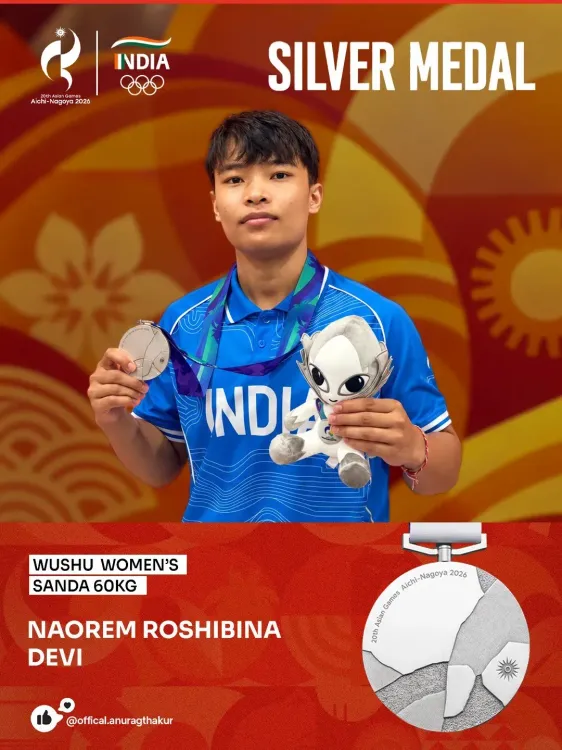
Naorem Roshibina Devi wins silver in Women's Sanda 60 kg at Asian Games 2026 in Aichi-Nagoya, completing a hat-trick of consecutive Games medals. BJP MP Anurag Thakur hailed the achievement as a landmark for India's Wushu programme and future generations of athletes.
Key Takeaways
Naorem Roshibina Devi won a silver medal in the Women's Sanda 60 kg event at the Asian Games 2026 in Aichi-Nagoya, Japan .
The result completes a hat-trick of consecutive Asian Games medals — across 2018 Jakarta-Palembang , 2023 Hangzhou , and 2026 Aichi-Nagoya .
BJP MP Anurag Thakur , a former Union Minister of Youth Affairs and Sports, publicly celebrated the achievement on 24 September 2026 .
Roshibina is among the most decorated Indian Wushu athletes in Asian Games history, operating in a discipline that does not feature at the Olympics.
Manipur remains the heartland of Indian Wushu talent, producing a high proportion of national-level competitors.
Three Asian Games, three medals — Naorem Roshibina Devi has done something no other Indian Wushu athlete has managed: built a consecutive-Games podium streak that now stretches across a decade of continental competition. BJP MP Anurag Thakur celebrated the feat on Thursday, 24 September 2026, calling it a 'hattrick' after Roshibina clinched a silver medal in the Women's Sanda 60 kg event at the Asian Games 2026 in Aichi-Nagoya, Japan.
Three Games, Three Podiums — the Sanda streak that defines a career
Roshibina first announced herself on the continental stage at the 2018 Jakarta-Palembang Asian Games, earning a medal in Sanda that put Indian Wushu on the map. She returned to the podium at the 2023 Hangzhou Asian Games, underlining that the first result was no fluke. The Aichi-Nagoya 2026 silver is the third chapter — and the one that cements her legacy as the most decorated Indian Wushu competitor in Asian Games history.
Thakur's post captured the arithmetic of that achievement with a single word: 'Hattrick!' He added that the win is 'a noteworthy achievement for the future generations,' framing it as a benchmark, not just a result.
Wushu's quiet rise in India's continental medal count
Wushu — a martial art encompassing both the performance-based Taolu and the combat-format Sanda — has emerged as one of India's more reliable medal sources at the Asian Games despite operating almost entirely outside the mainstream spotlight. Manipur, Roshibina's home state, has been the engine of that growth, producing a disproportionate share of the country's Wushu talent through a combination of grassroots culture and dedicated state-level infrastructure.
For the discipline's practitioners, a silver in the 60 kg Sanda category at a senior Asian Games is the pinnacle of the competitive calendar — Wushu does not currently feature at the Olympics. That makes Roshibina's hat-trick uniquely meaningful: there is no higher stage, and she has stood on its podium three times running.
A minister who tracked the journey — and why that matters
Thakur served as Union Minister of Youth Affairs and Sports from 2021 to 2024, a tenure that overlapped with the Hangzhou Games and the broader push to expand India's sporting infrastructure beyond cricket. His congratulatory post carries institutional memory — he is not simply a politician reacting to a trending result but someone who watched Wushu athletes navigate the national sports ecosystem from the inside. The public acknowledgement also signals continued political visibility for athletes in disciplines that rarely generate headline sponsorship or broadcast deals.
With India's final medal tally at Aichi-Nagoya 2026 still being compiled, Roshibina's silver stands as one of the Games' early defining moments for the Indian contingent — proof that consistency at the top is possible even in the sports the cameras rarely find.
Point of View
Wushu represents a structural opportunity: a sport where India competes at the highest tier of Asian competition without Olympic pressure reshaping funding priorities. Thakur's congratulations — coming from a former sports minister — keep this conversation alive in a media environment that rarely lingers on non-cricket medals. The hat-trick narrative is also politically useful ahead of any review of the national sports development framework, placing Manipur's sporting culture firmly in the national conversation.
NationPress
24 Sept 2026
Frequently Asked Questions
Who is Naorem Roshibina Devi?
Naorem Roshibina Devi is an Indian Wushu athlete from Manipur who competes in the Sanda category. She is one of India's most successful Wushu competitors at the Asian Games, having now won medals at three consecutive editions of the Games.
What medal did Roshibina Devi win at Asian Games 2026?
She won a silver medal in the Women's Sanda 60 kg event at the Asian Games 2026 held in Aichi-Nagoya, Japan.
What is Roshibina Devi's Asian Games hat-trick?
The 'hat-trick' refers to her winning medals at three consecutive Asian Games editions — the 2018 Jakarta-Palembang Games, the 2023 Hangzhou Games, and now the 2026 Aichi-Nagoya Games.
What is Wushu Sanda?
Wushu Sanda is the full-contact combat format of Wushu, a Chinese martial art. Athletes compete in weight categories, and it is a contested discipline at the Asian Games though not currently an Olympic sport.
Why did Anurag Thakur congratulate Roshibina Devi?
BJP MP Anurag Thakur, a former Union Minister of Youth Affairs and Sports, congratulated Roshibina on her silver medal at Asian Games 2026, describing it as a hat-trick and a noteworthy achievement for future generations of Indian athletes.