CM Samrat Choudhary Reviews Bihar's Mega Infrastructure Push
Synopsis
Bihar CM Samrat Choudhary chaired a sweeping infrastructure review on September 24, covering Ganga-Gandak-Kosi river works, the Buxar-Bhagalpur Greenfield Expressway, the 2,400 MW Pirpainti thermal plant, and PM-KUSUM solar scheme targets — signalling a coordinated push against the state's flooding and power deficits.
Key Takeaways
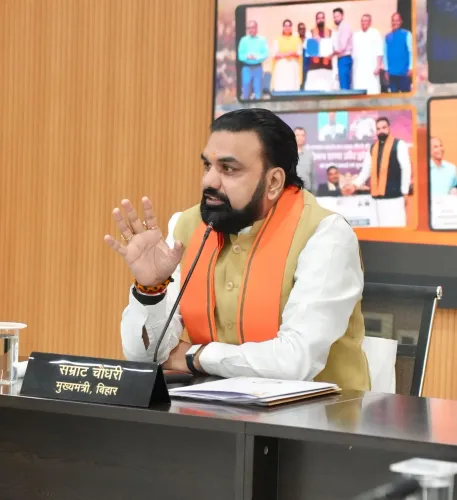
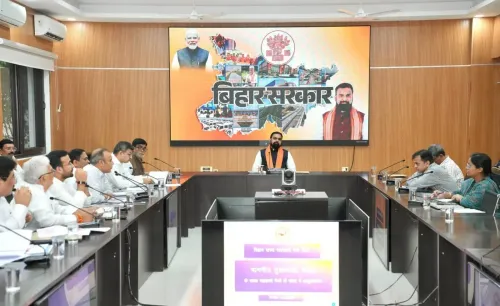
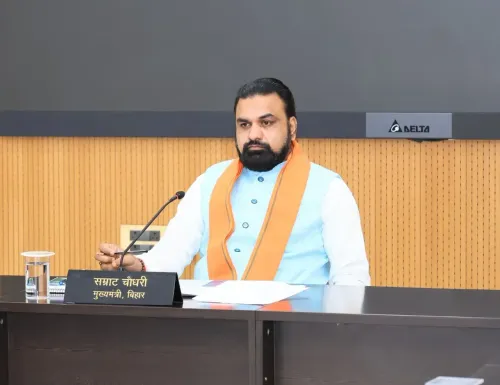
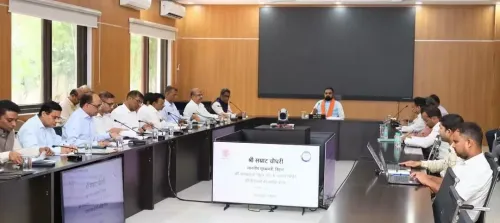
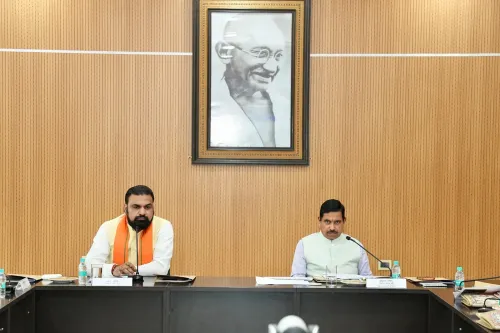
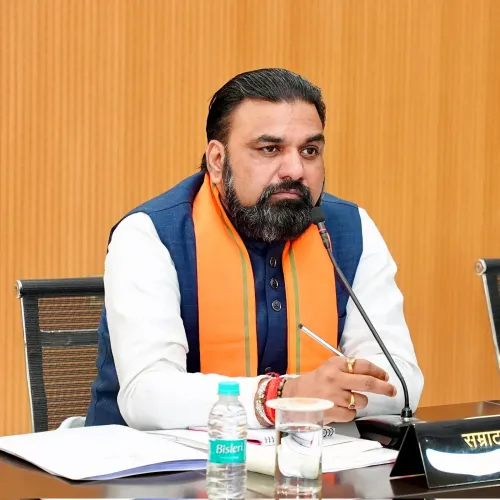
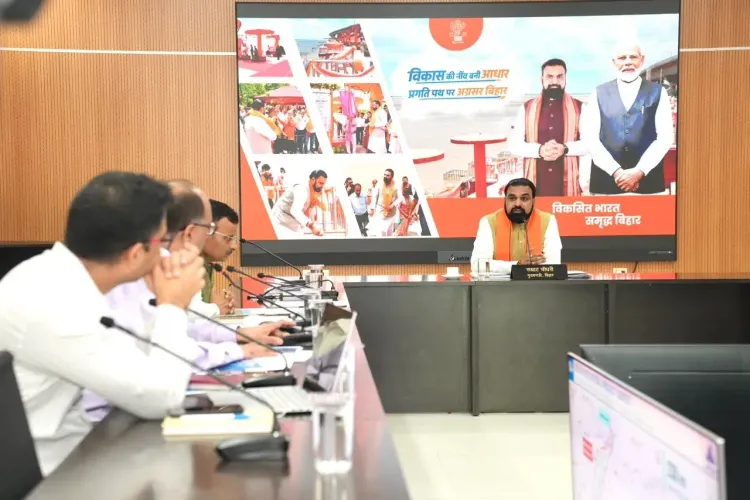
CM Samrat Choudhary chaired the review on September 24, 2026 at Sankalp Sabhagar, Lok Sewak Awas, Patna.
Flood-control works on the Ganga, Gandak, and Kosi rivers — Bihar's perennial disaster frontline — were among the projects assessed.
The Buxar-Bhagalpur Greenfield Expressway is designed to improve east-west road connectivity across the state.
The 2,400 MW Pirpainti Power Plant (3×800 MW) in Bhagalpur district could significantly raise Bihar's power generation capacity if built on schedule.
The PM-KUSUM scheme (launched 2019) targets solar-powered irrigation pumps for farmers and is under review for district-level implementation targets.
Land acquisition and tendering timelines for the expressway and power plant remain the key milestones to watch.
Four of Bihar's most consequential infrastructure bets — river flood works, a greenfield expressway, a giant thermal plant, and a solar farming scheme — landed on the same review table on Thursday, September 24, 2026, as Chief Minister Samrat Choudhary chaired a high-level assessment at Sankalp Sabhagar, Lok Sewak Awas in Patna.
What came under the CM's scanner
The session covered projects spanning the state's two deepest structural deficits: chronic flooding and a persistent power shortage. On the water front, ongoing works on the Ganga, Gandak, and Kosi river projects — Bihar's frontline defences against annual inundation — were assessed for progress and gaps. The Buxar-Bhagalpur Greenfield Expressway, a proposed multi-lane corridor that would stitch together the state's east and west ends, also featured prominently.
The most headline-grabbing entry was the 2,400 MW Pirpainti Power Plant (3×800 MW), sited in Bhagalpur district. Bihar's per-capita power consumption has long trailed the national average, and a project of this scale could reshape that arithmetic if it crosses the finish line. Rounding out the agenda was a review of implementation targets under the PM-KUSUM scheme, the 2019 central initiative that puts solar-powered pumps in farmers' hands and routes surplus power back to the grid.
Rivers, roads, and watts — Bihar's recurring infrastructure triangle
The combination is deliberate. Bihar governments have periodically bundled river management, road connectivity, and power generation into single review cycles — treating them as interdependent levers rather than departmental silos. Flooding disrupts agricultural supply chains that better roads are meant to serve; power deficits suppress the agri-processing economy the expressway is designed to unlock. Reviewing all four in one sitting signals that the current administration is treating them as a single development calculus.
The Ganga, Gandak, and Kosi projects carry the longest institutional memory — Bihar has run dedicated flood-management programmes on these rivers since at least the early 2000s, with embankment reinforcement and drainage works surviving multiple government transitions. The Kosi, which shifted course catastrophically in 2008, remains the most politically and humanly sensitive of the three.
PM-KUSUM's state-level test
Of the four agenda items, PM-KUSUM connects most directly to individual farmers. The scheme — launched by the Government of India in 2019 — subsidises solar pump installations and enables farmers to sell surplus electricity to state distribution companies. Implementation has been uneven across India; Bihar's district-wise targets for the coming financial year are among the specific numbers that will now come under fresh scrutiny following today's review.
Land, tenders, and timelines — the critical unknowns
The biggest variables hanging over both the Buxar-Bhagalpur Expressway and the Pirpainti plant are land acquisition and tendering schedules. Greenfield corridor projects in Bihar have historically hit delays at both stages. A review meeting signals political attention; it is the acquisition and bidding milestones in the months ahead that will tell whether that attention translates into concrete movement on the ground.
Bihar's ambition is clear. Whether the state's administrative machinery can turn four big-ticket project reviews into four big-ticket commissioning ceremonies — that is the question the next quarterly update will have to answer.
Point of View
Road, power, and solar reviews into a single high-level session is a governance signal as much as an administrative one — it telegraphs that the Bihar government views these as interlocking development constraints, not isolated department files. For a state that has cycled through infrastructure announcements with mixed delivery records, the real test will be whether this review triggers concrete land acquisition and tendering action on the Pirpainti plant and the Buxar-Bhagalpur corridor within the current fiscal year. PM-KUSUM's inclusion is particularly telling: it ties a central subsidy scheme to state credibility, putting Bihar's implementation machinery directly in the spotlight. If timelines slip again, the political cost will fall squarely on the CM's office.
NationPress
24 Sept 2026
Frequently Asked Questions
What is the Pirpainti Power Plant in Bihar?
The Pirpainti Power Plant is a planned 2,400 MW thermal power project (three units of 800 MW each) located in Bhagalpur district, Bihar . It was among the major projects reviewed by CM Samrat Choudhary on September 24, 2026.
What is the Buxar-Bhagalpur Greenfield Expressway?
The Buxar-Bhagalpur Greenfield Expressway is a proposed multi-lane highway corridor intended to improve east-west connectivity across Bihar, linking Buxar in the west to Bhagalpur in the east.
What is PM-KUSUM and how does it help Bihar farmers?
The PM-KUSUM scheme , launched by the Government of India in 2019 , subsidises solar pump installations for farmers and allows them to sell surplus solar power to distribution companies, reducing both irrigation costs and diesel dependence.
Why are Ganga, Gandak, and Kosi river projects important for Bihar?
These three rivers are the primary drivers of Bihar's annual flooding. The state has run dedicated embankment and drainage works on them since the early 2000s; the Kosi in particular caused a catastrophic course-shift in 2008, making river management a perennial political and humanitarian priority.
Who is Bihar's Chief Minister in 2026?
Samrat Choudhary is the Chief Minister of Bihar, who chaired the infrastructure review meeting at Sankalp Sabhagar, Patna, on September 24, 2026 .