Anurag Thakur pays tribute to Swami Vivekananda on death anniversary
Synopsis
BJP MP Anurag Thakur on 4 July 2026 paid homage to Swami Vivekananda on his death anniversary, calling him a divine carrier of Indian culture, Sanatan Dharma, and a source of inspiration for every Indian.
Key Takeaways
BJP MP Anurag Thakur posted a tribute to Swami Vivekananda on his death anniversary, 4 July 2026 .
Thakur described Vivekananda as a 'divine carrier of Indian culture and Sanatan Dharma', 'great spiritual guru', and 'eminent social reformer'.
Swami Vivekananda died on 4 July 1902 at Belur Math , near Kolkata , aged 39.
The Government of India declared 12 January — Vivekananda's birth anniversary — as National Youth Day in 1984 .
Vivekananda addressed the Parliament of the World's Religions in Chicago in 1893 , introducing Vedanta and Yoga to a global audience.
BJP leaders regularly invoke Vivekananda's philosophy to link contemporary politics with 19th-century Hindu reform thought.
BJP MP Anurag Thakur on Saturday, 4 July 2026, paid homage to Swami Vivekananda on the philosopher-monk's death anniversary, honouring him as a divine carrier of Indian culture and Sanatan Dharma, a great spiritual guru, and an inspiration for every Indian.
Context
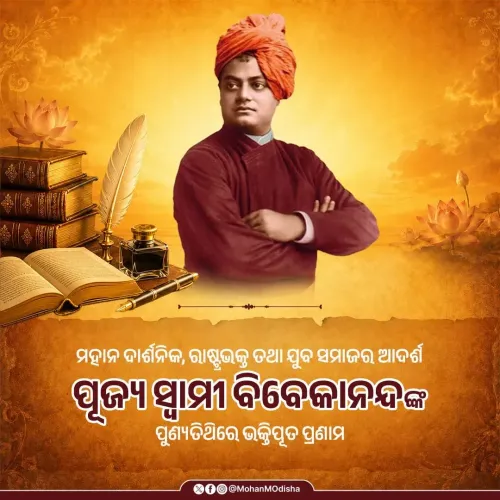
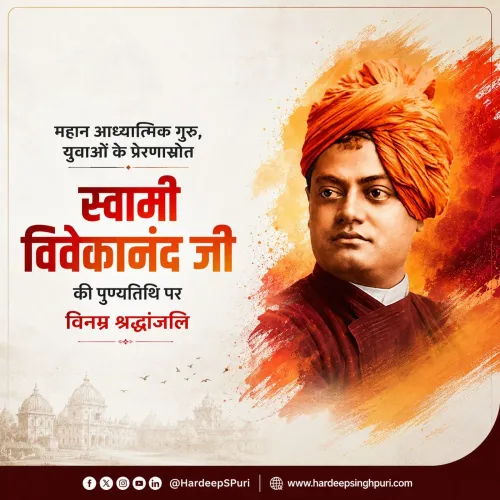
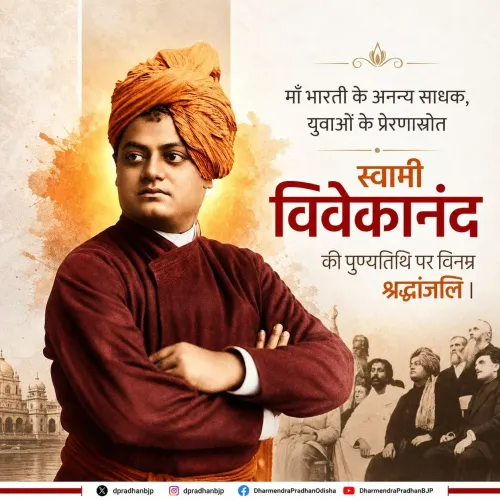
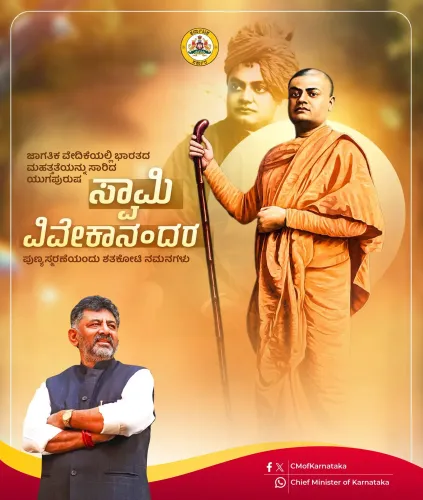
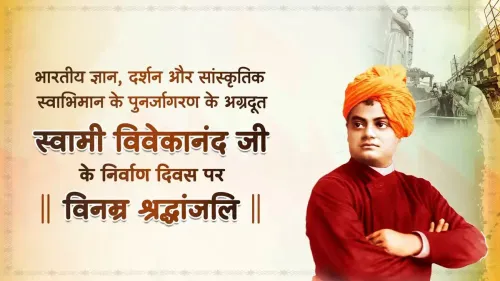
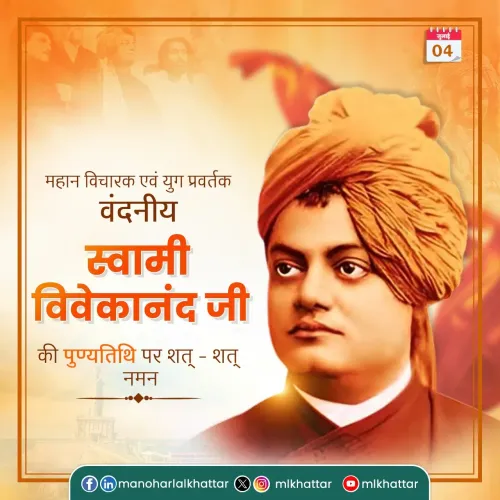
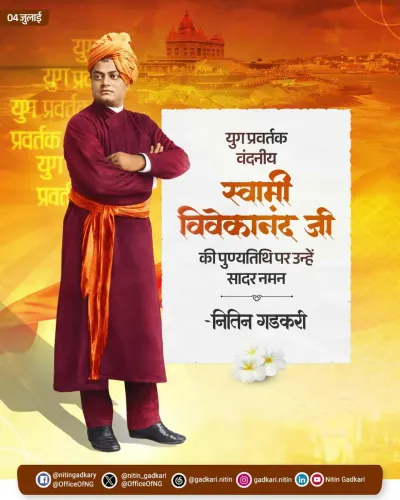
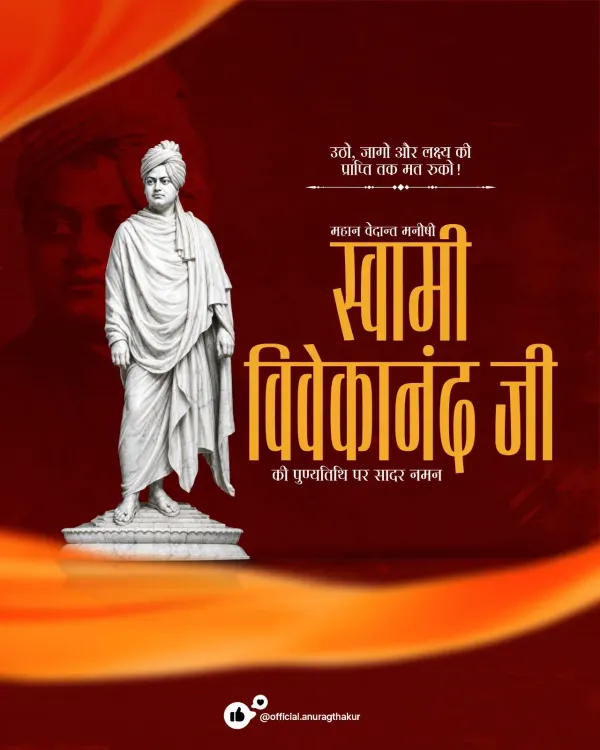
In his post, Thakur described Vivekananda as 'भारतीय संस्कृति व सनातन के दिव्य संवाहक' ('the divine carrier of Indian culture and Sanatan Dharma'), a 'skilled orator', 'great spiritual guru', 'eminent social reformer', and 'source of inspiration for every Indian'. The tribute was accompanied by an image and posted in Hindi on his official account.
Swami Vivekananda passed away on 4 July 1902 at Belur Math near Kolkata, at the age of 39. His death anniversary is observed annually across India by devotees, spiritual organisations, and public figures.
Policy Backdrop
The Government of India declared 12 January — Vivekananda's birth anniversary — as National Youth Day in 1984, to propagate his ideals of self-reliance, service, and national unity among young people. His writings and speeches have since been cited in education policy, youth development programmes, and cultural-heritage initiatives at both the central and state levels.
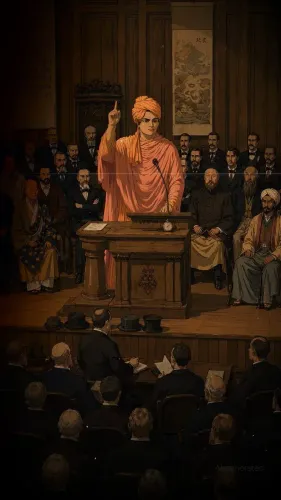
Vivekananda is widely remembered for his landmark address at the Parliament of the World's Religions in Chicago in 1893, where he introduced Vedanta and Yoga to a global audience and articulated a vision of universal spiritual brotherhood rooted in Hindu philosophy.
Stakeholders and Impact
Vivekananda's legacy resonates with a broad cross-section of Indian society — from devotees of Sanatan Dharma and followers of the Ramakrishna Mission to youth organisations, academic institutions, and policymakers who invoke his emphasis on character-building and national service.
Tributes by BJP leaders to Vivekananda form part of a recurring pattern in which his ideas on cultural self-confidence, seva (service), and national unity are invoked to connect contemporary political discourse with 19th-century Hindu reform movements. Thakur, as former Union Minister of Youth Affairs and Sports, has previously cited Vivekananda's philosophy in the context of youth empowerment programmes.
What's Next
Annual observances on 4 July and 12 January typically see commemorative events at Ramakrishna Mission centres, universities, and government institutions across the country. Policymakers and party leaders are expected to continue citing Vivekananda's ideals in upcoming youth, education, and cultural-heritage policy discussions. Any new central or state government initiative that draws explicitly on his teachings in these domains will be worth watching in the months ahead.
Point of View
The post signals an attempt to claim a broad ideological inheritance — one that encompasses both spiritual tradition and progressive reform. For a former youth-affairs minister, the homage also carries a policy resonance, given that Vivekananda's birth anniversary anchors India's National Youth Day. The pattern suggests that Vivekananda's legacy will remain a recurring reference point as the BJP frames its youth and cultural-heritage agenda in the run-up to future electoral cycles.
NationPress
4 Jul 2026
Frequently Asked Questions
When is Swami Vivekananda's death anniversary?
Swami Vivekananda's death anniversary falls on 4 July every year. He passed away on 4 July 1902 at Belur Math near Kolkata at the age of 39.
Why did Anurag Thakur pay tribute to Swami Vivekananda?
BJP MP Anurag Thakur paid tribute to mark Swami Vivekananda's death anniversary on 4 July 2026 , honouring him as a spiritual guru, social reformer, and source of inspiration for every Indian.
What is National Youth Day and why is it linked to Swami Vivekananda?
National Youth Day is observed on 12 January , Swami Vivekananda's birth anniversary. The Government of India designated the date in 1984 to promote his ideals of self-reliance, service, and national unity among young people.
What is Swami Vivekananda's connection to Sanatan Dharma?
Swami Vivekananda was a disciple of Ramakrishna and a leading exponent of Vedanta philosophy, which forms a core pillar of Sanatan Dharma. He is credited with articulating its universal spiritual dimensions at the 1893 Parliament of the World's Religions in Chicago.
Who is Anurag Thakur?
Anurag Thakur is a BJP Lok Sabha MP from Hamirpur, Himachal Pradesh and a former Union Minister of Information and Broadcasting and Youth Affairs and Sports.