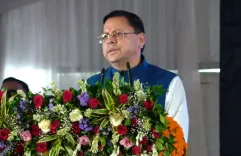
Jal Shakti Minister CR Paatil Champions Borewell Recharge

Synopsis
Union Jal Shakti Minister C. R. Paatil has called borewell recharge a vital tool for groundwater replenishment, linking it to PM Modi's 'Jal Hai To Kal Hai' message and the Catch the Rain campaign as India enters the 2026 monsoon season.
Key Takeaways
Union Jal Shakti Minister C.
Paatil posted on 4 July 2026 urging nationwide participation in rainwater conservation.
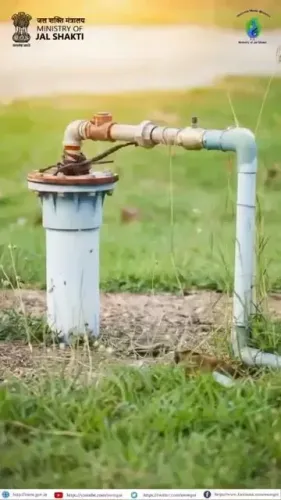
He highlighted borewell recharge as an effective method to strengthen groundwater levels and meet future water needs.
The post invoked PM Modi 's 'Jal Hai To Kal Hai' slogan and the Catch the Rain campaign as the policy framework.
The Catch the Rain campaign has run as an annual pre-monsoon drive since 2021 , promoting rainwater harvesting structures across districts.
The Ministry of Jal Shakti was formed in 2019 to unify India's fragmented water governance under a single ministry.
Farmers, rural households, and state water boards are the primary stakeholders in groundwater recharge efforts.
Union Jal Shakti Minister C. R. Paatil on Saturday, 4 July 2026, called for nationwide participation in rainwater conservation, highlighting borewell recharge as a critical tool to replenish groundwater and secure India's long-term water needs. The minister invoked Prime Minister Narendra Modi's 'Jal Hai To Kal Hai' ('If there is water, there is tomorrow') message and the Catch the Rain campaign as the policy foundation for this push.
Context
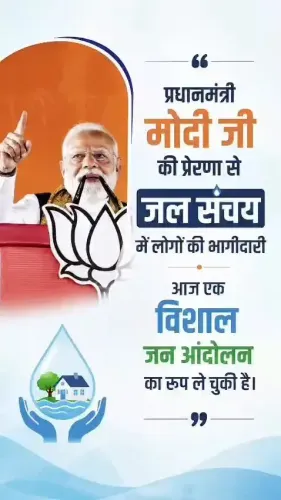
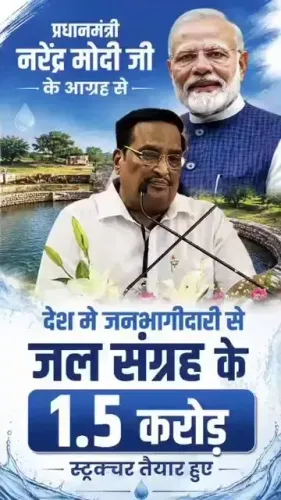
In his post, Paatil stated that PM Modi's slogan and the Catch the Rain campaign have transformed water conservation into a national movement driven by public participation. He wrote: 'Varsha ki pratyek boond ko sahejana aur use bhoojal tak pahunchana hum sabhi ki saajha zimmedari hai' — 'Saving every drop of rain and channelling it to groundwater is our shared responsibility.' The minister specifically flagged borewell recharge as an effective mechanism for strengthening aquifer levels.
The post was accompanied by a video and carried hashtags #JalHaiToKalHai, #CatchTheRain, #JalShakti, #WaterConservation, and #BorewellRecharge, signalling an organised ministry communication push ahead of the monsoon season.
Policy Backdrop
The Ministry of Jal Shakti was established in 2019 by merging the erstwhile ministries of Water Resources and Drinking Water and Sanitation, creating a unified body for water governance. In the same year, the Jal Jeevan Mission was launched with the goal of providing functional household tap connections to every rural home, with an explicit emphasis on source sustainability.
The Catch the Rain campaign, launched in 2021, runs as an annual pre-monsoon drive urging districts to build or restore rainwater harvesting structures. Borewell recharge — the practice of directing surface runoff into existing borewells to replenish aquifers — is one of the campaign's promoted techniques, particularly relevant in groundwater-stressed regions.
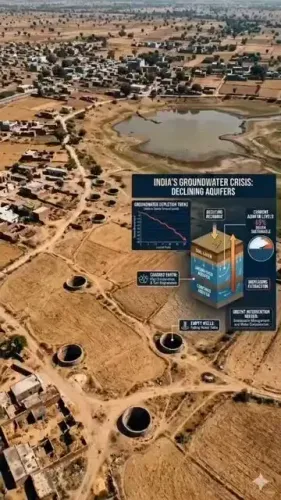
India's shift toward decentralised groundwater recharge reflects a broader policy evolution away from large-scale irrigation infrastructure toward community-led, climate-adaptive water security. Over-exploited groundwater blocks across several states have made aquifer replenishment a pressing national priority.
Stakeholders and Impact
Farmers and rural households stand to benefit most directly from improved groundwater levels, as agricultural irrigation and domestic water supply in large parts of India remain dependent on borewells. State water boards are the primary implementing agencies for recharge structures under centrally sponsored schemes.
Community participation — the cornerstone of Paatil's message — is seen as essential because borewell recharge at scale requires individual landowners and local bodies to modify existing wells and construct collection channels. The ministry's communication strategy, linking the technical practice to a patriotic and civic duty narrative, is aimed at accelerating grassroots adoption.
What's Next
With the 2026 monsoon underway, attention will turn to state-level progress reports on the number of borewell recharge structures commissioned this season. Any updates to groundwater legislation currently under parliamentary review could further shape how such conservation mandates are enforced at the district level.
As aquifer depletion continues to rank among India's most acute environmental challenges, the ministry's sustained messaging on borewell recharge suggests water conservation will remain a high-visibility policy theme through the monsoon months and into the next parliamentary session.
Point of View
The ministry frames groundwater replenishment as a civic and patriotic duty rather than a bureaucratic mandate. This approach is consistent with the BJP government's pattern of converting environmental policy into participatory campaigns with strong branding, as seen with Swachh Bharat and Jal Jeevan Mission. The timing, at the onset of the 2026 monsoon, signals that the ministry intends to use the rain season as a mobilisation window for measurable on-ground outcomes.
NationPress
4 Jul 2026
Frequently Asked Questions
What is borewell recharge and why is it important in India?
Borewell recharge is the practice of directing rainwater or surface runoff into existing borewells to replenish underground aquifers. It is important in India because groundwater is the primary source of irrigation and drinking water for hundreds of millions of people, and many aquifer blocks are classified as over-exploited due to excessive extraction.
What is the Catch the Rain campaign?
The Catch the Rain campaign is an annual pre-monsoon initiative launched in 2021 by the Ministry of Jal Shakti. It encourages states, districts, and communities to create or restore rainwater harvesting structures before the monsoon season begins, with the goal of maximising water storage and groundwater recharge.
What does 'Jal Hai To Kal Hai' mean?
'Jal Hai To Kal Hai' is a Hindi phrase meaning 'If there is water, there is tomorrow.' It is a water conservation slogan associated with Prime Minister Narendra Modi and is used by the Jal Shakti Ministry to promote public awareness about the importance of saving water.
Who is C. R. Paatil and what ministry does he head?
C. R. Paatil is a senior BJP leader and Union Minister of Jal Shakti. He previously served as president of the BJP's Gujarat state unit. As Jal Shakti Minister, he oversees water conservation, groundwater management, and drinking water supply policy at the central government level.
When was the Ministry of Jal Shakti formed?
The Ministry of Jal Shakti was formed in 2019 by merging the Ministry of Water Resources, River Development and Ganga Rejuvenation with the Ministry of Drinking Water and Sanitation, creating a unified body to coordinate India's water governance.