e-Jagriti platform digitises consumer complaints end-to-end: PM Modi
Synopsis
India's consumer justice system just got a significant digital overhaul. The e-Jagriti platform has unified four legacy systems into one AI-enabled portal, processed over 2.29 lakh cases since January 2025, and pushed disposal rates to 92.3% in FY 2025-26 — while also letting NRIs file complaints without returning to India.
Key Takeaways
PM Modi on 4 July highlighted the e-Jagriti platform , calling it a complete digitisation of the consumer complaint lifecycle.
Launched on 1 January 2025 , e-Jagriti merges four legacy systems — OCMS , e-Daakhil , NCDRC CMS , and CONFONET — into one AI-enabled, paperless platform.
Since launch, the platform has facilitated 2.29 lakh case filings and disposal of over 2.07 lakh cases , with an overall disposal rate of 90.75% .
In FY 2025-26 , the disposal rate rose to 92.3% , up from 89.47% in FY 2024-25.
NRIs can now file consumer complaints without returning to India.
Prime Minister Narendra Modi on Saturday, 4 July highlighted the e-Jagriti platform, stating it addresses multiple challenges by digitising the entire lifecycle of a consumer complaint — from filing to final disposal. Modi shared the remarks while amplifying an article authored by Union Minister Pralhad Joshi on the platform developed by the Department of Consumer Affairs.
What the Platform Does
Launched on 1 January 2025, e-Jagriti has consolidated four legacy applications — OCMS, e-Daakhil, the National Consumer Disputes Redressal Commission (NCDRC) CMS, and CONFONET — into a single AI-enabled, paperless platform. The integration eliminates the fragmented software infrastructure that previously slowed consumer redressal across the country.
Since its launch, the platform has facilitated the filing of more than 2.29 lakh consumer cases and the disposal of over 2.07 lakh cases, achieving an overall disposal rate of 90.75%. Consumers can now access justice from anywhere in India and, notably, from abroad — a provision that has specifically benefited Non-Resident Indians (NRIs) who no longer need to return to India to pursue consumer complaints.
Why the Reform Was Necessary
In his article, Minister Pralhad Joshi argued that consumers today transact across e-commerce platforms, digital payment systems, and online marketplaces 'at an unprecedented scale.' The traditional consumer justice ecosystem — characterised by physical filings, manual scrutiny, fragmented software, and in-person hearings — was, according to Joshi, 'increasingly becoming inadequate.'
Joshi further noted that ensuring consumer rights in the digital age required more than legislative reforms; it demanded 'a complete transformation in the way justice itself was delivered.' The e-Jagriti platform is positioned as that structural response, following extensive consultations with stakeholders.
Performance Data: FY 2025-26
During Financial Year 2025-26, consumer commissions recorded significant gains. Over 1.65 lakh cases were registered and more than 1.52 lakh cases were disposed of. The disposal rate climbed to 92.3%, up from 89.47% in FY 2024-25.
Even in the fourth quarter of FY 2025-26 (January–March 2026), the system held steady — 34,600 cases were disposed of against 38,944 filings, yielding a disposal rate of 88.84%, higher than the corresponding quarter of the previous year, according to official data.
Broader Significance
The e-Jagriti rollout is part of a wider push to bring structural digital reform to citizen-facing justice delivery. Modi noted that the platform places consumer justice among the sectors undergoing this transformation. This comes amid a broader government emphasis on paperless governance and AI-assisted public services. With disposal rates consistently above 88% across quarters, the platform's early metrics suggest meaningful operational improvement — though independent assessments of case quality and consumer satisfaction remain to be seen.
Point of View
But the metric measures throughput, not justice quality — it says nothing about how many complainants actually received satisfactory redress or enforcement of orders. The consolidation of four legacy systems into one is a genuine administrative achievement, and NRI access is a meaningful inclusion. But as consumer disputes increasingly involve large e-commerce and fintech platforms with deep legal resources, the real test of e-Jagriti will be whether it can deliver timely, enforceable outcomes against well-resourced defendants — not just close files efficiently.
NationPress
4 Jul 2026
Frequently Asked Questions
What is the e-Jagriti platform?
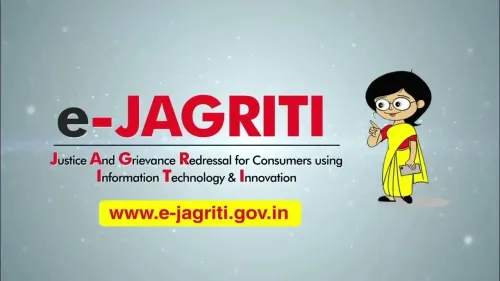
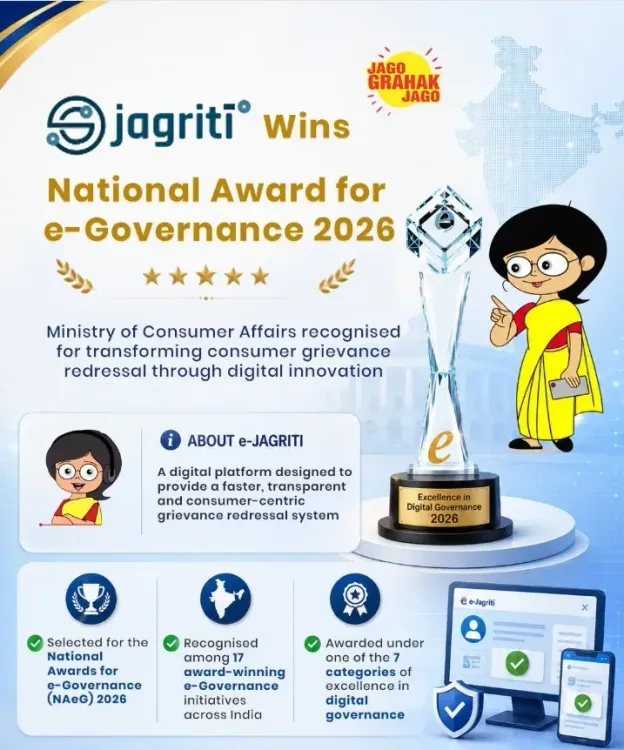
e-Jagriti is an AI-enabled, paperless consumer redressal platform launched on 1 January 2025 by the Department of Consumer Affairs. It unifies four legacy systems — OCMS, e-Daakhil, NCDRC CMS, and CONFONET — into a single portal that digitises the entire lifecycle of a consumer complaint.
How many cases has e-Jagriti handled since its launch?
Since its launch in January 2025, e-Jagriti has facilitated the filing of more than 2.29 lakh consumer cases and the disposal of over 2.07 lakh cases, achieving an overall disposal rate of 90.75%.
What was the consumer complaint disposal rate in FY 2025-26?
In FY 2025-26, consumer commissions achieved a disposal rate of 92.3%, a rise from 89.47% in FY 2024-25. Over 1.52 lakh cases were disposed of against 1.65 lakh registered during the year.
Can NRIs use the e-Jagriti platform to file consumer complaints?
Yes. The e-Jagriti platform enables Non-Resident Indians to file and pursue consumer complaints without needing to return to India, a significant accessibility improvement over the previous system.
Why was e-Jagriti created?
According to Union Minister Pralhad Joshi, the traditional consumer justice system — with physical filings, manual processes, and in-person hearings — was becoming inadequate as consumers increasingly transact on e-commerce and digital payment platforms. e-Jagriti was developed after extensive stakeholder consultations to deliver a structurally reformed, digital-first justice system.