CM Dhami vows to reach last person in Uttarakhand's hills
Synopsis
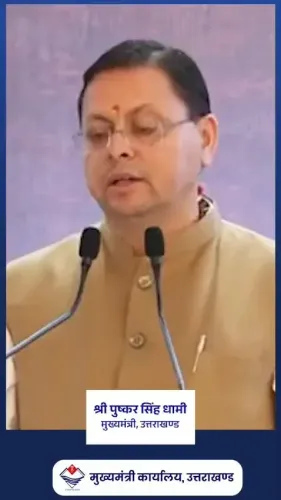
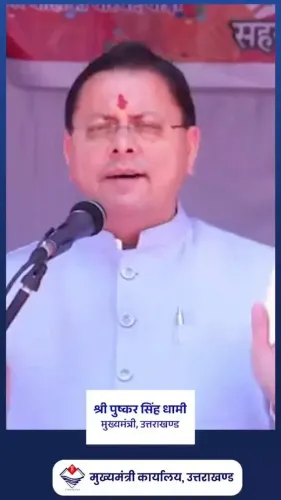
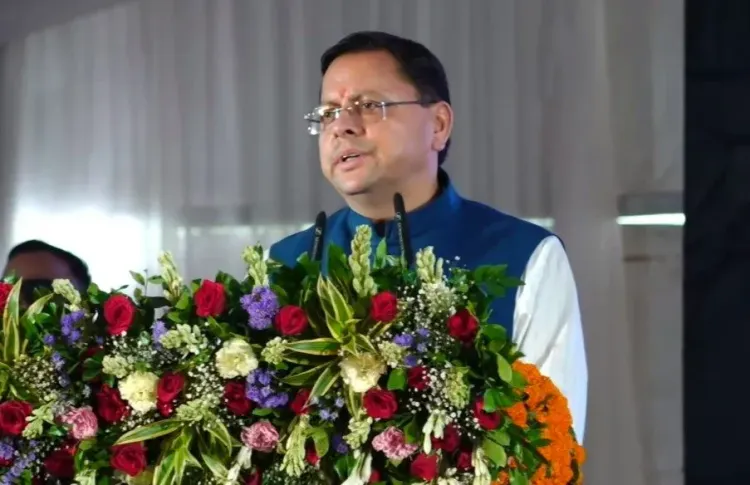
Chief Minister Pushkar Singh Dhami, in a statement shared by the official CMO account on 4 July 2026, declared that his satisfaction as CM lies not in tenure but in ensuring development reaches every poor citizen at Uttarakhand's farthest corners.
Key Takeaways
CM Dhami stated his measure of success is not years in office but development reaching the last person in Uttarakhand .
He pledged not to rest until every poor person in the state has a smile on their face, calling himself 'your son, your brother.' Uttarakhand , formed in 2000 , continues to face terrain-driven development gaps between plains and remote high-altitude districts.
Districts such as Pithoragarh , Chamoli , and Uttarkashi remain key benchmarks for last-mile delivery under both state and central schemes.
Central programmes including PMGSY-II and the Aspirational Districts Programme have specifically targeted Uttarakhand's most backward blocks.
The Chief Minister's Office of Uttarakhand, on Saturday, 4 July 2026, shared a statement from Chief Minister Pushkar Singh Dhami reaffirming his personal commitment to last-mile development across the state's most remote regions. The post, shared on the official CMO account, frames the CM's measure of success not in tenure but in inclusive growth reaching every corner of Uttarakhand.
Context
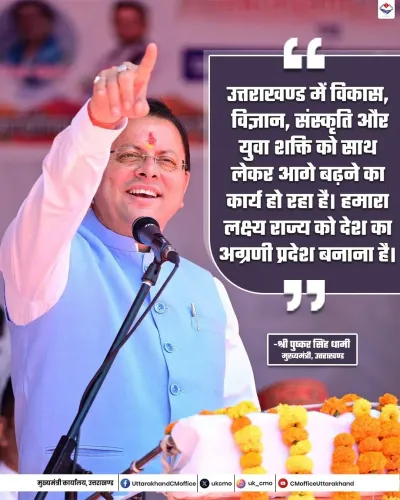
CM Dhami was quoted as saying: 'Mere jeevan ki santushti is baat mein nahin hai ki main kitne saal Mukhyamantri raha.' ['My life's satisfaction does not lie in how many years I served as Chief Minister.'] He added that real satisfaction would come only when 'the light of development reaches the last person standing at the farthest corner of Uttarakhand.' The statement, delivered in Hindi, carries an emotional register — addressing citizens as 'your son, your brother' — signalling a direct, personal bond with the electorate.
The CM further pledged: 'Until a smile comes on the face of every poor person in Uttarakhand, your son, your brother will not sit in peace.' The language echoes a long-standing idiom in Indian governance discourse of reaching the antim vyakti — the last person — a phrase popularised in post-independence political thought.
Policy Backdrop
Uttarakhand was carved out of Uttar Pradesh in November 2000 with an explicit mandate to accelerate development in its hilly and border regions, which had historically lagged behind the plains. The state's terrain — spanning high-altitude districts such as Pithoragarh, Chamoli, and Uttarkashi — poses persistent logistical challenges for road connectivity, power supply, and welfare delivery.
Post-2014 central programmes including the Pradhan Mantri Gram Sadak Yojana Phase II (PMGSY-II) and the Aspirational Districts Programme specifically targeted Uttarakhand's most backward blocks for basic infrastructure investment. CM Dhami, who has been in office since March 2021 and was re-elected in 2022, has publicly focused his administration on anti-encroachment drives, infrastructure expansion, and improving last-mile service delivery in hill districts.
Stakeholders and Impact
The statement is directed most immediately at households in Uttarakhand's remote border blocks — communities that face the steepest gaps in road access, healthcare, and economic opportunity. These residents have historically been the intended but underserved beneficiaries of successive state and central development schemes.
For the broader electorate, the framing of governance as a personal, familial obligation — 'your son, your brother' — is a deliberate rhetorical choice aimed at building trust beyond transactional politics. Civil society groups and opposition parties in the state are likely to hold this public pledge as a benchmark against which actual infrastructure and welfare delivery will be measured.
What's Next
Policy watchers will look to the roll-out status of ongoing road and power projects in Pithoragarh, Chamoli, and Uttarkashi districts as the most concrete test of this stated commitment. Any new district-level monitoring dashboards or targeted welfare announcements in the upcoming budget session would signal whether the rhetoric is being translated into administrative action.
The statement sets a self-defined standard for CM Dhami's tenure: inclusive development measured not by years in office but by visible improvement in the lives of Uttarakhand's poorest and most geographically isolated citizens. That standard will shape political accountability in the state for the foreseeable future.
Point of View
He pre-empts criticism about pace of delivery while setting an aspirational, difficult-to-falsify standard. The 'last person' framing fits squarely within a post-2014 national political vocabulary of inclusive development, allowing the CM to align himself with that broader arc. Whether this rhetoric translates into measurable outcomes in Uttarakhand's border blocks will be the defining test of his second term.
NationPress
4 Jul 2026
Frequently Asked Questions
What did CM Pushkar Singh Dhami say about his role as Chief Minister?
CM Dhami said his life's satisfaction does not come from how many years he serves as Chief Minister, but from the day development reaches the last person at the farthest corner of Uttarakhand.
Which districts in Uttarakhand face the most development challenges?
High-altitude border districts such as Pithoragarh, Chamoli, and Uttarkashi face the steepest gaps in road connectivity, power supply, and welfare delivery due to difficult terrain.
When did Pushkar Singh Dhami become Chief Minister of Uttarakhand?
Pushkar Singh Dhami became Chief Minister of Uttarakhand in March 2021 and was re-elected following the 2022 state assembly elections.
What central schemes target development in Uttarakhand's remote areas?
Central programmes including PMGSY-II (Pradhan Mantri Gram Sadak Yojana Phase II) and the Aspirational Districts Programme have specifically targeted Uttarakhand's most backward and remote blocks for infrastructure investment.
Why was Uttarakhand formed as a separate state?
Uttarakhand was carved out of Uttar Pradesh in November 2000 with an explicit mandate to accelerate development in its hilly and border regions, which had historically lagged behind the plains.