Anurag Thakur Pays Tribute to Ahilyabai Holkar on Her Jayanti
Synopsis
BJP MP Anurag Thakur marked Lokmata Ahilyabai Holkar's jayanti on 31 May 2026, honouring the 18th-century Malwa ruler for restoring Kashi Vishwanath, Somnath, Trimbakeshwar and Ayodhya shrines and dedicating her reign to justice, women's empowerment and cultural preservation.
Key Takeaways
BJP MP Anurag Thakur posted a tribute to Lokmata Ahilyabai Holkar on her birth anniversary on 31 May 2026 .
Thakur credited Holkar with the revival of Kashi Vishwanath Temple , Somnath Temple , Trimbakeshwar , and shrines at Ayodhya .
Holkar ruled the Malwa kingdom from approximately 1767 to 1795 and is recognised for large-scale temple restoration and public works across India.
The Kashi Vishwanath Dham Corridor was launched in 2019 , and the Ram Mandir at Ayodhya was consecrated in January 2024 , both framed as continuations of historical temple-restoration traditions.
Thakur's tribute reflects a broader BJP practice of invoking pre-colonial Hindu rulers to reinforce the government's heritage conservation and nari shakti messaging.
BJP MP Anurag Thakur on Sunday, 31 May 2026, paid tribute to Lokmata Ahilyabai Holkar on her birth anniversary, honouring the 18th-century Malwa ruler as an embodiment of sacrifice, justice, and women's empowerment whose legacy continues to inspire generations.
Context
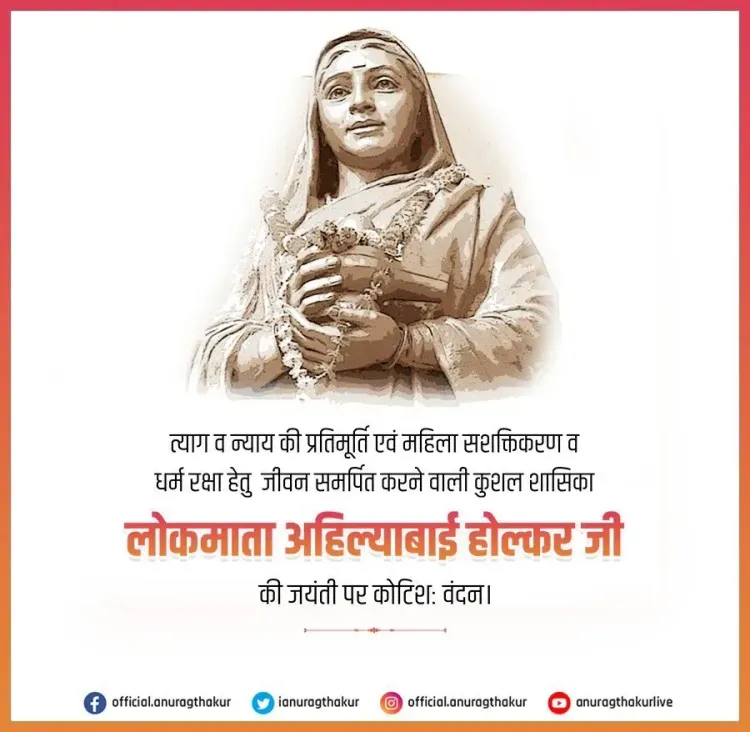
In his post, Thakur described Ahilyabai Holkar as 'tyaag va nyaay ki pratimoorti' (an embodiment of sacrifice and justice) and credited her with dedicating her life to women's empowerment and the protection of dharma. He noted that her contributions — spanning cultural preservation, religious restoration, and the promotion of art — would continue to fill coming generations with pride and inspiration.
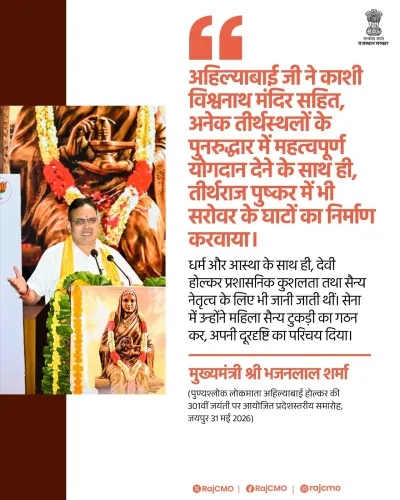
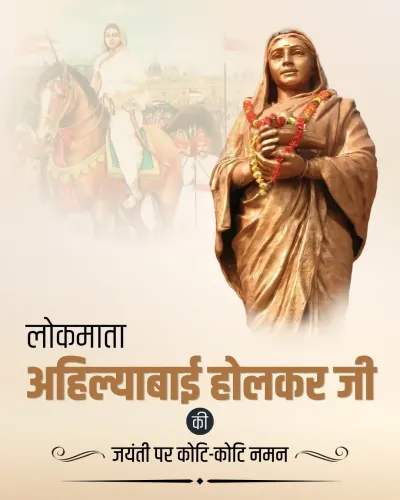
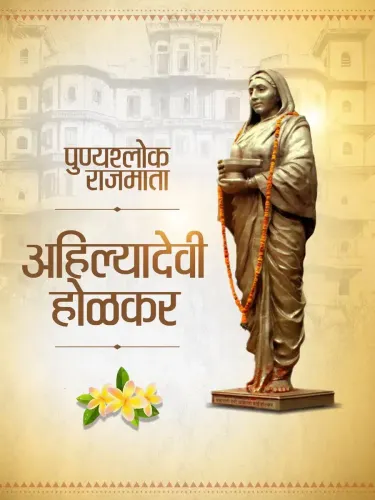
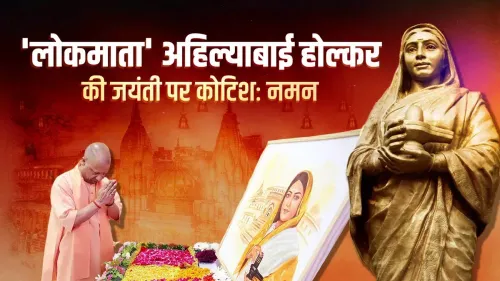
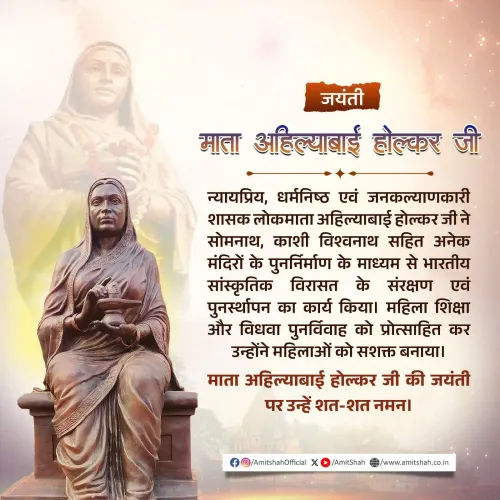
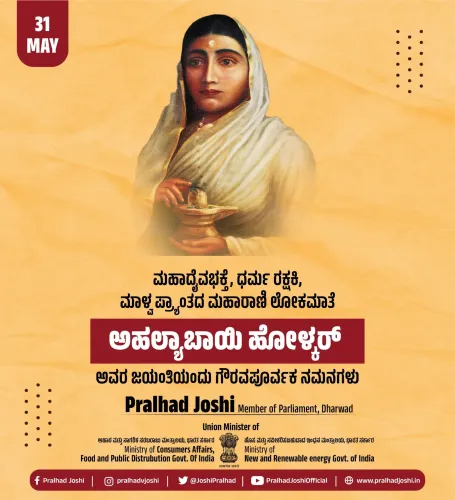
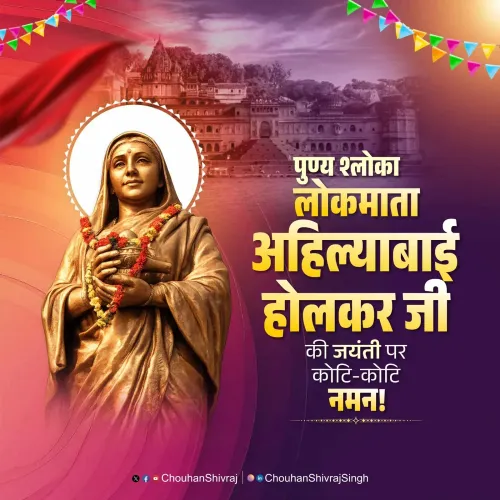
Thakur specifically cited her role in the revival of Kashi Vishwanath Temple in Varanasi, Somnath Temple in Gujarat, Trimbakeshwar in Maharashtra, and shrines in Ayodhya as among her most enduring achievements. The post was accompanied by an image marking the occasion.
Policy Backdrop
Ahilyabai Holkar, who ruled the Malwa kingdom from roughly 1767 to 1795, is widely regarded as one of India's most capable pre-colonial administrators. She is credited with funding the construction or restoration of temples, ghats, wells, and rest-houses across the subcontinent, including the Kashi Vishwanath Temple whose 18th-century reconstruction is formally attributed to her patronage.
The sites Thakur invoked carry contemporary policy significance. The Kashi Vishwanath Dham Corridor was launched by the central government in 2019 to redevelop the temple precinct in Varanasi. The Ram Mandir at Ayodhya was consecrated in January 2024 following a Supreme Court-mandated process. Both projects have been presented by the government as acts of civilisational restoration — a frame that resonates with Holkar's own historical legacy of temple renewal.
Stakeholders and Impact
Tributes to Ahilyabai Holkar on her jayanti draw participation from across the political spectrum, but the BJP has made her commemoration a prominent part of its cultural calendar, aligning her story with the party's broader emphasis on pre-colonial Hindu rulers and heritage conservation. Her identity as a sovereign female administrator also allows leaders to invoke the nari shakti (women's power) theme that has been central to government messaging.
Heritage bodies, temple trusts, and Hindu devotees at pilgrimage sites from Varanasi to Somnath regard Holkar as a foundational patron. The Ministry of Culture has increased budgetary allocations for monument conservation since 2014, and figures such as Holkar are frequently cited to provide historical grounding for those expenditures.
What's Next
Thakur's post is part of a recurring pattern in which BJP leaders commemorate pre-colonial rulers who undertook temple reconstruction, reinforcing the ideological continuity between historical patronage and the present government's pilgrimage-corridor programme. Progress reports on ongoing redevelopment work at Trimbakeshwar and other sites named in the post are expected to feature in Ministry of Culture communications in the months ahead.
As Ahilyabai Holkar's jayanti gains a higher public profile, her legacy as both an administrator and a cultural custodian is likely to remain a touchstone in debates about India's heritage policy and the place of women in its historical memory.
Point of View
Somnath, Trimbakeshwar, and Ayodhya in a single post, Thakur draws a direct line between Holkar's patronage and projects the BJP has championed in office. The simultaneous invocation of women's empowerment allows the party to claim a pre-colonial precedent for its nari shakti narrative. Such messaging is likely to intensify as corridor projects at several of these sites move toward completion milestones.
NationPress
19 Sept 2026
Frequently Asked Questions
Who was Ahilyabai Holkar and why is she remembered?
Ahilyabai Holkar was the ruler of the Malwa kingdom from roughly 1767 to 1795, celebrated for her just administration, extensive public works, and the restoration of Hindu temples across India, including the Kashi Vishwanath Temple in Varanasi and the Somnath Temple in Gujarat.
Which temples did Ahilyabai Holkar restore?
Among the most notable are the Kashi Vishwanath Temple in Varanasi, the Somnath Temple in Gujarat, Trimbakeshwar in Maharashtra, and several shrines in Ayodhya, along with numerous other temples, ghats, and rest-houses across the subcontinent.
Why did Anurag Thakur post a tribute to Ahilyabai Holkar?
Thakur posted the tribute on her birth anniversary (jayanti) on 31 May 2026, honouring her legacy of sacrifice, justice, women's empowerment, and cultural preservation — themes that align with the BJP's broader heritage and nari shakti messaging.
What is the Kashi Vishwanath Dham Corridor and how does it relate to Ahilyabai Holkar?
The Kashi Vishwanath Dham Corridor is a central government project launched in 2019 to redevelop the precinct around the Kashi Vishwanath Temple in Varanasi — the same temple whose 18th-century reconstruction is credited to Ahilyabai Holkar's patronage.
What is Ahilyabai Holkar's connection to women's empowerment in Indian political discourse?
As a female sovereign who exercised full administrative and military authority in the 18th century, Holkar is frequently cited by political leaders as a historical precedent for women's leadership, making her a recurring symbol in the government's nari shakti narrative.