Anurag Thakur targets Rahul Gandhi over paper leaks in Opp-ruled states
Synopsis
BJP MP Anurag Thakur on 23 July 2026 listed paper-leak incidents across Congress and opposition-ruled states — J&K, Himachal, Jharkhand, Telangana, West Bengal, Punjab, Kerala and Karnataka — and asked Congress leader Rahul Gandhi why his criticism of exam irregularities is selective.
Key Takeaways
Anurag Thakur on 23 July 2026 listed paper leaks in at least eight states and union territories governed by Congress or its allies.
States cited include Jammu and Kashmir (Congress-NC), Himachal Pradesh (Congress), Jharkhand (Congress-JMM), Telangana (Congress-CPI), West Bengal (TMC), Punjab , Kerala , and Karnataka (Congress).
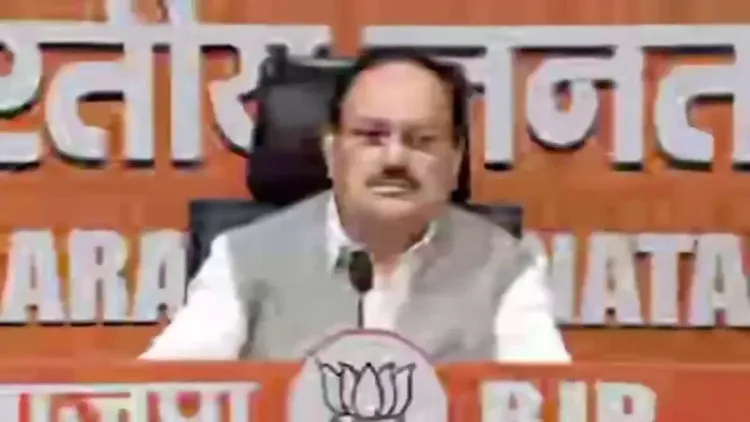
Thakur directly asked Rahul Gandhi , Leader of the Opposition, why his stance on exam paper leaks is 'selective.' The post was also tagged to BJP national president J.P.
Nadda , signalling possible party-level escalation.
The National Education Policy 2020 had called for stronger examination systems, but state-level implementation remains inconsistent.
Millions of students and job aspirants are affected each year when competitive examinations are compromised by leaks or irregularities.
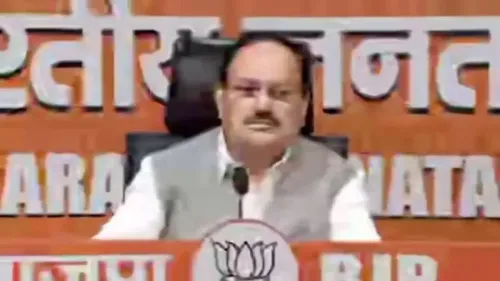
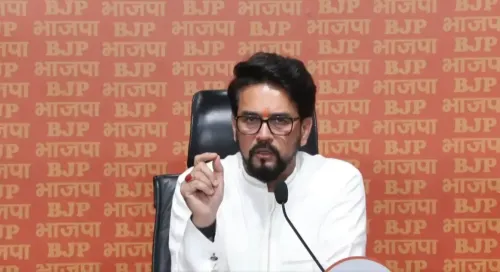
BJP MP Anurag Thakur on Thursday, 23 July 2026, publicly challenged Congress leader Rahul Gandhi over what he called a 'selective' stance on examination paper leaks, listing incidents across multiple states governed by the Congress and its allies — and tagging BJP national president J.P. Nadda in the post.
Context
In a detailed post on X, Thakur catalogued a series of paper-leak incidents in opposition-ruled states. He pointed to the Service Selection Board exam leak in Jammu and Kashmir, where a Congress-National Conference coalition governs, and the Himachal Pradesh School Education Board exam leak under a Congress government. He further cited Jharkhand, where the Congress-JMM alliance is in power, alleging that Hindi and Science papers of the Jharkhand Academic Council (JAC) were leaked.
Thakur's post also referenced a Telangana intermediate language exam leak under a Congress-CPI-backed government, a Staff Selection Commission (SSC) language exam leak, a B.Ed. paper leak in Tamil Nadu when an opposition government was in power, a police constable recruitment exam leak in West Bengal under the Trinamool Congress, a Punjab Subordinate Services Selection Board Group-D exam leak, alleged irregularities in 26 Kerala PSC examinations, and a POC exam leak in Congress-ruled Karnataka.
Policy Backdrop
Paper leaks in recruitment and academic examinations have emerged as a recurring governance concern across India, cutting across party lines and state boundaries. The National Education Policy 2020 specifically called for strengthening examination systems and curbing malpractices in both academic and recruitment tests, but implementation at the state level has remained uneven.
The broader pattern reflects deep public anxiety about the integrity of competitive examinations — a critical gateway for millions of students and job aspirants each year. Political parties have routinely traded accusations over such lapses, with the debate frequently eclipsing substantive discussion about systemic reforms.
Stakeholders and Impact
The most directly affected are students and job aspirants who invest years preparing for these examinations. A compromised exam forces re-tests, delays appointments, and erodes public trust in merit-based selection — concerns that resonate strongly in states with high youth unemployment.
Thakur's post, addressed pointedly to Rahul Gandhi and copied to J.P. Nadda, frames the issue as a political accountability question: 'मैं विपक्ष के नेता राहुल गांधी जी से पूछना चाहूंगा कि इस मुद्दे पर आपका रवैया चयनात्मक क्यों है?' ('I would like to ask Leader of the Opposition Rahul Gandhi why his stance on this issue is selective?'). The rhetorical framing is designed to blunt Congress's criticism of examination lapses in BJP-governed states by presenting a counter-list of incidents in non-BJP states.
What's Next
The exchange signals that examination integrity is likely to remain a flashpoint in parliamentary and public discourse. Calls for central legislation establishing uniform standards for state-level recruitment and academic examinations have grown louder after successive leak controversies, and the issue could find renewed traction in upcoming parliamentary sessions.
Whether the BJP leadership, now looped in via the tag to J.P. Nadda, escalates this into a formal legislative or parliamentary committee push will be closely watched by student groups and civil society organisations advocating for a transparent national examination framework.
Point of View
He seeks to neutralise Congress's ability to use examination integrity as a campaign issue against the BJP. The direct address to Rahul Gandhi — with J.P. Nadda tagged — suggests this is a coordinated party messaging move, not just an individual intervention. The broader arc points to examination integrity becoming a sustained political battleground ahead of state elections, with both sides weaponising selective accountability rather than converging on systemic reform. Until a credible, cross-party legislative consensus emerges on examination standards, the cycle of accusation and counter-accusation is unlikely to break.
NationPress
23 Jul 2026
Frequently Asked Questions
What did Anurag Thakur say about paper leaks in opposition-ruled states?
Anurag Thakur listed paper-leak incidents in Jammu and Kashmir, Himachal Pradesh, Jharkhand, Telangana, West Bengal, Punjab, Kerala, and Karnataka — all governed by Congress or its allies — and asked Rahul Gandhi why his criticism of exam irregularities is selective.
Which states were mentioned in Anurag Thakur's paper leak post?
The post named Jammu and Kashmir (Service Selection Board), Himachal Pradesh (School Education Board), Jharkhand (JAC Hindi and Science), Telangana (Intermediate language exam), West Bengal (police constable recruitment), Punjab (PSSSB Group-D), Kerala (26 PSC exams), and Karnataka (POC exam).
Why did Anurag Thakur tag J.P. Nadda in the paper leak post?
Thakur tagged BJP national president J.P. Nadda at the end of the post, suggesting the message was intended to be amplified at the party level and may signal a coordinated BJP push on the examination integrity issue.
What is Rahul Gandhi's position on exam paper leaks?
Rahul Gandhi has previously criticised paper leaks and exam irregularities in BJP-ruled states. Thakur's post challenges him to apply the same standard to states where Congress and its allies are in power.
Is there a central law against paper leaks in India?
India enacted the Public Examinations (Prevention of Unfair Means) Act in 2024 to address paper leaks in central recruitment exams. However, state-level examinations are governed by individual state laws, and calls for a uniform national framework continue to grow.