Goyal flags paper leaks in opposition states, targets Rahul
Synopsis
Union Minister Piyush Goyal amplified BJP chief J P Nadda's statement listing alleged examination paper leaks across Congress-governed and opposition-ruled states, directly asking Rahul Gandhi why his concern on the issue is 'selective'. The post names Jammu and Kashmir, Himachal Pradesh, Jharkhand, Telangana, West Bengal, Punjab, Kerala, Karnataka, and Tamil Nadu.
Key Takeaways
Piyush Goyal shared J P Nadda 's statement on 22 July 2026 listing paper leaks across multiple opposition-governed states.
States cited include Jammu and Kashmir, Himachal Pradesh, Jharkhand, Telangana, West Bengal, Punjab, Kerala, Karnataka , and Tamil Nadu .
The post directly challenges Rahul Gandhi , Leader of the Opposition, to explain what it calls a 'selective' approach to the paper-leak issue.
Examinations affected range from state board and recruitment tests to PSC and SSC language papers, impacting lakhs of aspirants.
The BJP has framed the pattern as a Congress governance failure ahead of potential state electoral contests.
The central government passed the Public Examinations (Prevention of Unfair Means) Act, 2024 , but state-level exams remain under state jurisdiction.
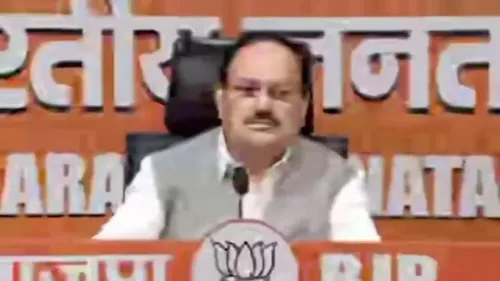
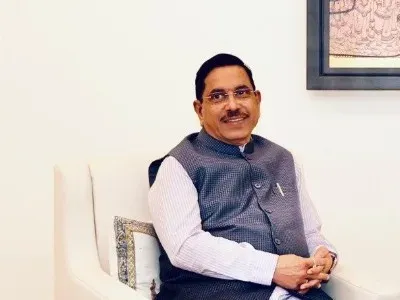
Union Commerce and Industry Minister Piyush Goyal on Wednesday, 22 July 2026 shared remarks attributed to senior BJP leader and party president J P Nadda, listing a series of examination paper-leak incidents across states governed by the Indian National Congress and its allies, and challenging Rahul Gandhi to explain what he called a 'selective' stance on the issue.
Context
The post, shared from Goyal's official account, reproduces Nadda's statement cataloguing alleged paper leaks in multiple states. The states named include Jammu and Kashmir, where the Service Selection Board examination paper is said to have leaked under the Congress-National Conference coalition; Himachal Pradesh, where a School Education Board paper reportedly leaked under a Congress government; and Jharkhand, where JAC Hindi and Science examination papers are alleged to have leaked under the Congress-Jharkhand Mukti Morcha government.
The statement further cites Telangana, where an Intermediate language examination paper allegedly leaked under a Congress government backed by the CPI; an SSC language examination paper leak; and a B.Ed. course examination leak in Tamil Nadu, said to have occurred when an opposition government was in power there. West Bengal's police constable recruitment examination and Punjab's Punjab Subordinate Services Selection Board Group-D examination are also cited, as are alleged irregularities in 26 PSC examinations in Kerala and a POC examination paper leak in Karnataka, which is governed by Congress.
Policy backdrop
Examination paper leaks have been a recurring governance concern across India, affecting lakhs of aspirants competing for government jobs and academic admissions. The central government enacted the Public Examinations (Prevention of Unfair Means) Act in 2024, imposing stringent penalties for malpractice in centrally conducted examinations, though state-level boards and recruitment bodies fall primarily under state jurisdiction.
The BJP has consistently sought to highlight paper-leak incidents in non-BJP-ruled states as evidence of administrative failure, while opposition parties have countered by pointing to high-profile irregularities in centrally conducted examinations. The exchange reflects a long-running partisan debate over institutional integrity in public recruitment and education.
Stakeholders and impact
The primary victims of paper leaks are students and government-job aspirants, who invest months or years preparing for competitive examinations. A compromised examination forces cancellations, re-tests, and prolonged uncertainty over employment, disproportionately affecting candidates from economically weaker backgrounds.
The political dimension is equally significant: with state elections on the horizon in several of the cited states, the BJP's framing of paper leaks as a Congress-era governance failure is designed to resonate with young voters. Rahul Gandhi, as Leader of the Opposition in the Lok Sabha, is the direct target of Nadda's rhetorical question about 'selective' concern on the issue.
What's next
A formal response from Rahul Gandhi or the Congress party is expected to follow, either through social media or during the ongoing parliamentary proceedings. The issue is likely to feature in floor debates and question hours in both Houses, given its direct bearing on youth employment and the credibility of public examinations.
State governments named in the statement may also face pressure to provide official clarifications or status updates on investigations into the cited leaks. Whether the Centre moves to expand the ambit of the 2024 anti-cheating law to cover state examinations through cooperative federalism mechanisms remains a question worth watching.
Point of View
Flood the discourse with parallel instances from opposition-ruled states to neutralise the moral high ground. By routing the statement through J P Nadda and amplifying it via Goyal, the party deploys both its organisational president and a senior Cabinet voice simultaneously. The direct question to Rahul Gandhi is calibrated to force either a response that concedes the problem is cross-party, or silence that can be labelled hypocrisy. With youth unemployment and exam integrity emerging as live electoral issues, this exchange signals that paper leaks will remain a sustained BJP attack vector through the next cycle of state polls.
NationPress
21 Oct 2026
Frequently Asked Questions
Which states have seen exam paper leaks according to J P Nadda's statement?
According to the statement shared by Piyush Goyal, paper leaks have been alleged in Jammu and Kashmir, Himachal Pradesh, Jharkhand, Telangana, Tamil Nadu, West Bengal, Punjab, Kerala, and Karnataka across various recruitment and board examinations.
Why is Rahul Gandhi being questioned about exam paper leaks?
J P Nadda's statement, as shared by Goyal, accuses Rahul Gandhi of a 'selective' stance — raising the issue only when it suits political purposes while remaining silent on paper leaks in states where Congress or its allies are in government.
What is India's law against exam paper leaks?
The central government enacted the Public Examinations (Prevention of Unfair Means) Act in 2024, which prescribes strict penalties for malpractice in centrally conducted examinations; state-level exams, however, are governed by individual state laws.
Which party governs the states cited for paper leaks?
Most states cited are governed by Congress alone or in coalition: Himachal Pradesh and Karnataka by Congress; Jharkhand by Congress-JMM; Jammu and Kashmir by Congress-National Conference; Telangana by Congress with CPI support; West Bengal by TMC; and Punjab by AAP, with Kerala by LDF.
What examinations were affected by paper leaks mentioned in the post?
The examinations cited include the J&K Service Selection Board test, Himachal Pradesh School Education Board exam, JAC Hindi and Science papers in Jharkhand, Telangana Intermediate language paper, SSC language paper, Tamil Nadu B.Ed. exam, West Bengal police constable recruitment test, Punjab SSSB Group-D exam, 26 Kerala PSC exams, and a Karnataka POC examination.