Anurag Thakur wishes Uttarakhand on 26th Statehood Day
Synopsis
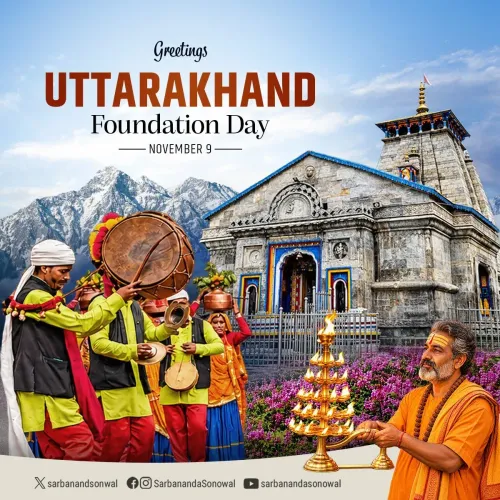
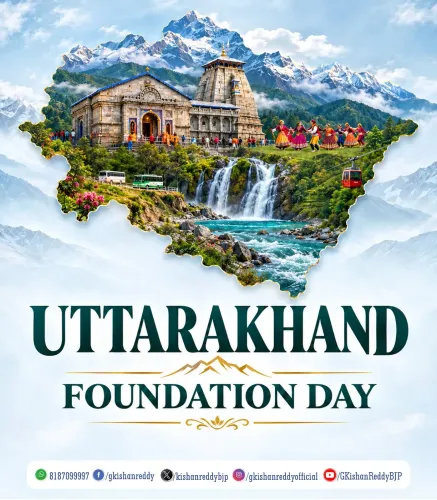
BJP MP Anurag Thakur marked Uttarakhand's 26th Statehood Day on 9 November 2026 with heartfelt wishes, invoking the blessings of Kedarnath, Badrinath, and Dhari Devi for the state's well-being, good governance, and prosperity.
Key Takeaways
BJP MP Anurag Thakur greeted the people of Uttarakhand on Statehood Day, 9 November 2026 .
Uttarakhand was formed as India's 27th state on 9 November 2000 from Uttar Pradesh, making this its 26th anniversary .
Thakur invoked three major Uttarakhand shrines: Kedarnath , Badrinath , and Dhari Devi .
He wished the state continued progress on the path of good governance and prosperity .
The greeting reflects a common BJP practice in Himalayan states of blending devotional imagery with political outreach on key anniversaries.
Twenty-six years after the hills of the Garhwal and Kumaon came together as India's 27th state, BJP MP Anurag Thakur marked Uttarakhand Statehood Day on 9 November 2026 with a devotional greeting invoking the three most sacred names of Devbhoomi — the land of the gods.
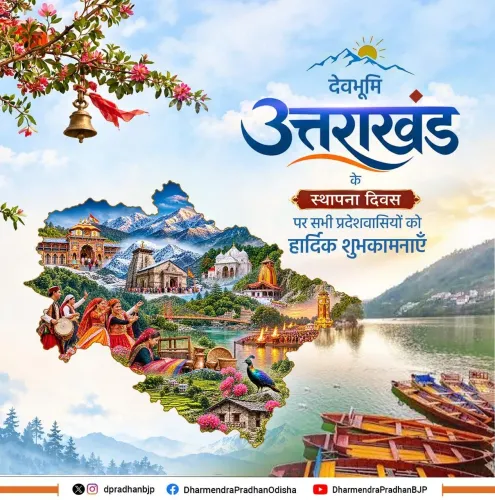
Thakur, the BJP Lok Sabha MP from Hamirpur, Himachal Pradesh, wrote in Hindi: 'Devbhoomi Uttarakhandvaasiyon ko rajya sthapana divas ki haardik shubhkamnayen' — 'Heartfelt wishes to the people of Devbhoomi Uttarakhand on Statehood Day.' He prayed to Baba Kedarnath, Bhagwan Badri Vishal, and Mata Dhari Devi that the people remain safe and that the state continues on the path of good governance and prosperity.
A state born from the mountains on 9 November 2000
Uttarakhand was carved out of Uttar Pradesh on 9 November 2000 under the Uttar Pradesh Reorganisation Act, 2000, making it India's 27th state. The region had long sought separate statehood, its identity anchored in the high Himalayan terrain and an unbroken tradition of pilgrimage. The name Devbhoomi — land of the gods — captures that identity in a single word.
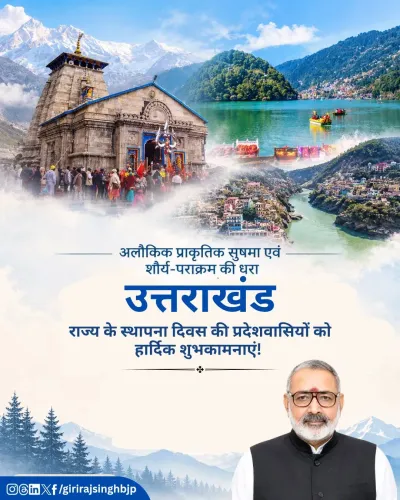
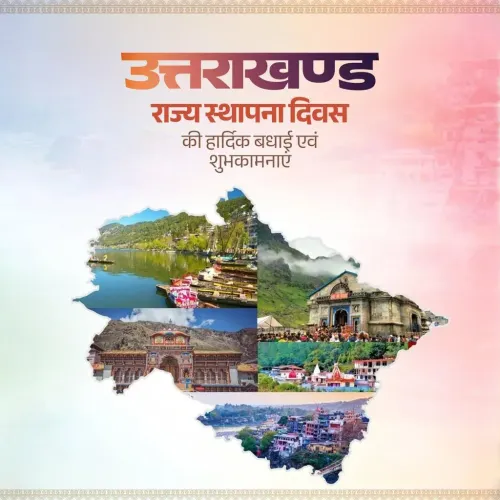
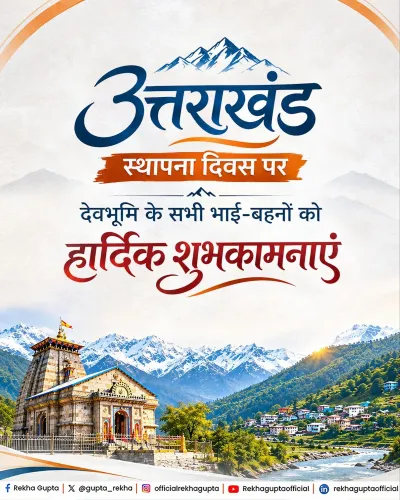
The three shrines Thakur invokes are not incidental. Kedarnath, the Shiva shrine deep in the Garhwal Himalayas, is one of the Char Dham pilgrimage sites that draw millions of devotees each year. Badrinath, dedicated to Vishnu and administered by the Badrinath-Kedarnath Temple Committee, anchors the Vaishnava end of the same circuit. Dhari Devi, the goddess temple at Srinagar, Uttarakhand, sits along the Kedarnath yatra route and is considered a protective deity of the region. Together they represent the full spiritual geography of the state.
Devotion and politics in the Himalayan arc
Statehood Day greetings from BJP leaders in neighbouring hill states — Himachal Pradesh prominent among them — consistently blend religious imagery with calls for good governance. It is a rhetorical pattern well-worn in Himalayan political culture, where pilgrimage, identity, and administration are rarely separated in public discourse. Thakur, whose own constituency sits just across the border in Himachal Pradesh, shares the Himalayan cultural terrain with Uttarakhand's electorate.
The blessing framing — entrusting the state's welfare to its presiding deities — is as much a cultural register as a political one. But on a day when Uttarakhand marks 26 years of statehood, the invocation of Kedarnath, Badrinath, and Dhari Devi carries the full weight of what that statehood was built on.
Point of View
Demographic overlap, and electoral geography. By anchoring his message in Kedarnath, Badrinath, and Dhari Devi rather than development metrics, Thakur speaks the language that resonates most deeply in hill electorates. The pairing of 'suśāsan' (good governance) with devotional blessing is a rhetorical signature of the BJP's Himalayan communication strategy. With Uttarakhand having completed 26 years as a state, such messaging also quietly stakes a claim on the state's identity narrative.
NationPress
9 Nov 2026
Frequently Asked Questions
When was Uttarakhand founded as a state?
Uttarakhand was established as India's 27th state on 9 November 2000, carved out of Uttar Pradesh under the Uttar Pradesh Reorganisation Act, 2000.
Why is Uttarakhand called Devbhoomi?
Uttarakhand is called Devbhoomi — meaning 'land of the gods' — because it is home to major Hindu pilgrimage sites including Kedarnath, Badrinath, Gangotri, and Yamunotri, collectively known as the Char Dham.
Who is Dhari Devi and why is she significant in Uttarakhand?
Dhari Devi is a goddess whose temple is located at Srinagar in Uttarakhand along the Kedarnath yatra route. She is widely regarded as a protective deity of the state.
What did Anurag Thakur post on Uttarakhand Statehood Day 2026?
BJP MP Anurag Thakur posted heartfelt wishes in Hindi on 9 November 2026, invoking the blessings of Baba Kedarnath, Bhagwan Badri Vishal, and Mata Dhari Devi for the well-being of Uttarakhand's people and the state's progress in good governance and prosperity.
How many years old is Uttarakhand in 2026?
Uttarakhand completes 26 years as a state on 9 November 2026, having been founded on 9 November 2000.