CM Chandrababu Directs 2.5 Cr Seed Ball Drive for AP Green Cover
Synopsis
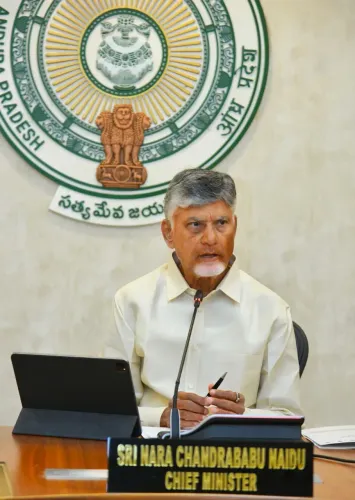
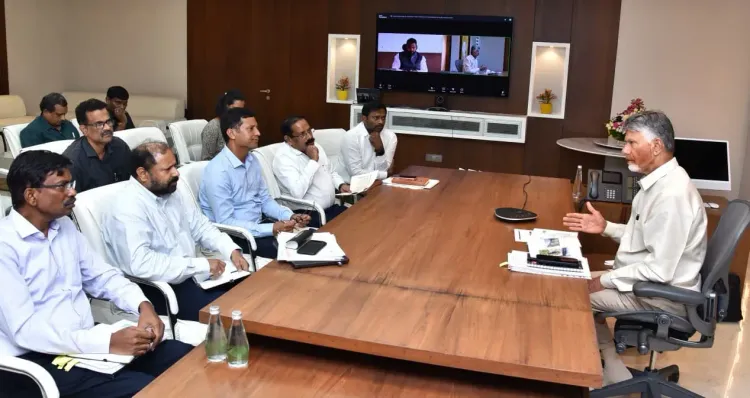
Chief Minister N. Chandrababu Naidu has directed Andhra Pradesh Forest Department officials to prepare 2.50 crore seed balls in June 2026 and distribute them during July and August, enlisting students, government employees, and voluntary organisations to expand the state's green cover.
Key Takeaways
Chandrababu Naidu has instructed Forest Department officials to expand Andhra Pradesh's green cover through a large-scale seed ball drive.
A total of 2.50 crore seed balls are to be prepared in June 2026 and distributed in July and August 2026 .
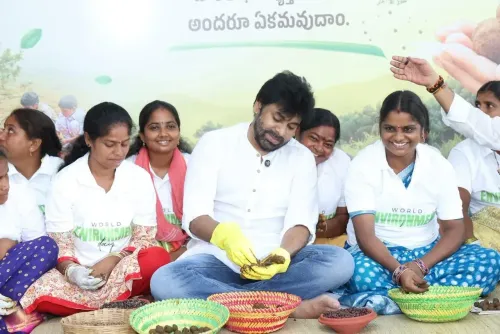
The programme will involve students, government employees , and voluntary organisations as active participants.
The initiative aligns with India's National Forest Policy target of 33 percent forest and tree cover and the Green India Mission .
The drive revives the community-plantation approach used during Naidu's earlier Haritha Andhra Pradesh framework (2014–2019).
Germination and survival rates post-monsoon will be the key metric to assess the programme's real-world impact.
The Chief Minister's Office of Andhra Pradesh announced on 22 May 2026 that Chief Minister N. Chandrababu Naidu has directed Forest Department officials to take concrete steps to expand the state's green cover as part of its environmental conservation agenda. The centrepiece of this push is a planned distribution of 2.50 crore seed balls, with broad community participation mandated across the state.
Context
Addressing Forest Department officials, CM Naidu made clear that the seed ball programme must succeed, instructing that the balls be prepared in June and distributed during July and August — coinciding with the monsoon season, when germination conditions are most favourable. He emphasised that the drive should include students, government employees, and voluntary organisations, making it a wide-ranging community effort.
The CM's directive, shared by the official Andhra Pradesh Chief Minister's Office account on X, was issued in Telugu: 'జూన్లో సీడ్ బాల్స్ సిద్ధం చేసి, జూలై, ఆగస్ట్లో పంపిణీ చేయాలని సీఎం నిర్దేశించారు' ('The CM directed that seed balls be prepared in June and distributed in July and August').
Policy Backdrop
The initiative echoes Naidu's earlier 2014–2019 tenure, during which the state conducted annual plantation drives targeting several crore saplings under the Haritha Andhra Pradesh framework. Seed ball techniques have been used across India since the 2010s to regenerate degraded and remote lands where conventional sapling planting is logistically difficult.
The programme aligns with India's National Forest Policy goal of achieving 33 percent forest and tree cover nationally, and complements the Green India Mission launched in 2015. Similar community-participation models are already operational in Telangana and Maharashtra, positioning Andhra Pradesh within a broader state-level afforestation trend.
Stakeholders and Impact
The programme is designed as a participatory exercise, drawing in students, government employees, and voluntary organisations alongside the Forest Department. This multi-stakeholder model is intended to maximise geographic spread and community ownership of the green cover initiative.
Seed balls — compact clay-and-soil pellets containing seeds — can be dispersed aerially or by hand across difficult terrain, making them effective for reaching hillsides, degraded forest fringes, and rural wastelands where planting saplings is impractical. A successful drive at the 2.50 crore scale would represent one of the larger such exercises undertaken by the state.
What's Next
Attention will now turn to the June 2026 preparation phase, when Forest Department officials must mobilise resources and coordinate with schools, government offices, and civil society groups. The actual dispersal window of July–August 2026 will coincide with the southwest monsoon, the most critical factor for germination and survival rates.
Longer-term, the programme's credibility will rest on post-monsoon monitoring of germination success and survival rates — metrics that will determine whether the 2.50 crore seed ball target translates into measurable gains in Andhra Pradesh's forest and tree cover before the next annual plantation cycle.
Point of View
But the real test lies in post-dispersal monitoring, an area where past state plantation drives across India have frequently fallen short. By conscripting students and government employees alongside NGOs, the government is distributing both the workload and the political credit. If survival rates are tracked and published transparently, this could set a credible precedent; if not, it risks becoming another headline-driven green gesture.
NationPress
7 Oct 2026
Frequently Asked Questions
What is the Andhra Pradesh seed ball programme announced by CM Chandrababu Naidu?
CM Naidu has directed the AP Forest Department to prepare 2.50 crore seed balls in June 2026 and distribute them during July and August to increase the state's green cover, with participation from students, government employees, and voluntary organisations.
What is a seed ball and why is it used for afforestation?
A seed ball is a compact pellet of clay and soil containing seeds that can be scattered by hand or aerially over difficult terrain. It is used to regenerate degraded lands and remote hillsides where planting conventional saplings is impractical.
When will the Andhra Pradesh seed ball distribution take place in 2026?
According to CM Naidu's directive, seed balls will be prepared in June 2026 and distributed during July and August 2026 , timed to coincide with the southwest monsoon for maximum germination success.
Who will participate in the AP seed ball drive?
CM Naidu has specified that students, government employees , and voluntary organisations should all be made stakeholders in the programme alongside Forest Department officials.
How does the AP seed ball initiative relate to India's forest cover targets?
The programme aligns with India's National Forest Policy goal of achieving 33 percent forest and tree cover nationally and complements the Green India Mission , with Andhra Pradesh following community-participation models already running in states like Telangana and Maharashtra.