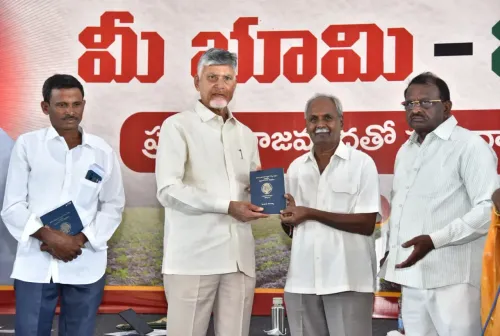
CM Chandrababu Launches 'Mee Bhoomi-Blockchain' Pilot in AP
Synopsis
Chief Minister Chandrababu Naidu on 23 July 2026 launched the 'Mee Bhoomi-Blockchain' pilot from the AP Secretariat, deploying Hyperledger Fabric technology across seven mandals to create tamper-proof land records and eliminate double registration through a unified Revenue-Survey-Registration platform.
Key Takeaways
CM Chandrababu Naidu virtually launched the Mee Bhoomi-Blockchain pilot on 23 July 2026 from the Andhra Pradesh State Secretariat.
The system assigns a unique digital ID to every land parcel, making records tamper-proof using Hyperledger Fabric blockchain technology.
Developed jointly by NIC Andhra Pradesh and the Centre of Excellence in Blockchain Technology, NIC Bengaluru .
Pilot covers seven mandals across Kurnool, Chittoor, Bapatla, Krishna, East Godavari, Parvathipuram Manyam, and Vizianagaram districts.
The platform integrates Revenue, Survey, and Registration departments into a single source of truth, targeting elimination of double registration.
Minister Anagani Satya Prasad and Chief Secretary G.
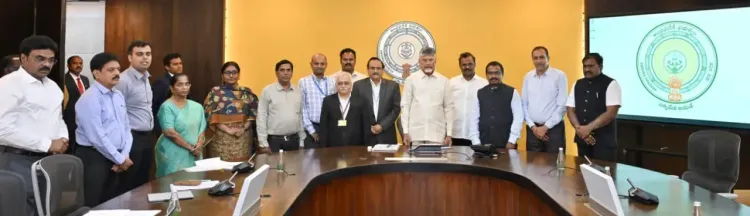
Sai Prasad were present at the launch alongside district collectors and senior officials.
Chief Minister Nara Chandrababu Naidu on Thursday, 23 July 2026, virtually launched the 'Mee Bhoomi-Blockchain' pilot project from the Andhra Pradesh State Secretariat, marking a significant step towards tamper-proof digital land records in the state. The initiative, developed jointly by NIC Andhra Pradesh and the Centre of Excellence in Blockchain Technology at NIC Bengaluru using Hyperledger Fabric technology, aims to eliminate double registration, fraud, and disputes over land ownership.
Context
The post from the Chief Minister's Office of Andhra Pradesh announced that the state's Revenue Department has designed a blockchain-based system to provide 'శాశ్వత భద్రత' (permanent security) to land records. Each land parcel will be assigned a unique digital ID, enabling tamper-proof, secure transactions. The system is designed to serve as a 'Single Source of Truth' for all land records, bringing the Revenue, Survey, and Registration departments onto a single unified platform.
The pilot will be rolled out across seven mandals: Aspari (Kurnool district), Penumuru (Chittoor district), Repalle (Bapatla district), Gannavaram (Krishna district), Kadiyam (East Godavari), Gummalakshmipuram (Parvathipuram Manyam), and Kothavаласа (Vizianagaram district).
Policy Backdrop
Andhra Pradesh's Mee Bhoomi portal, launched in 2015, was among the country's earliest state-level efforts to digitise land records and reduce manual tampering. It built on the Digital India Land Records Modernization Programme, a central initiative dating to 2008 that aimed to computerise and integrate land records across all states.
Blockchain adds a cryptographic, decentralised layer on top of existing digitisation — meaning no single actor can alter a record without consensus across the network. Multiple Indian states have explored blockchain for land titling, but a government-backed pilot of this scale, developed by NIC with Hyperledger Fabric, represents a more institutionalised approach than earlier experimental efforts.
Chief Minister Chandrababu Naidu, who has consistently positioned Andhra Pradesh as a technology-forward state across his tenures, framed the launch as part of a broader push for transparent, citizen-centric governance through digital public infrastructure.
Stakeholders and Impact
The primary beneficiaries are landowners and farmers across Andhra Pradesh, who have historically faced disputes arising from double registration, forged documents, and inconsistent records across departments. A blockchain-anchored system with unique digital IDs for each parcel would make such fraud structurally far harder to execute.
Revenue officials across the seven pilot mandals will operate the new platform, which merges functions currently split between the Revenue, Survey, and Registration departments. Minister Anagani Satya Prasad, Chief Secretary G. Sai Prasad, senior officials from the three departments, and district collectors from the pilot locations attended the launch event.
For the broader real-estate and legal ecosystem, blockchain-backed records could reduce the volume of property litigation that clogs civil courts — a persistent problem in land-record-intensive states like Andhra Pradesh.
What's Next
The government will evaluate outcomes from the seven pilot mandals before deciding on a statewide rollout. Key metrics will include the reduction in double-registration cases, turnaround time for land transactions, and citizen grievance rates. Any legislative move to formally recognise blockchain records as legally valid documents would be a critical downstream step. The success of this pilot could also serve as a template for other states looking to modernise land administration through decentralised ledger technology.
Point of View
A qualitatively different governance ambition. By anchoring the project in NIC's institutional infrastructure rather than a private vendor, the state is signalling a preference for sovereign, auditable technology stacks. The choice of seven geographically dispersed mandals spanning tribal, coastal, and agrarian belts suggests a deliberate stress-test of the system across diverse land-tenure contexts. If the pilot delivers measurable reductions in litigation and fraud, it could pressure other large states with complex land records — Maharashtra, Uttar Pradesh, Odisha — to accelerate similar programmes.
NationPress
22 Oct 2026
Frequently Asked Questions
What is the Mee Bhoomi-Blockchain project in Andhra Pradesh?
The Mee Bhoomi-Blockchain project is a pilot initiative launched by the Andhra Pradesh government on 23 July 2026 that uses Hyperledger Fabric blockchain technology to create tamper-proof, unique digital IDs for every land parcel, integrating the Revenue, Survey, and Registration departments on a single platform to prevent double registration and land fraud.
Which mandals are included in the Mee Bhoomi-Blockchain pilot?
The pilot covers seven mandals: Aspari in Kurnool district, Penumuru in Chittoor district, Repalle in Bapatla district, Gannavaram in Krishna district, Kadiyam in East Godavari, Gummalakshmipuram in Parvathipuram Manyam, and Kothavаласа in Vizianagaram district.
Who developed the Mee Bhoomi-Blockchain system?
The system was jointly developed by NIC Andhra Pradesh and the Centre of Excellence in Blockchain Technology at NIC Bengaluru using Hyperledger Fabric, an enterprise-grade open-source blockchain framework.
How does blockchain help prevent land fraud in Andhra Pradesh?
Blockchain creates an immutable, decentralised ledger where each land record, once entered, cannot be altered without network-wide consensus. Each parcel gets a unique digital ID, making double registration and document forgery structurally difficult and leaving a permanent, auditable transaction trail.
Will the Mee Bhoomi-Blockchain project be rolled out across all of Andhra Pradesh?
As of the 23 July 2026 launch, the project is in a pilot phase across seven mandals. A statewide rollout will depend on the evaluation of outcomes — including reductions in double registration and citizen grievances — from these pilot locations.