AQIS expands terror network, targets India's Northeast via Bangladesh
Synopsis
For years, AQIS stayed invisible by design — letting rival groups absorb counter-terrorism attention while it quietly built proxies across India. Now, with southern and northern India covered by the Base Movement and AGuH, intelligence officials say the Northeast is next, with Bangladesh's political instability providing the entry point.
Key Takeaways
AQIS has evolved from a fragmented outfit into a structured regional terror network, per a recent UNSC report.
The group, formed in 2014 , deliberately stayed low-profile to avoid counter-terrorism scrutiny while building proxy outfits.
Proxies include the Base Movement (South India), Ansar Ghazwat-ul-Hind (AGuH) , and Ittehad-ul-Mujahideen (IuM) ; AGuH was linked to the Red Fort -area car bomb blast in Delhi .
Intelligence officials say India's northeastern states are now high on AQIS 's priority list.
Bangladesh -based affiliates ABT and HuJI-B are expected to serve as the operational conduit into the Northeast .
The UNSC report flagged concern about AQIS exploiting Bangladesh unrest to establish cells there.
Al-Qaeda in the Indian Subcontinent (AQIS), a regional affiliate of Al-Qaeda, has evolved from a fragmented and weakened outfit into a structured regional terrorist network, leveraging online propaganda and proxy organisations to extend its reach across India and neighbouring countries, according to a recent United Nations Security Council (UNSC) report. Intelligence officials warn that the group's next strategic focus is India's northeastern states, with Bangladesh serving as a key operational corridor.
From Fringe to Structured Network
AQIS was established in 2014 with India as its primary target, but for years it failed to execute any major strike. Rather than dissolving, the outfit deliberately adopted a low-profile posture — staying off the radar of major counter-terrorism agencies that were focused on groups such as the Islamic State Khorasan Province (ISKP), Lashkar-e-Taiba, and Jaish-e-Mohammed. The latest UNSC report confirms that this strategy has paid off: AQIS has now transitioned into a more structured and geographically dispersed network.
Indian intelligence officials noted that Pakistan's engagements with the Taliban and Tehreek-e-Taliban Pakistan (TTP) inadvertently benefited AQIS by diverting attention away from it. 'The terror outfit remained off the radar for several years, while the focus of major agencies was on groups such as the ISKP, Lashkar-e-Taiba and Jaish-e-Mohammed,' officials said, adding that Pakistan's confrontations with the Taliban in Afghanistan gave AQIS the space to quietly build umbrella structures and proxies.
Proxy Outfits and Online Radicalisation
While ground-level operations remained limited, AQIS sustained an uninterrupted online propaganda campaign and cultivated a set of proxy outfits to carry out targeted activities. These include the Base Movement in South India, Ansar Ghazwat-ul-Hind (AGuH), and Ittehad-ul-Mujahideen (IuM). The Base Movement reportedly targeted politicians, judges, and police personnel it labelled as anti-Islam, while AGuH has been linked to more direct operational activity.
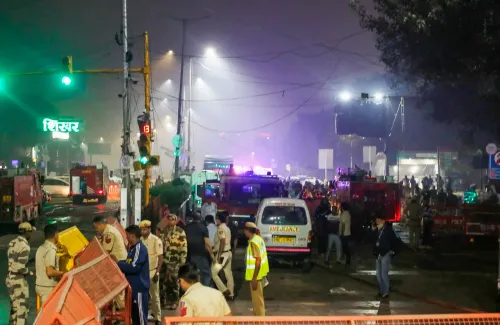
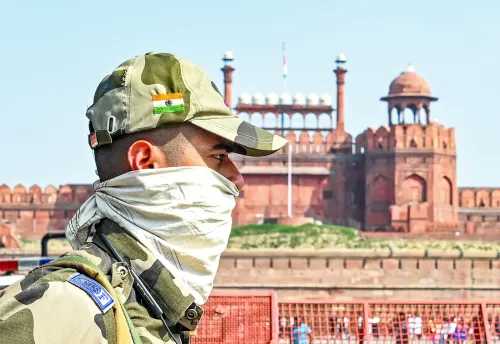
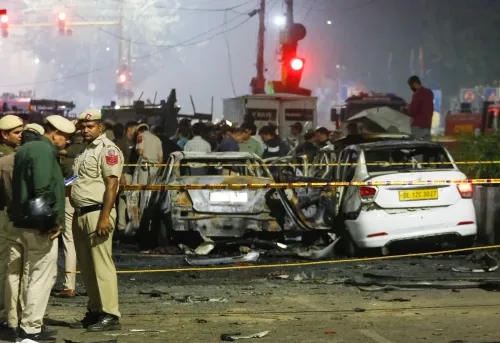
Investigators connected AGuH to the car bomb blast near the Red Fort in Delhi in November last year. According to officials, the Faridabad module that executed the blast was heavily radicalised by AGuH ideology — which investigators describe as effectively the ideology of AQIS itself. A similar ideological thread was identified in the Base Movement: multiple investigations indicated that despite operating under a separate name in South India, its foundational ideology was rooted in AQIS.
Northeast India in the Crosshairs
With the Base Movement and AGuH providing coverage across southern and northern India respectively, officials say the group's attention is now shifting eastward. According to an intelligence official, the northeastern states are high on AQIS's priority list, and the outfit is expected to create region-specific proxies to extend its operational footprint there.
This comes amid significant concern about AQIS's growing activity in Bangladesh. The UNSC report explicitly flagged that AQIS was 'trying to exploit Bangladesh unrest to establish cells there.' The outfit's affiliates in Bangladesh — including the Ansarullah Bangla Team (ABT) and Harkat-ul-Jihadi al-Islami Bangladesh (HuJI-B) — have historically targeted West Bengal and India's northeastern states. Officials say AQIS would likely rely on these existing affiliate networks to expand its operational capabilities in the region.
The Bangladesh Connection
AQIS is described as a key player in Bangladesh, with multiple affiliated groups already embedded there. The HuJI-B and ABT have long maintained cross-border ambitions targeting West Bengal and the Northeast. Intelligence officials say that any operational expansion by AQIS in Bangladesh would have a direct bearing on India's border states, given the porous nature of the frontier and the existing affiliate infrastructure.
What Security Agencies Are Watching
Officials say the creation of more region-specific proxies across India is the most likely near-term trajectory for AQIS. The pattern — establish an ideologically aligned local outfit, keep it low-key, use it for targeted radicalisation and eventually operations — has already been demonstrated in both northern and southern India. The concern, according to officials, is that the same template is now being prepared for the Northeast, with Bangladesh-based affiliates as the entry point. How Indian agencies respond to this structural shift — rather than just individual incidents — will determine whether the threat is contained.
Point of View
AQIS ideology — is particularly difficult to prosecute under existing frameworks, since each outfit can claim organisational independence. The Bangladesh angle deserves more urgency: the country's political instability is not just a humanitarian concern but a live security variable for India's most geographically vulnerable region. Agencies that are still calibrated for the last threat cycle may be a step behind.
NationPress
28 Sept 2026
Frequently Asked Questions
What is AQIS and why is it considered a threat to India?
Al-Qaeda in the Indian Subcontinent (AQIS) is a regional affiliate of Al-Qaeda, formed in 2014 with India as its primary target. A recent UNSC report warns that it has evolved from a fragmented entity into a structured regional terror network, using online propaganda and proxy outfits to expand its reach across India and neighbouring countries.
Which proxy groups has AQIS created in India?
AQIS has cultivated several proxy outfits, including the Base Movement in South India, Ansar Ghazwat-ul-Hind (AGuH), and Ittehad-ul-Mujahideen (IuM). Investigators linked AGuH to the car bomb blast near the Red Fort in Delhi, and found that the Base Movement's ideology is rooted in AQIS despite operating under a separate name.
Why are India's northeastern states now a focus for AQIS?
With proxy networks already established in southern and northern India, intelligence officials say AQIS is now shifting its focus eastward to the northeastern states. The group is expected to rely on Bangladesh-based affiliates — Ansarullah Bangla Team (ABT) and Harkat-ul-Jihadi al-Islami Bangladesh (HuJI-B) — as an operational conduit into the region.
What role does Bangladesh play in AQIS's expansion plans?
AQIS is a key player in Bangladesh, with affiliates including ABT and HuJI-B already active there. The UNSC report flagged concern about AQIS exploiting Bangladesh's political unrest to establish new cells. Officials say any operational expansion in Bangladesh would directly affect India's northeastern border states.
How did AQIS manage to grow without carrying out major attacks?
AQIS deliberately adopted a low-profile posture, staying off the radar while counter-terrorism agencies focused on higher-profile groups like ISKP, Lashkar-e-Taiba, and Jaish-e-Mohammed. It used this period to build proxy outfits, sustain online propaganda, and create regional umbrella structures — a strategy Indian intelligence officials say has worked in its favour.