UN warns AQIS is building terrorist cells in Bangladesh

Synopsis
The UN's latest terrorism monitoring report doesn't just flag a regional threat — it identifies Bangladesh, in the wake of Sheikh Hasina's ouster, as a new operational base for AQIS. With the November 2025 Delhi Red Fort attack now linked to the group and AQIS leaders reportedly holding Afghan identity documents, South Asia's security architecture faces a stress test that few governments in the region appear prepared for.
Key Takeaways
The UN Security Council's 38th Monitoring Team report warns that AQIS is attempting to use Bangladesh as a base to build terrorist cells.
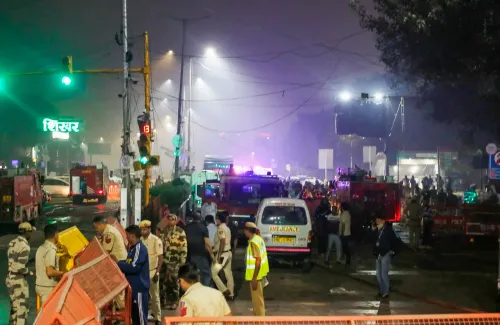
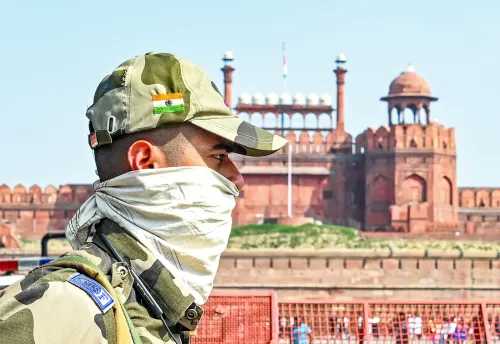
The November 2025 Red Fort attack in Delhi has been linked to AQIS in the report.
AQIS has evolved into a regional entity operating through decentralised, scattered cells with established logistics and financial networks.
The UN team says terrorist threats have intensified in South Asia and the Sahel, even as the global threat level remains broadly unchanged.
AQIS leaders are reportedly based in Kabul and have been issued Afghan identity documents , indicating Taliban cooperation.
AQIS was founded in 2014 by Al-Qaida leader Ayman al-Zawahiri and also reportedly forms the backbone of Ittihad-ul-Mujahideen Pakistan .
The United Nations Security Council has warned that Al-Qaida in the Indian Subcontinent (AQIS) is actively attempting to use Bangladesh as a base to establish and expand terrorist cells across the region. The warning is contained in the 38th report of the UN Analytical Support and Sanctions Monitoring Team, submitted to the Security Council committee overseeing Islamic State, Al-Qaida, and associated groups.
Key Findings of the UN Report
The report links the November 2025 Red Fort attack in Delhi to AQIS, marking a significant escalation in the group's operational reach. According to Bangladeshi media reports, the UN team flagged concerns over AQIS's efforts to exploit Bangladesh's territory for building broader terrorist networks. The team concluded that terrorist threats have “intensified” across South Asia.
The report noted that AQIS has evolved from a fragmented outfit into a more structured regional entity. “AQIS continued to evolve from a fragmented group into a regional terrorist entity,” the report stated, adding that the organisation had established logistics and financial networks while operating through “decentralised small, scattered cells instead of large units.”
Bangladesh's Changing Security Landscape
Concerns over Bangladesh's vulnerability have mounted since democratically elected Prime Minister Sheikh Hasina was forced into exile following an uprising in which Islamist elements played a significant role. Security analysts and regional governments have since raised alarms over the possibility of terrorist organisations finding fertile ground in the country during its political transition.
The UN report situates these concerns within a broader deterioration of the security environment across South Asia, noting that while the global terrorist threat level remained broadly unchanged, it had specifically intensified in the Sahel and South Asia. The report also acknowledged that Al-Qaida's senior leadership remained marginalised, with its “capability and intent to conduct external operations” remaining unclear.
Afghanistan-Pakistan Tensions and Taliban Links
The report highlighted that regional tensions remained elevated, with cross-border attacks between Pakistan and Afghanistan continuing. It accused Taliban authorities of sustaining support for Tehrik-e-Taliban Pakistan (TTP), which has escalated attacks against Pakistan and provoked military exchanges between the two neighbours. The Taliban, for its part, continued to deny harbouring terrorist groups.
Notably, AQIS leaders were believed to remain in Kabul and had reportedly been issued Afghan identity documents, suggesting close operational cooperation between the Taliban and the organisation. The report also identified AQIS as forming the backbone of Ittihad-ul-Mujahideen Pakistan, which was reportedly responsible for several attacks in the region.
Broader Regional Threat Assessment
The UN team warned that the ability of several terrorist groups to operate freely inside Afghanistan remained an enduring threat to neighbouring countries and Central Asia. Despite operations against Islamic State-Khorasan (IS-K) and attempts to contain other groups, the Taliban has been unable to suppress the terrorist problem within its borders, the report said.
Member states expressed concern that the ongoing conflict could create further opportunities for extremist organisations and generate compounding security challenges across the region. AQIS was founded in 2014 by Al-Qaida leader Ayman al-Zawahiri. With the group now reportedly embedding itself in Bangladesh, South Asia faces what the UN describes as a measurably more dangerous threat environment than a year ago.
Point of View
A country in political flux since Sheikh Hasina's forced exile, is now formally identified as an AQIS staging ground. That is a significant escalation in the group's ambition. The Delhi Red Fort attack link, if verified, would mark AQIS's most high-profile strike on Indian soil and demands a re-examination of how India and Bangladesh coordinate on counter-terrorism. Meanwhile, the confirmation that AQIS leaders hold Afghan identity documents points to a Taliban double game that the international community has been reluctant to confront directly — a reluctance that is now producing measurable consequences.
NationPress
28 Sept 2026
Frequently Asked Questions
What has the UN warned about AQIS and Bangladesh?
The UN Security Council's 38th Monitoring Team report warns that Al-Qaida in the Indian Subcontinent (AQIS) is attempting to use Bangladesh as a base to establish terrorist cells. The report flags the country's political instability following Sheikh Hasina's exile as a contributing factor to the heightened risk.
Is AQIS linked to the November 2025 Red Fort attack in Delhi?
According to the UN Analytical Support and Sanctions Monitoring Team's report, the November 2025 Red Fort attack in Delhi was linked to AQIS. The report does not elaborate on the nature of the link beyond this attribution, which was also noted in Bangladeshi media reports.
What is AQIS and when was it founded?
Al-Qaida in the Indian Subcontinent (AQIS) is a regional affiliate of Al-Qaida, founded in 2014 by then-Al-Qaida leader Ayman al-Zawahiri. The UN report describes it as having evolved from a fragmented group into a regional terrorist entity with established logistics and financial networks.
What is the Taliban's role in AQIS's operations, according to the UN?
The UN report states that AQIS leaders are believed to remain in Kabul and have reportedly been issued Afghan identity documents, suggesting close cooperation between the Taliban and AQIS. The Taliban has denied harbouring terrorist groups, but the report contradicts those denials.
How does the UN assess the broader security situation in South Asia?
The UN team says the global terrorist threat level remained broadly unchanged but has specifically intensified in South Asia and the Sahel. Regional tensions between Pakistan and Afghanistan remain high, and the Taliban's inability to suppress groups like IS-K compounds the threat to neighbouring countries and Central Asia.