ARCI Hyderabad develops crack-free bi-metallic structure to cut superalloy imports
Synopsis
Indian researchers have fabricated a crack-free steel-superalloy hybrid component using laser-based additive manufacturing — achieving a tensile strength of 550 MPa with failure away from the interface. The breakthrough could let manufacturers use costly Inconel superalloys only where extreme heat demands it, cutting import bills across aerospace, nuclear, and power sectors.
Key Takeaways
ARCI Hyderabad , under the Department of Science and Technology , developed a crack-free bi-metallic structure combining SS316L stainless steel and Inconel IN718 superalloy.
The technique used is laser-based powder bed fusion (LPBF) additive manufacturing , which avoids the cracking and porosity seen in conventional welding.
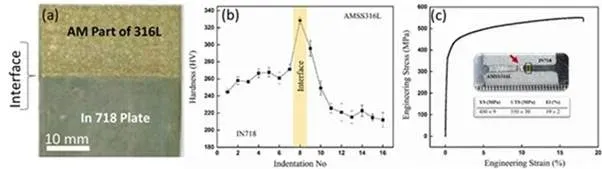
The structure achieved a peak hardness of 310 HV at the interface and an ultimate tensile strength of 550 ± 30 MPa .
Tensile failure occurred on the softer SS316L side , away from the bi-metallic junction, confirming superior interfacial integrity.
Applications span aerospace , nuclear reactors , ultra-supercritical power plants , and oil and gas industries.
The research was published in the journal Progress in Additive Manufacturing by a four-member team led by S.
Researchers at Hyderabad's International Advanced Research Centre for Powder Metallurgy and New Materials (ARCI), an autonomous institute under the Department of Science and Technology (DST), have developed a crack-free bi-metallic structure using laser-based powder bed fusion (LPBF) additive manufacturing — a breakthrough that could significantly reduce India's dependence on costly imported superalloys. The findings were published in the journal Progress in Additive Manufacturing.
The Engineering Challenge
Stainless steels and nickel-based superalloys are critical materials in aerospace, nuclear, and thermal power applications. Certain sections of a gas turbine can reach temperatures as high as 2000°C, while adjacent sections operate at far lower temperatures. This thermal gradient makes combining materials with different properties — such as SS316L stainless steel (valued for toughness and corrosion resistance) and Inconel IN718 superalloy (prized for high-temperature strength and creep resistance) — both technically desirable and notoriously difficult.
Conventional welding of these two materials is fraught with complications. Differences in chemical composition, melting temperatures, and thermal expansion coefficients frequently cause solidification cracking, porosity, segregation of Nb/Mo-rich phases, and the formation of brittle intermetallics at the joint interface.
What the ARCI Team Achieved
The research team — comprising S. Narayanaswamy, Gururaj Telasang, Nokeun Park, and Ravi Bathe — fabricated the bi-metallic structure by building SS316L directly onto a surface-ground IN718 plate using an LPBF additive manufacturing system.
According to a statement by the Union Ministry of Science and Technology, the resulting structure showed no visible cracks or porosity at the interface. It recorded a peak hardness of nearly 310 HV at the junction and an ultimate tensile strength (UTS) of 550 ± 30 MPa. Critically, failure during tensile testing occurred on the softer SS316L side, away from the bi-metallic interface — demonstrating superior interfacial integrity.
Potential Applications
The technology opens pathways for multi-material components in some of the most demanding industrial environments. Identified applications include boiler tubes, heat exchangers for nuclear and ultra-supercritical coal-fired power plants, and advanced energy systems where different sections of a single component face varying thermal and mechanical stress.
The ministry's statement noted that the technology is equally relevant for nuclear reactors and oil and gas processing industries, where corrosion resistance and high-temperature strength must coexist. In aerospace, the bi-metallic design allows the steel side to serve as the load-bearing element while the Inconel side handles extreme heat — with additive manufacturing enabling the strategic placement of superalloy material only where thermal exposure demands it.
Significance for India
Nickel-based superalloys are among the most expensive and import-dependent advanced materials in India's industrial supply chain. By enabling manufacturers to use superalloys selectively — only in thermally critical zones — this technique could reduce material costs and lower import bills without compromising component performance. This comes amid a broader national push to indigenise advanced materials for the aerospace and energy sectors.
Point of View
But the ability to place superalloy material only where extreme temperatures demand it, which is a fundamentally different cost logic. What remains to be seen is whether ARCI can move this from journal publication to industrial adoption — a gap that has stalled several promising Indian materials breakthroughs before. DST's role as the funding body gives it the institutional leverage to push for pilot deployment; whether it exercises that leverage will determine if this stays a research milestone or becomes a manufacturing one.
NationPress
1 Oct 2026
Frequently Asked Questions
What has ARCI Hyderabad developed in this research?
ARCI Hyderabad has developed a crack-free bi-metallic structure that combines SS316L stainless steel with Inconel IN718 superalloy using laser-based powder bed fusion additive manufacturing. The structure achieved a tensile strength of 550 ± 30 MPa with no cracks or porosity at the interface.
Why is combining stainless steel and Inconel superalloy difficult?
The two materials differ significantly in chemical composition, melting temperatures, and thermal expansion coefficients. Conventional welding of SS316L and IN718 typically causes solidification cracking, porosity, and the formation of brittle intermetallics at the joint, making a robust interface hard to achieve.
What are the applications of this bi-metallic technology?
The technology is applicable in aerospace components, nuclear reactors, boiler tubes, heat exchangers in ultra-supercritical coal-fired power plants, and oil and gas processing equipment — anywhere a single component must handle both extreme heat and corrosive conditions simultaneously.
How does this reduce India's superalloy import dependency?
By using additive manufacturing to place Inconel superalloy only in thermally critical zones of a component, manufacturers can significantly reduce the total quantity of expensive imported superalloy used per part. The remainder of the component can use domestically available stainless steel.
Where was the research published and who conducted it?
The research was published in the journal Progress in Additive Manufacturing. It was conducted by a team comprising S. Narayanaswamy, Gururaj Telasang, Nokeun Park, and Ravi Bathe at ARCI Hyderabad, an autonomous institute of the Department of Science and Technology.