Are Science, R&D, and Advanced Materials the Cornerstones of Viksit Bharat 2047?
Synopsis
Join us as we delve into the pivotal role of science, R&D, and advanced materials in shaping a prosperous India by 2047. Discover insights from leading experts like Dr. N. Kalaiselvi and Prof. Giridhar Kulkarni at the ESTIC 2025, where innovation meets the future.
Key Takeaways
Science and R&D are crucial for India's future Advanced materials are transforming technology Leading experts emphasize the need for innovation ESTIC 2025 serves as a platform for collaboration India is on the path to becoming a self-reliant nation
New Delhi, Nov 5 (NationPress) Science, research and development, and advanced materials are essential foundations for Viksit Bharat 2047, asserted Dr. (Mrs) N. Kalaiselvi, Director General of the Council of Scientific and Industrial Research (CSIR), on Wednesday.
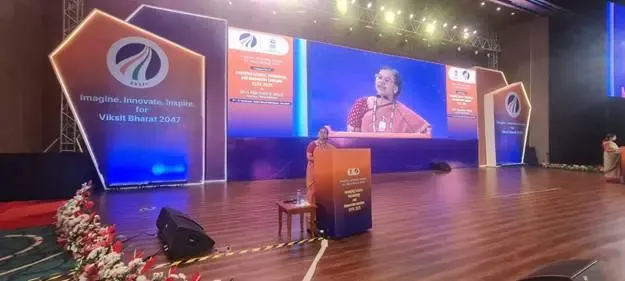
During her address at the technical session on Day 3 of the Empowering Science, Technology and Innovation Conclave (ESTIC) 2025 in the national capital, Kalaiselvi emphasized India's progress in advanced materials and manufacturing techniques.
In the plenary session, Kalaiselvi engaged in a lively discussion regarding how advanced materials are transforming product realization, industrial design, and sustainability.
“Innovations in materials science, clean energy, biotechnology, and emerging technologies will significantly influence the nation's growth path. With CSIR and India's top scientific institutions spearheading groundbreaking research, the country is paving the way for a technology-driven, self-reliant, and innovation-centered future,” she remarked.
Kalaiselvi pointed out that ESTIC 2025 serves as a powerful platform where ideas, science, and cutting-edge technologies converge — expediting the realization of a future-ready, knowledge-driven Bharat.
Prof. Giridhar Udapi Rao Kulkarni, Former President of JNCASR in Bengaluru, elaborated on the global shift from matter to materials — transitioning from basic elements to precisely engineered structures designed for performance and purpose.
“From semiconductors and composites to smart polymers, advanced materials are unlocking next-gen technologies and tangible products, facilitating India’s evolution from a Stone Age mindset to the Age of Technology,” Kulkarni stated.
“Scientific innovation, backed by nano-scale precision, shape control, and dimensional engineering, can propel manufacturing advancements that support India’s aspirations for Viksit Bharat 2047, encapsulated in the continuum: science leading to innovation, manufacturing, and ultimately the product,” he added.
This session gathered leading scientists, innovators, and entrepreneurs to deliberate on transformative technologies shaping the nation’s innovation landscape.
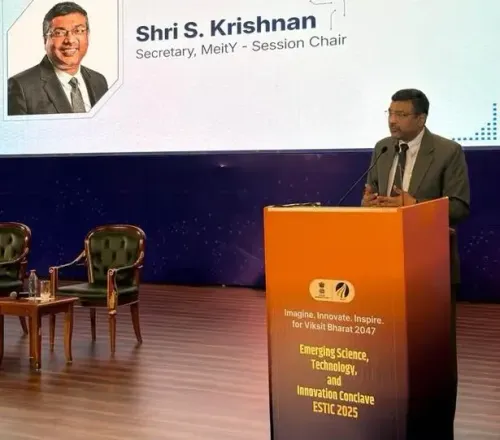
The ESTIC 2025, themed ‘Imagine, Innovate, Inspire’, convened over 3,000 participants from academia, research institutions, industry, and government, including Nobel laureates, eminent scientists, innovators, and policymakers.
Point of View
The advancements highlighted in the discussion reflect India's commitment to becoming a self-reliant and innovative nation. The emphasis on science and technology as foundational pillars for future growth aligns with the country's long-term vision. It’s essential that India continues to invest in these areas to maintain its competitive edge globally.
NationPress
19 Sept 2026
Frequently Asked Questions
What is Viksit Bharat 2047?
Viksit Bharat 2047 refers to the vision of a developed India by the year 2047, focusing on self-reliance, technological advancement, and sustainable growth.
Who is Dr. N. Kalaiselvi?
Dr. N. Kalaiselvi is the Director General of the Council of Scientific and Industrial Research (CSIR), responsible for overseeing scientific research and innovations in India.
How do advanced materials impact technology?
Advanced materials play a critical role in developing next-generation technologies, enhancing product performance, and enabling sustainable manufacturing processes.
Why are R&D and advanced materials important for India?
R&D and advanced materials are vital for India's growth as they drive innovation, improve manufacturing capabilities, and support the nation’s goal of becoming self-reliant by 2047.