Could Hydrogen Replace Natural Gas in India Within 5 to 10 Years?
Synopsis
As the world pivots towards greener energy sources, a prominent Indian official suggests that hydrogen may soon outpace natural gas as a primary fuel within the next decade. This transition could be pivotal for India's sustainable development and economic growth. Stay tuned to learn how this shift could reshape the steel industry and more.
Key Takeaways
Hydrogen prices are declining rapidly, potentially replacing natural gas in India.
The DRI plus Hydrogen route offers a sustainable method for green steel production.
India aims for 500 million tonnes of steel-making capacity by 2047 .
Medium and small enterprises contribute significantly to steel production.
The government is focusing on self-reliance and quality standards in the steel sector.
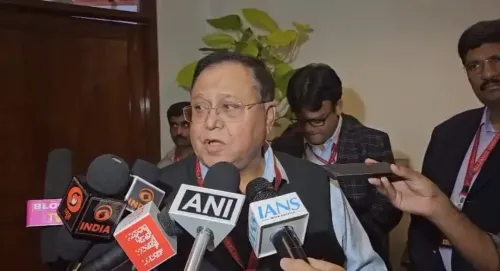
New Delhi, Nov 4 (NationPress): With hydrogen prices dropping more swiftly than expected, India could potentially embrace hydrogen as a credible substitute for natural gas within the next five to ten years. This transition is poised to be vital for our decarbonisation and global competitiveness objectives, as stated by a prominent government official on Tuesday.
Speaking at the CII Steel Summit 2025, Union Steel Secretary Sandeep Poundrik remarked, "The DRI (Direct Reduced Iron) plus Hydrogen approach presents an exciting avenue for green steel manufacturing."
He emphasized the substantial investment opportunities in the steel sector, driven by increasing demands from industries such as defence, space, automotive, and power—all of which are experiencing rapid growth and elevating the need for high-quality steel products.
Poundrik noted that with continuous growth in consumption and capacity, coupled with the rising potential from specialty and green steel, India is on track to meet its target of 500 million tonnes by 2047.
"In line with the vision of Viksit Bharat, our objective is to achieve a steel-making capacity of 500 million tonnes by 2047. At the current rate, we anticipate adding approximately 100 million tonnes every five to seven years, positioning India not only to satisfy domestic demand but also to become a leading global player in sustainable steel production," he stated.
The Steel Secretary highlighted a common misperception that India’s steel industry is predominantly driven by a few major producers. In reality, nearly 47 percent of the steel manufactured in the country comes from approximately 2,200 medium and small enterprises, which form the backbone of India’s diverse and resilient steel ecosystem.
"There is an urgent need for India to attain self-sufficiency in the steel sector, considering its strategic importance. The Ministry of Steel is collaborating closely with the Ministry of Coal to boost the proportion of domestic coking coal in steel production, thereby ensuring enhanced self-reliance and security in raw material supply. Additionally, the government is implementing proactive measures to prevent the influx of cheap and substandard steel in the Indian market," he continued.
He stressed that the government is establishing a level playing field through Quality Control Orders (QCOs) to guarantee that both domestic and foreign manufacturers adhere to the same quality standards.
Tata Steel Ltd Executive Director and CII National Committee on Steel Co-Chairman Koushik Chatterjee underscored that steel is fundamental to India’s industrial transformation and national resilience. As the core of construction, transportation, energy, and manufacturing, this sector will play a crucial role in developing world-class infrastructure, modern cities, and sustainable growth.
Highlighting India’s demographic advantage and structural reforms like GST 2.0 that are creating new consumption opportunities, JSW Steel Ltd Joint Managing Director & CEO and CII National Committee on Steel Co-Chairman Jayant Acharya pointed out that rapid urbanization, a burgeoning middle class, and increasing discretionary spending are generating strong demand prospects for the steel sector.
Point of View
Our perspective aligns with the need for India to embrace innovative solutions like hydrogen for energy transition. The government’s proactive initiatives in the steel sector highlight a commitment to sustainability and economic resilience, which is essential for the nation's future.
NationPress
24 Sept 2026
Frequently Asked Questions
What is the timeline for hydrogen replacing natural gas in India?
Experts suggest that hydrogen could become a viable alternative to natural gas within the next five to ten years.
How will hydrogen impact steel production?
The DRI plus Hydrogen route is expected to enhance green steel production, promoting sustainability in the steel industry.
What role do small enterprises play in India's steel production?
Approximately 47% of India's steel is produced by about 2,200 medium and small enterprises, underscoring their critical role in the industry.
What measures is the government taking to ensure steel quality?
The government is implementing Quality Control Orders to ensure that all producers, both domestic and foreign, adhere to the same quality standards.
Why is self-reliance in the steel sector important?
Self-reliance in the steel sector is crucial for India's strategic security and economic stability, especially in light of global supply chain challenges.