Are Election-Time Freebies Shaping Our Culture?
Synopsis
The Supreme Court has raised concerns over the alarming rise in political parties' distribution of freebies ahead of elections, questioning its impact on public welfare and economic stability. What does this trend mean for our future?
Key Takeaways
The Supreme Court is questioning the ethics of freebie distribution by political parties.
Concerns about economic impact are being raised, particularly in relation to long-term development.
Welfare measures should be targeted, distinguishing between those in need and those who can afford to pay.
Employment creation should be prioritized over unconditional benefits.
Legal precedents exist regarding the distribution of freebies, affecting future political practices.
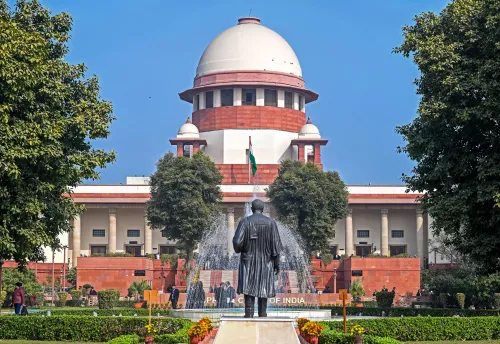
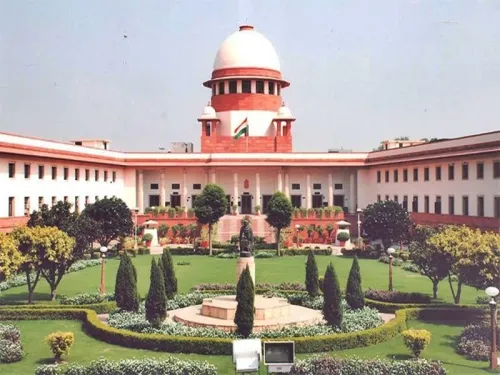
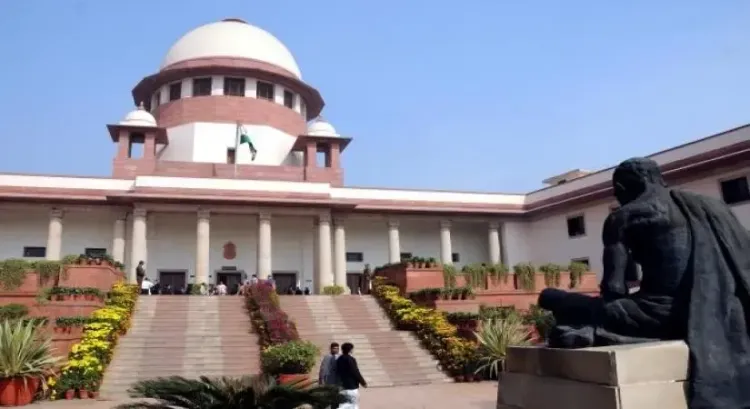
New Delhi, Feb 19 (NationPress) The Supreme Court delivered pointed oral remarks on Thursday about the increasing trend among political parties and state governments to announce "freebies" in the lead-up to elections.
A bench led by Chief Justice of India (CJI) Surya Kant, along with Justices Joymalya Bagchi and Vipul M. Pancholi, made these observations while considering a writ petition brought by Tamil Nadu Power Distribution Company Ltd. This petition challenges Rule 23 of the Electricity (Amendment) Rules, 2024, particularly concerning tariff subsidies and power cost recovery.
The CJI cautioned that uncontrolled welfare distribution could have negative consequences on the nation's long-term economic growth. He questioned the practice of states covering electricity bills and offering blanket subsidies, failing to differentiate between those who can pay and those who are genuinely in need.
"Is it in the public interest for the state to absorb these costs? We are discussing this not just in the context of Tamil Nadu but across the entire country. What kind of culture are we fostering with such freebies?" the Supreme Court inquired.
"As a welfare state, it is commendable to provide support to the marginalized. However, without distinguishing between those who can afford it and those who cannot, could this not lead to a form of appeasement?" the court further elaborated.
The CJI-led bench expressed that it was "deeply concerned" about the nationwide tendency to announce welfare initiatives just before elections.
"Why are these schemes being introduced right before elections? It's crucial for all political leaders and parties to reassess this approach," the bench stated.
The Supreme Court emphasized that even states with a revenue surplus are obligated to prioritize developmental spending.
"Shouldn't surplus funds be allocated towards building roads, hospitals, and schools instead of distributing food, clothing, and other benefits just before elections? What is occurring in this country?" it remarked.
It insisted that governments should focus on creating employment opportunities rather than expanding unconditional benefits.
"Opportunities for employment should be created so that individuals can earn with dignity. If everything becomes free—food, electricity, cash transfers—what motivation do people have to work?" the bench questioned.
However, the Supreme Court stressed that it remains the government's duty to implement genuine welfare measures for those unable to afford basic necessities. Importantly, the wider issue of election freebies is currently under review by the apex court in a pending petition by advocate Ashwini Kumar Upadhyay. The Supreme Court has noted that enticing promises made by political parties could potentially lead states towards bankruptcy and has referred the issue to a three-judge bench.
In a 2013 ruling in the Subramanian Balaji vs Tamil Nadu case, the SC determined that the distribution of free color television sets by the DMK government post-election could not be classified as a "corrupt practice" under the Representation of the People Act.
Point of View
It's crucial to highlight that while welfare measures are essential, the indiscriminate distribution of benefits, particularly near elections, raises serious questions about long-term economic sustainability and ethical governance. Our focus should remain on creating a society that values hard work and dignity.
NationPress
12 Oct 2026
Frequently Asked Questions
What are election-time freebies?
Election-time freebies refer to the various benefits and subsidies that political parties promise or distribute to voters shortly before elections, often to gain favor and votes.
Why is the Supreme Court concerned about freebies?
The Supreme Court is concerned that the distribution of freebies may undermine economic development and create a culture of dependency among citizens.
How do freebies impact economic growth?
Indiscriminate welfare distribution can lead to budgetary pressures on governments, potentially diverting funds from essential services like infrastructure, education, and healthcare.
What did the Supreme Court say about the responsibility of the government?
The Supreme Court emphasized that while the government should support those in need, it must also prioritize sustainable economic practices and employment generation.
Is there a legal precedent regarding election freebies?
Yes, the Supreme Court's 2013 ruling in the Subramanian Balaji vs Tamil Nadu case indicated that distributing freebies like color televisions could not be considered a corrupt practice under the Representation of the People Act.