Supreme Court Petition Calls for Cancellation of Tamil Nadu Assembly Elections Over Alleged Vote-Buying
Synopsis
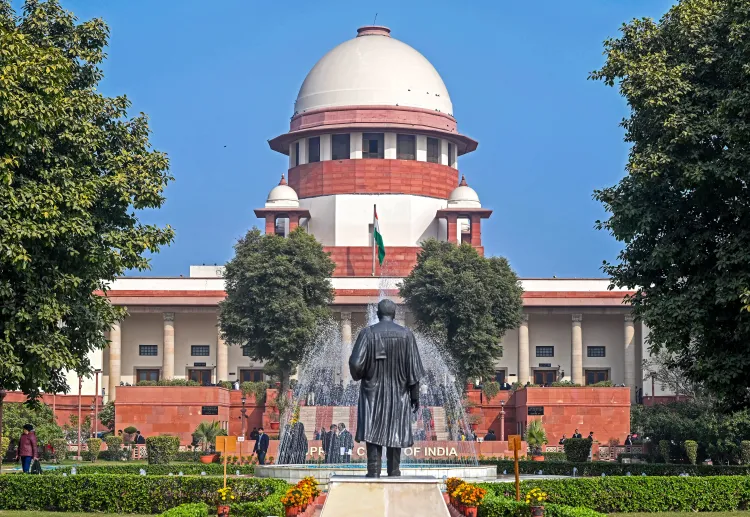
A petition has been lodged in the Supreme Court to annul the Tamil Nadu Assembly elections, alleging widespread voter bribery by political parties. The petition raises concerns about the Election Commission's effectiveness in ensuring electoral integrity.
Key Takeaways
Petition filed in Supreme Court to cancel Tamil Nadu Assembly elections.
Allegations of vote-buying by major political parties.
Criticism of Election Commission for inaction against electoral malpractice.
Claims of systemic bribery in various constituencies.
Historical context provided by past election seizures.
New Delhi, April 11 (NationPress) A petition has been submitted to the Supreme Court requesting the annulment of the forthcoming Tamil Nadu Assembly elections, citing extensive voter bribery through cash, gifts, alcohol, and various incentives from prominent political parties. The petition also criticizes the Election Commission of India (ECI) for its inability to guarantee free and fair elections.
The writ petition, initiated by Tamil Nadu resident K.K. Ramesh, demands that the Election Commission of India and the Tamil Nadu Chief Electoral Officer cancel the 2026 Assembly elections, claiming that the electoral process has been significantly compromised due to widespread vote-buying.
According to the petitioner, major political entities such as the DMK, BJP, AIADMK, TVK, and Congress are engaging in the bribery of voters through the distribution of cash and enticing freebies like laptops, color televisions, grinders, mixers, fans, goats, and cows.
The petition asserts that the ECI has failed to mitigate these activities despite being aware of the circumstances, stating: “Bribery in elections undermines the foundation of democracy. It is imperative to uphold the integrity and sanctity of the electoral process, which can only be achieved through rigorous action against those involved in such bribery.”
The plea mentions that Tamil Nadu has been classified by the ECI as an “expenditure-sensitive State” due to frequent high-value seizures during elections, yet alleges that the poll body has not implemented sufficient preventative measures to curtail vote-for-cash schemes.
Highlighting previous election seizures, the petition notes that during the 2024 Lok Sabha elections, enforcement agencies confiscated cash, precious metals, drugs, and liquor valued at Rs 1,324.83 crore in the state, while seizures during the 2021 Assembly elections amounted to approximately Rs 1,000 crore.
Claiming systemic voter bribery, the petitioner alleges that in various constituencies, voters received payments between Rs 5,000 and Rs 10,000 per vote, with political parties creating mechanisms that made refusal to accept cash nearly impossible.
“The atmosphere in Tamil Nadu Assembly constituencies is severely tainted by the influence of money,” the plea argues, adding that candidates elected through such means “would not represent the true will of the voters.”
Seeking judicial intervention, the petitioner has requested directions to “nullify the Assembly Election of Tamil Nadu” and any other relief deemed appropriate to uphold democratic principles.
The petition further seeks any other relevant orders or directives that the Supreme Court may find suitable in the interest of justice.
It is worth noting that the broader issue of electoral freebies is already under review by the Supreme Court in an ongoing petition filed by advocate Ashwini Kumar Upadhyay.
In a 2013 ruling in the Subramanian Balaji case, the Supreme Court determined that the distribution of free color television sets by the DMK government after winning the Tamil Nadu Assembly elections could not be considered a “corrupt practice” under the Representation of the People Act.
Point of View
It is crucial to highlight the serious allegations surrounding the Tamil Nadu Assembly elections. The integrity of electoral processes is paramount for a functioning democracy. The claims of systemic vote-buying and the role of the Election Commission must be scrutinized to ensure that the will of the electorate is genuinely represented.
NationPress
23 Sept 2026
Frequently Asked Questions
What is the main reason for the petition?
The petition seeks to cancel the Tamil Nadu Assembly elections due to allegations of widespread voter bribery by major political parties.
Who filed the petition?
The petition was filed by K.K. Ramesh, a resident of Tamil Nadu.
What actions does the petitioner want from the Supreme Court?
The petitioner requests the court to annul the upcoming Assembly elections and take necessary actions to uphold democratic values.
What has been the response of the Election Commission?
The petition criticizes the Election Commission for failing to ensure free and fair elections despite awareness of the bribery issues.
What previous cases are referenced in the petition?
The petition references significant election-related seizures during previous elections, highlighting ongoing issues with vote-buying.