Army builds 34-metre bridge to restore Siliguri-Mirik link after floods
Synopsis
After monsoon floods washed away the Siliguri-Mirik bridge over the Balason River, the Indian Army's Trishakti Corps stepped in with a 34-metre footbridge — restoring access to Pashupati Phatak and Darjeeling hill routes within days. A Bailey Bridge for vehicles is already underway, signalling a two-phase recovery that could revive tourism and daily commerce for thousands in North Bengal.
Key Takeaways
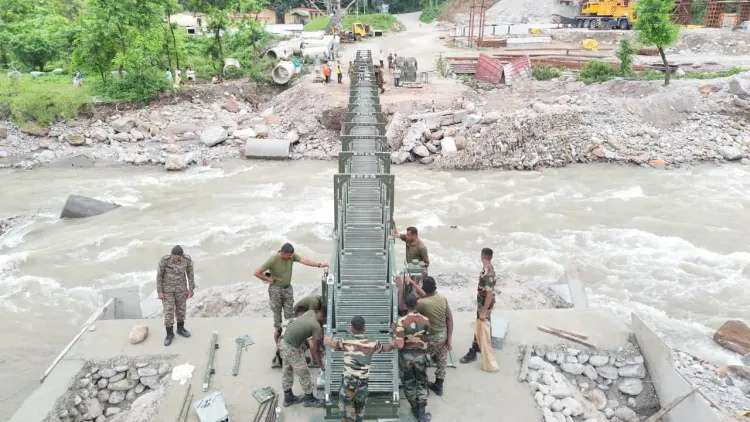
Indian Army's Trishakti Corps constructed a 34-metre footbridge over the Balason River at Dudhia on 23 June .
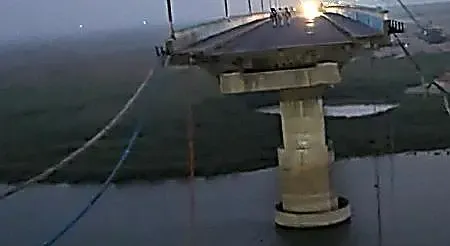
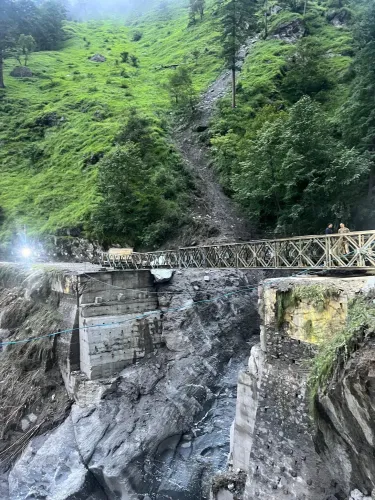
The original bridge was washed away by heavy rainfall, severing the Siliguri-Mirik route in North Bengal .
The footbridge restores pedestrian access and reconnects border crossing points including Pashupati Phatak .
A wider Bailey Bridge for vehicular movement is being constructed at the same site and is expected to be completed in the coming days.
The corridor is critical for tourism to Mirik and Darjeeling hill destinations, a key livelihood source for local residents.
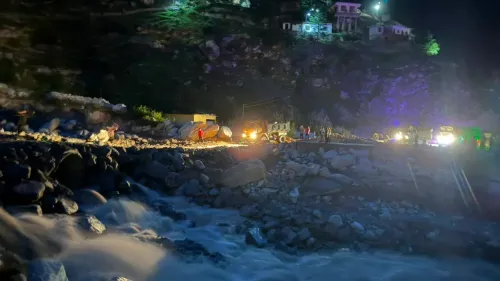
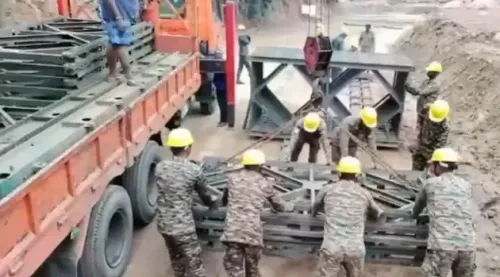
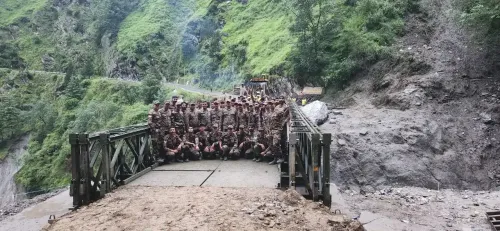
The Indian Army's Trishakti Corps has constructed a 34-metre footbridge across the Balason River at Dudhia, restoring the critical connectivity link between Siliguri and Mirik in North Bengal after the original bridge was swept away by heavy rainfall, defence officials confirmed on Tuesday, 23 June. The temporary structure was erected following a formal requisition from the district administration, which had flagged the disruption to pedestrian movement and essential travel in the region.
What Triggered the Emergency Response
Incessant rainfall caused the existing bridge over the Balason River to collapse, severing a key route used daily by local residents, commuters, and tourists travelling toward the hill destinations of Darjeeling district and surrounding areas. The disruption also cut off access to important border crossing points, including Pashupati Phatak, compounding the impact on communities dependent on the corridor for livelihoods and daily movement.
This comes amid a broader pattern of monsoon-driven infrastructure damage across the sub-Himalayan belt, where bridge collapses and road washouts routinely isolate hill communities during the June-September rainfall season.
How the Army Responded
According to defence officials, the Trishakti Corps mobilised personnel and resources swiftly after receiving the civil administration's request, completing the footbridge in time to restore pedestrian access across the river. Structural stability and pedestrian safety have been prioritised, with necessary safeguards and security measures put in place at the temporary crossing.
An Army official stated that the force remains committed to supporting civil administration and local communities in emergencies, adding that the restored link will ease daily movement and provide relief until a permanent solution is in place.
Bailey Bridge to Follow for Vehicular Access
The footbridge is a first-phase measure. The Army has initiated work on a wider Bailey Bridge at the same location, which, once completed, will enable vehicular movement and more fully restore the Siliguri-Mirik corridor. Defence authorities noted that resumption of vehicular traffic is expected to deliver a significant boost to tourism in the region — a primary source of livelihood for many residents along this route.
Impact on Communities and Tourism
The Siliguri-Mirik route is a well-travelled artery for tourists heading to Mirik lake, tea gardens, and the broader Darjeeling hills. The collapse of the bridge had effectively isolated several localities and disrupted the movement of goods, people, and emergency services. With pedestrian connectivity now restored and vehicular access on the horizon, local traders, tourism operators, and daily wage workers stand to benefit most directly.
The episode underscores the recurring vulnerability of North Bengal's road and bridge infrastructure to monsoon flooding, and the critical gap-filling role the Army plays when civilian agencies are overwhelmed by rapid-onset disasters.
Point of View
But it also exposes a structural problem: North Bengal's sub-Himalayan road and bridge network is rebuilt reactively, season after season, rather than hardened against predictable monsoon stress. The Army fills a critical gap, but the real question is why civil infrastructure in a flood-prone corridor like Siliguri-Mirik remains so vulnerable. A Bailey Bridge is a temporary fix; what the region needs is a permanent, flood-resistant crossing — and a state-level audit of bridges in similar risk zones before the next monsoon cycle.
NationPress
22 Sept 2026
Frequently Asked Questions
Why was the Siliguri-Mirik bridge washed away?
The original bridge over the Balason River at Dudhia was swept away by incessant monsoon rainfall, cutting off the route between Siliguri and Mirik in North Bengal. The collapse disrupted pedestrian movement, daily commutes, and tourist traffic to the Darjeeling hill region.
What has the Indian Army constructed to restore connectivity?
The Indian Army's Trishakti Corps erected a 34-metre footbridge across the Balason River at Dudhia, restoring pedestrian access. The Army is also constructing a wider Bailey Bridge at the same location to enable vehicular movement in the coming days.
Which areas benefit from the restored bridge?
The footbridge reconnects communities along the Siliguri-Mirik corridor and restores access to border crossing points including Pashupati Phatak. Tourists travelling to Mirik, Darjeeling, and surrounding hill destinations also benefit, as do local residents and traders dependent on the route.
When will vehicular traffic resume on the Siliguri-Mirik route?
Vehicular movement will be restored once the Bailey Bridge under construction at Dudhia is completed. Defence officials indicated work has already begun, with completion expected within the coming days, though no specific date has been confirmed.
How did the Army coordinate the bridge construction?
The Trishakti Corps acted after receiving a formal requisition from the district administration. Personnel and resources were mobilised swiftly, with close coordination between the Army, district administration, and local communities to restore the essential infrastructure link.