CM Pema Khandu Hails Arunachal Artists' Sangeet Natak Akademi Honours
Synopsis
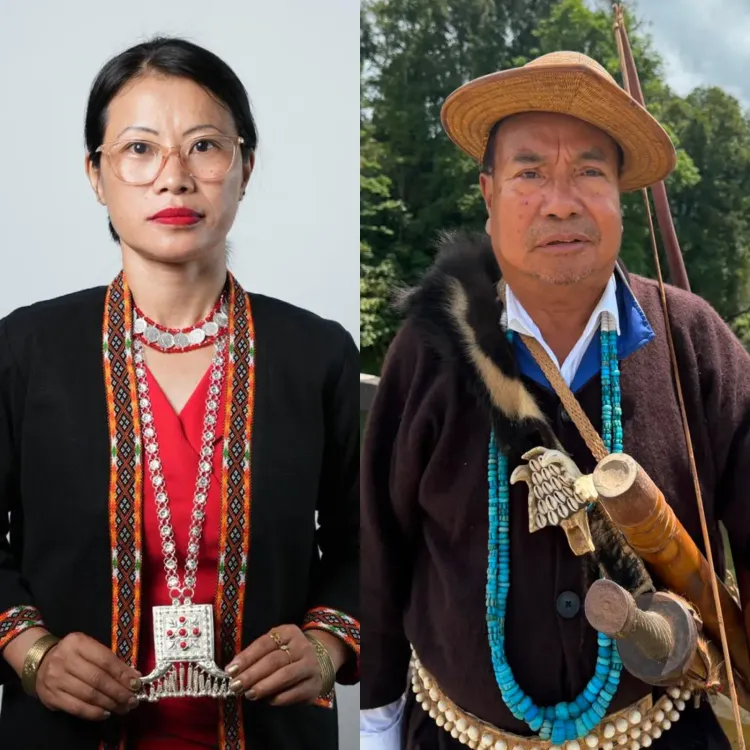
Arunachal Pradesh CM Pema Khandu congratulated Rumi Taki, who won the Ustad Bismillah Khan Yuva Puraskar for folk theatre and dance, and Domin Karbak, who received the Sangeet Natak Akademi Award for preserving indigenous traditions — dual national honours spotlighting the state's performing arts heritage.
Key Takeaways
Rumi Taki received the Ustad Bismillah Khan Yuva Puraskar for contributions to Folk Theatre and Traditional Folk Dance from Arunachal Pradesh.
Domin Karbak was honoured with the Sangeet Natak Akademi Award for preserving and promoting the state's indigenous cultural heritage.
The Sangeet Natak Akademi , founded in 1953 , is India's national academy for music, dance, and drama.
The Ustad Bismillah Khan Yuva Puraskar was instituted in 2006 to recognise emerging performing artists including those in folk traditions.
Arunachal Pradesh has over 100 indigenous tribal communities whose folk traditions form part of India's intangible cultural heritage.
CM Pema Khandu publicly celebrated both awards as a source of pride for the state on 15 June 2026 .
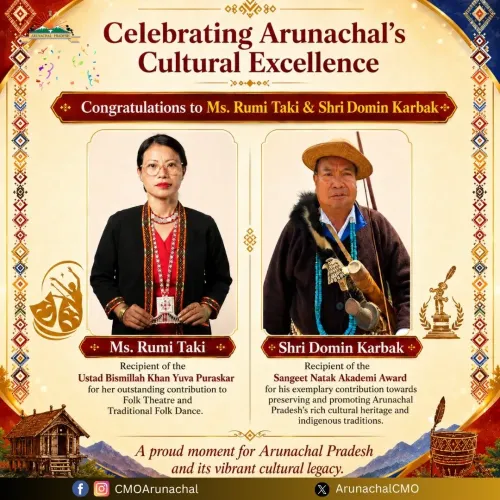
Arunachal Pradesh Chief Minister Pema Khandu on Monday, 15 June 2026 congratulated two artists from the state — Ms. Rumi Taki and Shri Domin Karbak — on receiving prestigious national honours from the Sangeet Natak Akademi, India's apex body for music, dance and drama.
Context
Ms. Rumi Taki has been conferred the Ustad Bismillah Khan Yuva Puraskar for her outstanding contribution to Folk Theatre and Traditional Folk Dance. The Chief Minister described the recognition as bringing 'immense pride to Arunachal Pradesh.' Shri Domin Karbak received the Sangeet Natak Akademi Award for his exemplary work in the preservation, promotion, and enrichment of the state's cultural heritage and indigenous traditions.
Khandu extended his 'warmest congratulations' to both awardees and wished them 'continued success in their artistic journey and endeavours,' according to his post on X.
Policy Backdrop
The Sangeet Natak Akademi was established in 1953 as India's primary national institution for the preservation and promotion of performing arts across the country's diverse regions. The Ustad Bismillah Khan Yuva Puraskar, instituted in 2006, is awarded annually to recognise emerging artists — generally under the age of 40 — in fields spanning classical, folk, and traditional performing arts.
Arunachal Pradesh is home to more than 100 indigenous tribal communities, whose folk theatre, dance forms, and oral traditions constitute a significant part of India's intangible cultural heritage. National academies have periodically recognised practitioners from the northeastern states as part of a broader policy of integrating tribal performing arts into the national cultural canon, a commitment that dates to the Ministry of Culture's earliest autonomous bodies in the 1950s.
Stakeholders and Impact
For folk artists and indigenous communities across Arunachal Pradesh, the dual recognition signals sustained national attention to the state's performing arts ecosystem. Recognitions of this kind often catalyse increased visibility for practitioners in state-level cultural festivals and documentation programmes.
The awards come at a time when Arunachal Pradesh faces the twin pressures of rapid infrastructure expansion and generational change — both of which pose challenges to the continuity of oral and performative heritage. National honours for working artists can help sustain interest among younger practitioners and community institutions.
What's Next
Attention will now turn to whether the state government follows up with dedicated platforms — such as sponsored cultural festivals or documentation initiatives — that feature the work of Rumi Taki, Domin Karbak, and similarly recognised artists. Future Sangeet Natak Akademi award lists will also be watched to gauge the continuing representation of northeastern folk traditions at the national level. For Arunachal Pradesh, these recognitions could serve as a lever to seek greater central support for heritage preservation amid competing development priorities.
Point of View
Publicly amplifying these awards serves a dual purpose: reinforcing the BJP's cultural-nationalism narrative while also positioning Arunachal Pradesh as a contributor — not merely a recipient — in the national cultural conversation. The recognition of both a young artist via the Yuva Puraskar and a senior practitioner via the full Akademi Award suggests the state's performing arts ecosystem is gaining traction across generational cohorts. The durability of this momentum will depend on whether state and central institutions translate symbolic recognition into sustained funding for documentation, training, and public presentation of indigenous forms.
NationPress
13 Sept 2026
Frequently Asked Questions
What award did Rumi Taki receive from Sangeet Natak Akademi?
Rumi Taki received the Ustad Bismillah Khan Yuva Puraskar from the Sangeet Natak Akademi for her outstanding contribution to Folk Theatre and Traditional Folk Dance.
Who is Domin Karbak and what honour did he receive?
Domin Karbak is a cultural practitioner from Arunachal Pradesh who received the Sangeet Natak Akademi Award for his work in preserving, promoting, and enriching the state's indigenous traditions and cultural heritage.
What is the Ustad Bismillah Khan Yuva Puraskar?
The Ustad Bismillah Khan Yuva Puraskar is an annual award instituted by the Sangeet Natak Akademi in 2006 to recognise young artists for excellence in performing arts, including folk theatre and traditional dance.
What is the Sangeet Natak Akademi?
The Sangeet Natak Akademi, established in 1953, is India's national academy for music, dance, and drama. It confers awards recognising outstanding contributions to the country's performing arts traditions.
Why is Arunachal Pradesh significant for India's folk arts?
Arunachal Pradesh is home to more than 100 indigenous tribal communities whose folk theatre, dance, and oral traditions form a major part of India's intangible cultural heritage, making national recognition for its artists especially significant.