Arunachal CMO Lauds Mogto Village Handmade Paper Artisans
Synopsis
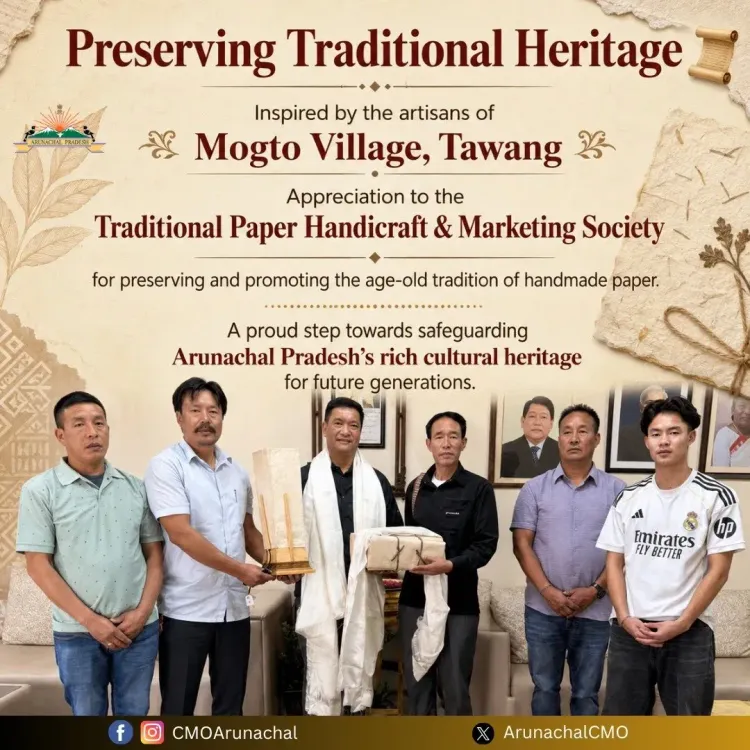
The Chief Minister's Office of Arunachal Pradesh spotlighted artisans of Mogto village on 29 May 2026, appreciating the Traditional Paper Handicraft and Marketing Society for preserving the state's indigenous handmade paper tradition and sustaining it for future generations.
Key Takeaways
The Chief Minister's Office of Arunachal Pradesh publicly appreciated artisans of Mogto village on 29 May 2026 for preserving traditional handmade paper craft.
The Traditional Paper Handicraft and Marketing Society, Mogto was specifically recognised for promoting and sustaining the heritage craft for future generations.
Arunachal Pradesh is home to over 26 major tribes , with a rich tradition of indigenous craft practices rooted in community life.
Village-level marketing societies like the one in Mogto are key institutional links between artisan communities and broader markets or state support systems.
The public acknowledgement could open pathways for handicraft cluster development, Geographical Indication registration, or integration into the state's heritage tourism circuits.
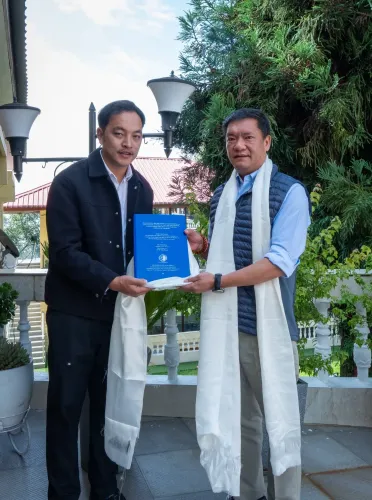
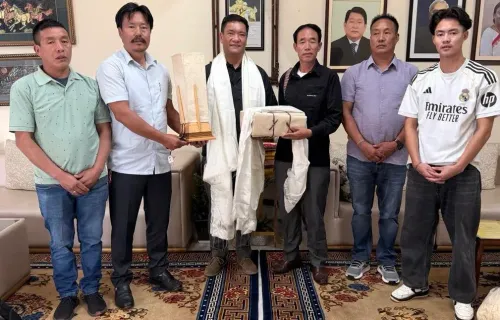
The Chief Minister's Office of Arunachal Pradesh on Friday, 29 May 2026, highlighted the traditional handmade paper craft practised by artisans of Mogto village, expressing appreciation for the Traditional Paper Handicraft and Marketing Society, Mogto, for sustaining this indigenous heritage craft for future generations.
Context
The post, shared from the official CMO handle, described the artisans of Mogto village as an inspiration and acknowledged the Society's role in 'promoting and sustaining this unique heritage craft for future generations.' The acknowledgement draws public attention to a community-level effort to keep alive a craft that relies entirely on traditional, handmade production methods passed down across generations.
Arunachal Pradesh is home to more than 26 major tribes, each carrying distinct cultural traditions. The state's northeastern geography has historically supported a range of indigenous craft practices, many of which remain embedded in daily community life. Handmade paper production, as practised in Mogto, represents a niche but significant strand of this broader cultural fabric.
Policy Backdrop
India's support for village-level handicraft industries dates to the post-independence five-year planning era, when resources were channelled toward small-scale and cottage industries across tribal regions. Over successive decades, national policy has consistently linked heritage craft preservation to twin goals: safeguarding intangible cultural heritage and sustaining rural livelihoods.
Northeastern states have periodically spotlighted community-based craft practices as part of wider cultural documentation and economic programmes. Marketing societies formed at the village level — such as the Traditional Paper Handicraft and Marketing Society, Mogto — serve as the institutional backbone of these efforts, bridging artisan communities and potential markets. Such bodies often become entry points for state support, craft cluster development, and Geographical Indication registration processes.
Stakeholders and Impact
The primary beneficiaries of sustained attention to the Mogto craft are the artisan families whose livelihoods depend on handmade paper production. Recognition from the Chief Minister's Office carries symbolic weight that can translate into policy visibility, potentially attracting funding from state handicraft boards or central schemes targeting tribal craft clusters.
Tribal communities across Arunachal Pradesh also stand to benefit from the broader cultural documentation that accompanies such public acknowledgements. Tourism circuits in the northeast have increasingly incorporated living-craft experiences, and a publicly recognised craft like the handmade paper tradition of Mogto could become an anchor for heritage tourism in the region. Younger generations within the community may find renewed incentive to continue the craft if institutional and market support follows.
What's Next
The CMO's appreciation could be a precursor to more concrete state-level interventions, including the development of dedicated handicraft clusters, integration of Mogto's handmade paper into Arunachal Pradesh's tourism and cultural circuits, or the initiation of a Geographical Indication tag application to protect and market the craft's regional identity. Such a tag would give artisans legal protection and commercial leverage in both domestic and international markets.
Observers of northeastern craft policy will watch whether this public recognition translates into budgetary allocations or formal partnerships between the state government and the Traditional Paper Handicraft and Marketing Society, Mogto. The broader trajectory for indigenous crafts in the northeast will depend on whether community-level societies receive sustained institutional support beyond ceremonial acknowledgement.
Point of View
Where tribal identity and cultural preservation carry electoral and developmental weight, such acknowledgements often precede more substantive policy moves like craft cluster funding or GI tag applications. The shoutout to a village-level marketing society also signals an intent to work through community institutions rather than top-down bureaucratic channels — a model that has shown results in other northeastern states. Whether this translates into durable support or remains a one-time social media moment will be the true test of the state's commitment to indigenous craft livelihoods.
NationPress
13 Oct 2026
Frequently Asked Questions
What is the traditional handmade paper craft of Mogto village in Arunachal Pradesh?
Mogto village in Arunachal Pradesh is home to artisans who produce handmade paper using age-old traditional methods passed down across generations, representing a distinct strand of the state's indigenous craft heritage.
What is the Traditional Paper Handicraft and Marketing Society, Mogto?
The Traditional Paper Handicraft and Marketing Society, Mogto is a village-level society in Arunachal Pradesh dedicated to promoting and sustaining the traditional handmade paper craft, serving as an institutional link between artisans and markets.
Why did the Arunachal Pradesh CMO appreciate Mogto village artisans?
The Chief Minister's Office of Arunachal Pradesh appreciated the artisans of Mogto village on 29 May 2026 for preserving the traditional handmade paper craft and acknowledged the local marketing society for sustaining this heritage for future generations.
How many tribes are there in Arunachal Pradesh?
Arunachal Pradesh is home to more than 26 major tribes, each with distinct cultural traditions, making it one of India's most ethnically and culturally diverse states.
Could the Mogto handmade paper craft get a Geographical Indication tag?
A GI tag is a possible next step following official recognition, as it would provide legal protection and commercial leverage to Mogto's artisans in domestic and international markets, though no formal application has been announced.