Arunachal CMO Dedicates Modular Op Theatre at Tawang's KDS Hospital
Synopsis
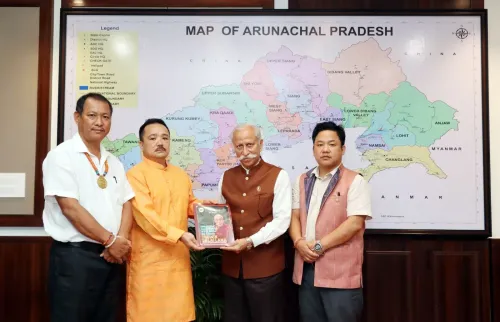
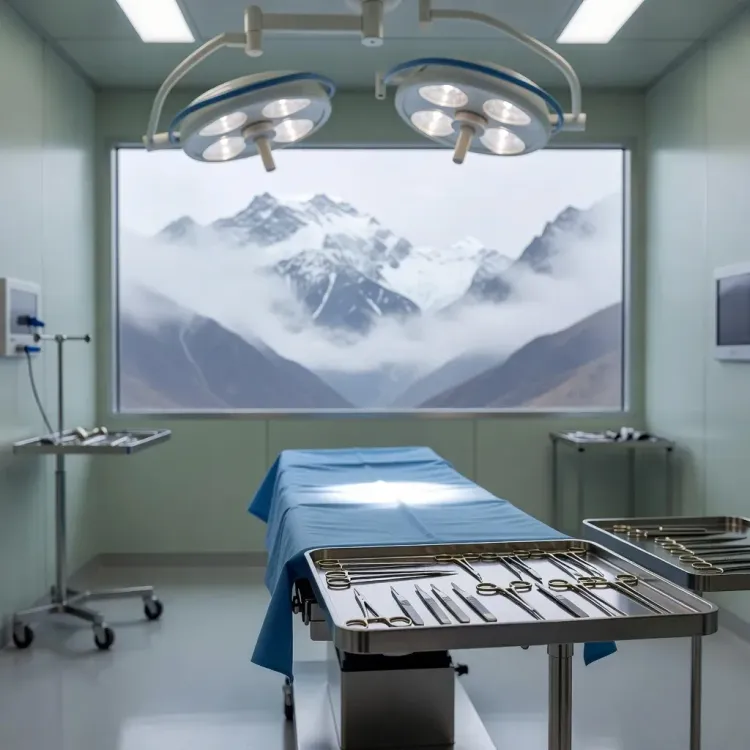
The Chief Minister's Office of Arunachal Pradesh has dedicated a new Modular Operation Theatre at KDS District Hospital in Tawang, aiming to reduce outbound surgical referrals and bring reliable healthcare to one of India's most remote border districts.
Key Takeaways
A Modular Operation Theatre at KDS District Hospital, Tawang has been formally dedicated to the public by the Arunachal Pradesh government.
Tawang is a remote, high-altitude district on the India-China border , where terrain and road conditions have historically made accessing surgical care extremely difficult.
The facility is designed to enable basic and intermediate surgical procedures locally, reducing the need for patients to travel to Itanagar or hospitals in Assam .
The project is part of Arunachal Pradesh's broader strategy of incremental district-level health infrastructure upgrades across its border and tribal regions.
Operational impact — including actual surgical volumes and referral reduction — will be the key metric to watch as the facility comes into service.
A new operating theatre in one of India's most remote border districts just changed what is possible for thousands of people who once had no choice but to travel hundreds of kilometres for surgery. The Chief Minister's Office of Arunachal Pradesh announced on Monday, 2 November 2026 that a new Modular Operation Theatre at KDS District Hospital, Tawang has been dedicated to the public — a facility designed to bring dependable surgical care directly to a population long forced to seek treatment outside the district.
What a modular theatre means for Tawang's patients
Tawang, perched at high altitude along the India-China border in far-western Arunachal Pradesh, has always faced a brutal geography problem. Terrain, weather, and road conditions routinely turn a medical emergency into a race against time — and the nearest tertiary care has historically meant a gruelling journey to Itanagar or hospitals across the border in Assam. A modular operation theatre changes that calculus by enabling basic and intermediate surgical interventions inside the district itself.
The CMO's announcement framed the facility around three explicit goals: bringing 'quality healthcare closer home', reducing outbound referrals, and ensuring 'access to dependable medical facilities for all.' Each phrase is a direct response to a documented gap — Arunachal Pradesh's border and tribal districts have historically recorded high referral rates precisely because district hospitals lacked the infrastructure to handle surgical cases.
Tawang's place in Arunachal's incremental health push
The state has pursued a steady, if quiet, campaign of upgrading district-level health infrastructure across its 26 districts — a strategy shaped by the reality that centralised tertiary care in Itanagar is simply too far for most of the state's population. The modular theatre model is part of that broader push: prefabricated, faster to commission than traditional construction, and designed to meet infection-control standards needed for safe surgical environments.
For Tawang specifically — a district that doubles as a strategically sensitive zone and a centre of Buddhist heritage — improved healthcare also carries quiet significance for civilian welfare along a sensitive frontier. Border populations with better local services have less reason to seek care across state lines, and the state government has repeatedly signalled intent to replicate successful district-level upgrades elsewhere.
The referral burden this facility targets
Outbound referrals are not just an inconvenience — they represent a systemic failure that costs patients money, time, and sometimes their lives on difficult mountain roads. Every surgery that can be safely performed at KDS District Hospital is one fewer family making that journey. The real measure of this theatre's success will come from operational data: surgical volumes, complication rates, and whether referral numbers for conditions within its scope actually fall. That data, when it emerges, will also shape whether the state moves to install similar facilities in other underserved districts.
Point of View
Replicable surgical infrastructure at the district level, the government is signalling a shift away from the politically easier but logistically impractical model of centralising all tertiary care in Itanagar. The true test is scalability — if referral data from Tawang shows measurable improvement, it builds the case for replication in other underserved districts like Anjaw or Upper Siang. For a state where geography has always been the hardest policy problem, that would be a genuinely significant step.
NationPress
2 Nov 2026
Frequently Asked Questions
What is the new modular operation theatre at KDS District Hospital Tawang?
It is a newly commissioned surgical facility at KDS District Hospital in Tawang, Arunachal Pradesh, designed to perform basic and intermediate surgical procedures locally so that patients do not need to travel outside the district for care.
Why is a modular operation theatre important for Tawang?
Tawang is a remote, high-altitude border district where difficult terrain and weather make long-distance travel for surgery dangerous and costly. A local operation theatre reduces this burden significantly for the district's population.
What does 'modular operation theatre' mean?
A modular operation theatre is a prefabricated surgical unit built to infection-control standards, typically faster to commission than conventional construction, making it practical for deployment in remote or under-resourced district hospitals.
Will this reduce referrals from Tawang to Itanagar or Assam hospitals?
That is the stated goal — the CMO's announcement specifically cited reducing referrals outside the district as a key objective of the new facility. Actual referral reduction will be measurable once the theatre becomes operational.
Is Arunachal Pradesh expanding modular theatres to other districts?
It has not been officially confirmed yet, but state health policy watchers note that success in Tawang could serve as a model for replication in other remote districts across Arunachal Pradesh.