CM Pema Khandu Leads Yoga Day at Jang With Army, Schools
Synopsis
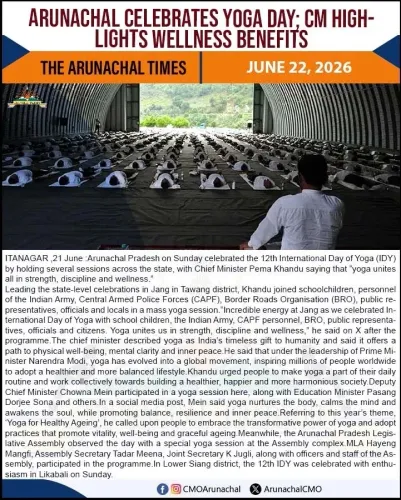
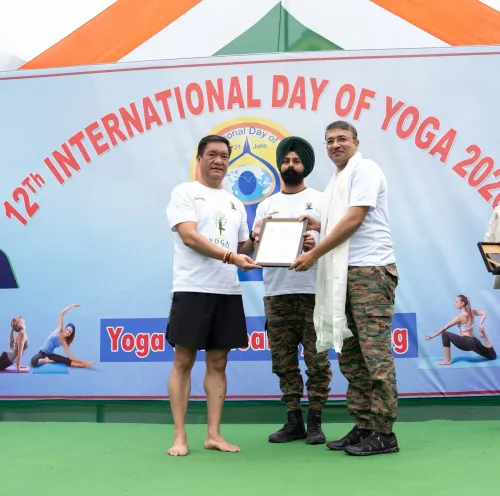
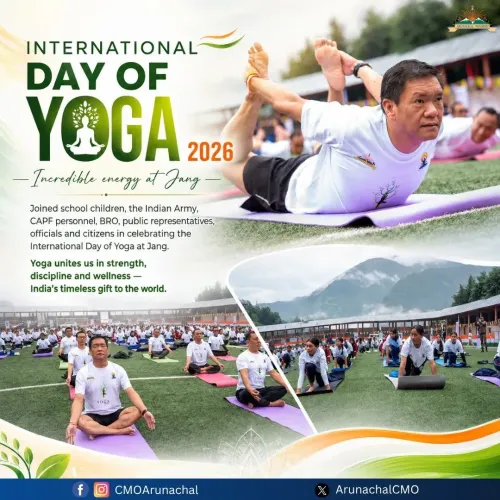
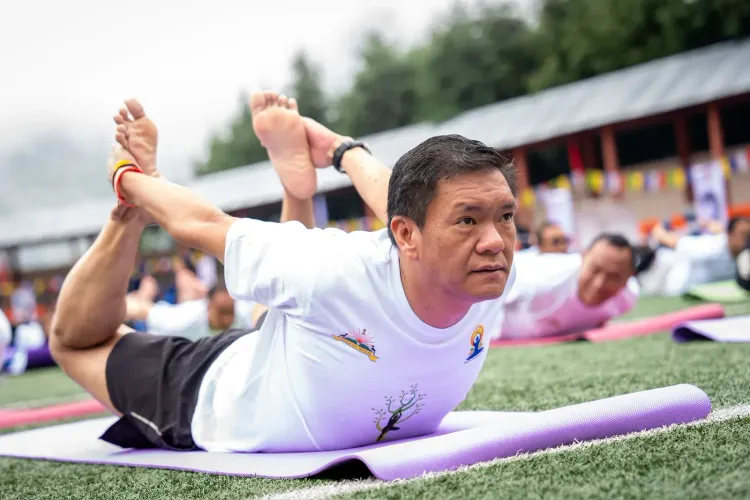
Arunachal Pradesh CM Pema Khandu joined the Indian Army, CAPF, BRO, schoolchildren, and residents at Jang in Tawang district on 21 June 2026 to celebrate the International Day of Yoga, calling the occasion a display of unity in strength, discipline, and wellness.
Key Takeaways
Chief Minister Pema Khandu participated in International Day of Yoga celebrations at Jang, Tawang district on 21 June 2026 .
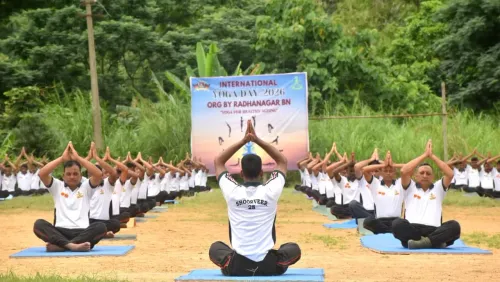
Participants included the Indian Army , CAPF personnel, Border Roads Organisation (BRO) , school children, public representatives, and local citizens.
The event reflects a national pattern of combining civilian and defence participation in yoga observances in border-sensitive districts of the northeast.
The International Day of Yoga was established by a UN General Assembly resolution in December 2014 on India's proposal and has been observed globally every 21 June since 2015 .
The Fit India Movement , launched on 29 August 2019 , complements AYUSH-led yoga protocols by embedding fitness goals across age groups and institutions.
Arunachal Pradesh's border-adjacent yoga events serve both a public-health purpose and a civil-military visibility function in strategically sensitive areas near the India-China border .
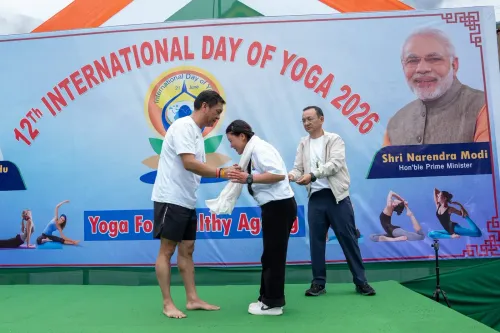
Arunachal Pradesh Chief Minister Pema Khandu joined school children, Indian Army personnel, Central Armed Police Forces (CAPF), the Border Roads Organisation (BRO), public representatives, and local citizens on Sunday, 21 June 2026, to mark the International Day of Yoga at Jang in Tawang district.
Context
Posting on X, CM Khandu described the atmosphere as one of 'incredible energy,' noting that the gathering brought together a wide cross-section of participants — from uniformed defence and paramilitary forces to schoolchildren and ordinary citizens. He called yoga 'India's enduring gift to the world,' reflecting the broader national narrative that has accompanied the observance since its inception.
Jang is a town in Tawang district, situated close to the India-China border. Public events here regularly involve security forces, making the venue symbolically significant beyond its administrative geography.
Policy Backdrop
The International Day of Yoga has been observed every 21 June since 2015, following a UN General Assembly resolution (69/131) passed in December 2014 that accepted India's proposal — championed by Prime Minister Narendra Modi — to designate the date globally. The Ministry of AYUSH has since run standardised nationwide yoga protocols each year, integrating schools and uniformed services into the observance.
The Fit India Movement, launched on 29 August 2019 at Indira Gandhi Stadium, New Delhi, extended this push by embedding physical-activity goals into government programming across age groups. Both initiatives are reflected in the hashtags #FitIndia and #HealthyIndia used by CM Khandu in his post.
In Arunachal Pradesh, celebrations in border-adjacent districts have consistently combined civilian participation with defence and paramilitary personnel, advancing fitness goals while reinforcing national presence in strategically sensitive areas.
Stakeholders and Impact
The convergence of Indian Army troops, CAPF units, and BRO workers alongside schoolchildren and residents at Jang underscores the civil-military character that yoga events in the northeast have taken on. For border communities, such gatherings serve a dual purpose: promoting public health and visibly affirming state and national presence in remote districts.
School participation is particularly significant. The Ministry of AYUSH framework encourages embedding yoga into school timetables, and state-level events of this kind reinforce that curriculum push at the grassroots level. For the BRO workforce — engaged in high-altitude road construction — wellness programmes carry direct occupational relevance.
What's Next
Attention will now turn to whether Arunachal Pradesh announces a formal expansion of yoga in its school curriculum or releases participation data from the 2026 state-wide observance. Nationally, the Ministry of AYUSH typically compiles aggregate figures from across districts, and border-state turnout is increasingly cited as a marker of programme reach. The 2027 International Day of Yoga will be the next major benchmark for assessing how deeply these initiatives have taken root in frontier communities.
Point of View
CAPF, and BRO alongside schoolchildren in the same frame, the event fuses wellness diplomacy with strategic visibility in a district that sits directly on the India-China boundary. This mirrors a broader AYUSH and Fit India strategy of using the International Day of Yoga as soft-power infrastructure in the northeast, where civil-military integration is both a governance priority and a geopolitical statement. The consistency of this approach since 2015 suggests it has moved well beyond symbolism into a durable institutional pattern.
NationPress
20 Sept 2026
Frequently Asked Questions
Where did Pema Khandu celebrate International Day of Yoga 2026?
CM Pema Khandu celebrated International Day of Yoga 2026 at Jang in Tawang district, Arunachal Pradesh, joining the Indian Army, CAPF, BRO, schoolchildren, and local citizens.
When is International Day of Yoga observed?
International Day of Yoga is observed every year on 21 June, following a UN General Assembly resolution passed in December 2014 that accepted India's proposal to designate the date globally.
Why is the Indian Army involved in yoga events in Arunachal Pradesh?
The Indian Army participates in yoga events in Arunachal Pradesh to promote troop wellness and strengthen civil-military ties, particularly in border-sensitive districts like Tawang that are adjacent to China.
What is the Fit India Movement?
The Fit India Movement is a nationwide fitness campaign launched by the Government of India on 29 August 2019 to promote physical activity across all age groups; it complements the Ministry of AYUSH's annual yoga protocols.
What is the significance of Jang in Tawang for public events?
Jang is a town in Tawang district close to the India-China border, and public events there regularly involve security forces, making it symbolically significant for demonstrating national presence in a strategically sensitive region.