Assam Cabinet approves 6 new Municipal Boards, expands 23 ULBs

Synopsis
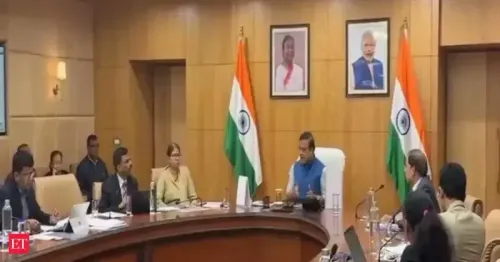
The Assam Cabinet approved six new Municipal Boards and ordered ward delimitation across 23 existing Urban Local Bodies on November 19, 2026, in one of the state's most comprehensive municipal restructuring moves under CM Himanta Biswa Sarma.
Key Takeaways
The Assam Cabinet approved the creation of 6 new Municipal Boards on November 19, 2026 .
Ward delimitation and area expansion was cleared for 23 existing Urban Local Bodies simultaneously.
Himanta Biswa Sarma announced the decision, continuing his urban governance reform agenda since May 2021 .
The move is rooted in obligations under the 74th Constitutional Amendment , which mandates current ward boundaries and regular municipal elections.
Rollout timelines, staffing of new boards, and any related budget allocations are the immediate milestones to watch.
The decision brings previously ungoverned urban growth corridors in Assam under formal elected municipal administration.
Assam's urban map is being redrawn. The Assam Cabinet, in a decision announced by Chief Minister Dr. Himanta Biswa Sarma on Thursday, November 19, 2026, approved the creation of six new Municipal Boards and ordered the expansion of areas and ward delimitation across 23 existing Urban Local Bodies (ULBs) — the most sweeping restructuring of the state's municipal architecture in recent memory.
Six new boards and 23 redrawn wards: what the Cabinet cleared
The Cabinet's twin-track decision addresses two distinct but connected pressures: fast-growing urban clusters that currently fall outside any formal municipal jurisdiction, and older town bodies whose boundaries have long since been swallowed by expanding settlements. Creating six fresh Municipal Boards brings previously ungoverned growth corridors under elected local administration. The simultaneous delimitation of wards in 23 existing ULBs ensures representation keeps pace with population shifts — a process mandated, but frequently delayed, under the 74th Constitutional Amendment that first framed the architecture of urban self-governance in India.
Assam's long march toward the 74th Amendment's promise
Assam has been periodically revising municipal limits since the 2010s, but the scale of Thursday's decision marks a step-change in ambition. Chief Minister Sarma, who has anchored an aggressive administrative reform agenda since taking office in May 2021, has pushed urban governance restructuring alongside larger state-building goals. The northeast — where urban growth has historically outrun institutional capacity — has seen similar exercises in neighbouring states, but Assam's simultaneous creation of new boards and mass ward delimitation in one Cabinet sitting signals a consolidated rather than piecemeal approach.
The 74th Amendment obligates states to constitute ward committees, hold regular elections, and devolve functional powers to municipal bodies. Keeping ward boundaries and jurisdictions current is a precondition for any of that to work in practice — which is why this Cabinet decision carries weight beyond administrative housekeeping.
What comes next for urban residents and municipal elections
The immediate watch point is the rollout timeline. New Municipal Boards must be staffed and their electoral rolls prepared before residents can elect ward councillors. The delimitation exercise in existing ULBs similarly feeds into the next cycle of local body elections — a process that determines who controls contracts, infrastructure spending, and civic services at the neighbourhood level. Any linked state budget allocation for the newly created bodies will signal how quickly Assam intends to operationalise the Cabinet's decision. Urban residents in the expansion zones stand to gain formal municipal services — road maintenance, drainage, waste collection, building permits — that were previously either absent or handled informally.
The move places Assam alongside other Indian states racing to close the gap between where people actually live and where organised civic administration reaches. That gap has widened fastest in the northeast. Thursday's Cabinet call is a direct attempt to narrow it.
Point of View
Stronger municipal bodies also mean more electoral units to contest ahead of potential local body polls — governance and political calculus rarely travel separately. The key test will be whether resource allocation and election timelines follow the announcement at pace, or whether operationalisation lags, as has historically been the pattern across Indian states post-delimitation.
NationPress
19 Nov 2026
Frequently Asked Questions
How many new Municipal Boards did the Assam Cabinet approve?
The Assam Cabinet approved the creation of 6 new Municipal Boards in its November 2026 decision announced by CM Himanta Biswa Sarma.
What is ward delimitation and why is Assam doing it in 23 ULBs?
Ward delimitation is the process of redrawing electoral ward boundaries within a municipality to reflect population changes. Assam is carrying it out in 23 existing Urban Local Bodies to ensure representation keeps pace with urban growth, as required under the 74th Constitutional Amendment.
What is the 74th Constitutional Amendment and how does it apply here?
The 74th Constitutional Amendment mandates that states constitute ward committees, hold regular elections, and devolve powers to urban local bodies. Assam's municipal restructuring directly fulfils these obligations by updating jurisdictions and ward boundaries.
When did Himanta Biswa Sarma become Chief Minister of Assam?
Himanta Biswa Sarma became Chief Minister of Assam in May 2021 and has since led multiple administrative and urban governance reform initiatives.
What happens after the Assam Cabinet approves new Municipal Boards?
After Cabinet approval, the new boards must be staffed and electoral rolls prepared before local elections can be held. Ward delimitation in existing ULBs feeds into the next municipal election cycle, and state budget allocations for the new bodies are the next key development to watch.