CM Himanta Reviews Land, Urban and ADB Projects for Assam

Synopsis
Assam Chief Minister Himanta Biswa Sarma on 16 July 2026 shared updates on three policy tracks from the day's meetings: land governance reform, future-ready Urban Growth Centres, and new infrastructure projects with ADB. The moves align with Assam's Act East Policy ambitions and its ongoing administrative digitisation drive.
Key Takeaways
CM Himanta Biswa Sarma held meetings on 16 July 2026 covering three policy areas: land governance, urban planning, and ADB-linked infrastructure.
Assam has an established ADB financing track record, with loans signed between 2014 and 2022 for urban and flood-management projects.
The state's land-record modernisation drive dates to 2017–18 , building on the central Digital India Land Records Modernization Programme of 2008. 'Urban Growth Centres' signals a planned, infrastructure-backed approach to urban expansion rather than unmanaged growth.
Formal ADB loan agreements and potential changes to Assam's land-revenue code are expected to be announced in the next assembly session.
The strategy mirrors multilateral-funding-plus-digitisation models used by Odisha , Tamil Nadu , and Maharashtra .
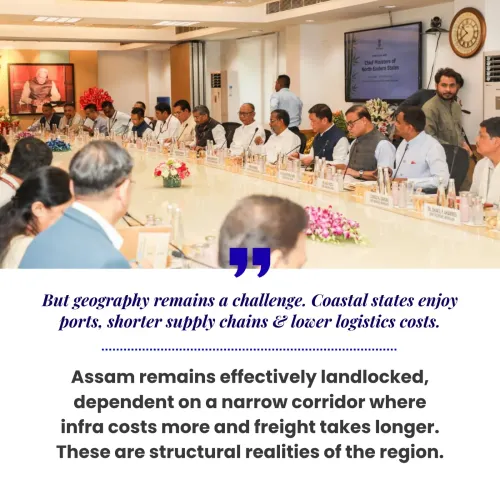
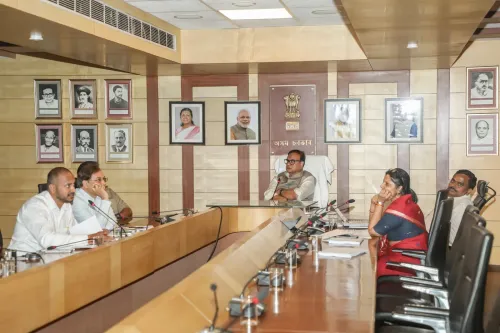
Assam Chief Minister Himanta Biswa Sarma on Thursday, 16 July 2026, shared an update on a series of high-level meetings covering land governance reform, urban growth planning, and new infrastructure projects being developed in partnership with the Asian Development Bank (ADB). The post, shared on X, outlined three distinct policy tracks the state government is actively pursuing under its #AssamRising agenda.
Context
The Chief Minister's update identified three focus areas from the day's deliberations: improved land governance, the development of 'future-ready Urban Growth Centres', and new infrastructure projects tied to an ADB partnership. While specific outcomes of the meetings remain to be formally announced, the post signals active movement on fronts that have been central to the Sarma administration's governance agenda since 2021.
Land governance and urban infrastructure have been recurring themes for Assam under the current government. The state has been working to reduce land-related litigation and enable planned urban expansion — goals that require both administrative reform and capital investment.
Policy Backdrop
Assam has a significant history with ADB financing. The state signed successive ADB loans for urban infrastructure and flood-risk management between 2014 and 2022, and the multilateral lender has backed road, urban, and flood-management projects in the region since the early 2000s. Any new loan agreements would build on this established partnership.
On land records, Assam launched its own computerisation and mutation-reform programme in 2017–18, itself an extension of the central government's Digital India Land Records Modernization Programme launched in 2008. Better land governance reduces title disputes, accelerates project clearances, and lays the groundwork for structured urban expansion — all prerequisites for the Urban Growth Centres concept referenced in the post.
The broader strategic frame is India's Act East Policy, under which north-eastern states have increasingly accessed ADB and other external financing to accelerate connectivity and urban development. Assam's approach of pairing multilateral investment with administrative digitisation mirrors strategies adopted by Odisha, Tamil Nadu, and Maharashtra.
Stakeholders and Impact
The three policy tracks touch distinct but overlapping groups. Land governance reforms directly affect landowners across the state, particularly in peri-urban and rural areas where title ambiguity has historically stalled development. Cleaner records also benefit infrastructure contractors who require unencumbered land for project execution.
Urban residents stand to gain from the Urban Growth Centres initiative, which signals planned, infrastructure-backed expansion rather than unmanaged sprawl. If ADB financing is secured for new projects, it would also bring international procurement and environmental standards into play, raising the quality bar for execution.
What's Next
Formal announcements of new ADB loan agreements and any legislative changes to Assam's land-revenue code are expected to be tabled in the next state assembly session. The Chief Minister's public update suggests these discussions have reached a stage where policy direction is being consolidated, even if specific figures and timelines are yet to be disclosed.
Taken together, the three tracks — land, urban planning, and ADB-backed infrastructure — represent a layered strategy to position Assam as a governance and investment destination in India's north-east, consistent with the state's stated ambition under the #AssamRising banner.
Point of View
Planned urbanisation, and multilateral financing — rather than treating them as sequential priorities. Bundling these in a single public post reinforces the administration's 'whole-of-government' narrative ahead of what are likely to be significant formal announcements. The ADB angle is particularly notable: north-eastern states that successfully leverage multilateral lenders gain not just capital but institutional credibility, which in turn attracts private investment. Watched alongside expected assembly-session legislation, this update may mark the beginning of a more visible infrastructure push in the run-up to the next electoral cycle.
NationPress
15 Oct 2026
Frequently Asked Questions
What did Assam CM Himanta Biswa Sarma announce on 16 July 2026?
CM Sarma shared an update on meetings covering three areas: land governance improvement, development of Urban Growth Centres, and new infrastructure projects in partnership with the Asian Development Bank (ADB).
What is Assam's relationship with the Asian Development Bank?
Assam has worked with the ADB since the early 2000s, signing successive loans for urban infrastructure and flood-risk management between 2014 and 2022. New agreements are expected to be formally announced soon.
What are Urban Growth Centres in Assam?
Urban Growth Centres is a concept referenced by CM Sarma indicating planned, infrastructure-backed urban expansion zones in Assam, designed to support structured growth rather than unmanaged urban sprawl.
What is Assam's land governance reform about?
Assam has been modernising land records since 2017–18 through computerisation and mutation reforms, building on the central Digital India Land Records Modernization Programme. The goal is to reduce litigation and enable faster development clearances.
How does Assam's infrastructure push relate to India's Act East Policy?
Under India's Act East Policy, north-eastern states including Assam have increasingly accessed ADB and other external financing to accelerate connectivity and urban projects, positioning the region as a gateway to South-East Asia.