CM Assam, Arunachal Advance Border Settlement Talks
Synopsis
The Chief Minister's Office of Assam flagged fresh engagement on the long-running Assam-Arunachal Pradesh boundary dispute on 18 June 2026, building on the landmark 2022 agreement to resolve disputes over 123 villages through a bilateral joint commission led by CMs Himanta Biswa Sarma and Pema Khandu.
Key Takeaways
The Chief Minister's Office of Assam posted an update on 18 June 2026 referencing the Assam-Arunachal Pradesh border settlement process.
In December 2022 , the two states signed an agreement to resolve disputes over 123 villages via a joint commission.
CM Himanta Biswa Sarma (Assam) and CM Pema Khandu (Arunachal Pradesh) have led multiple rounds of bilateral talks.
The joint commission mechanism involves local representatives, revenue officials, and senior bureaucrats assessing each contested village individually.
Progress on the 123-village framework could serve as a model for other Northeast inter-state boundary disputes.
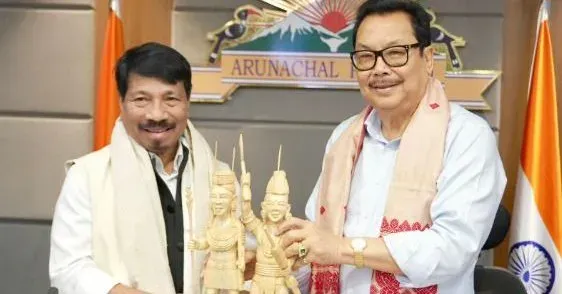
The Chief Minister's Office of Assam shared an update on 18 June 2026 referencing ongoing engagement between Assam and Arunachal Pradesh on their long-standing inter-state boundary dispute, signalling continued momentum in the bilateral resolution process.
Context
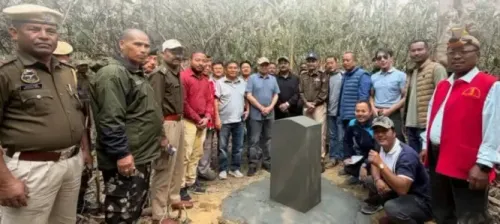
The Assam-Arunachal Pradesh border has been a subject of dispute for decades, involving dozens of villages along a boundary that was never formally demarcated after the reorganisation of Northeastern states. Residents of contested villages have historically faced uncertainty over land rights, access to government schemes, and administrative jurisdiction.
The two states have pursued dialogue through bilateral mechanisms, supplementing earlier processes overseen by the Supreme Court of India. The current round of engagement is consistent with the central government's broader push for harmonised governance across the Northeast.
Policy Backdrop
A landmark moment came in December 2022, when Assam and Arunachal Pradesh signed a formal agreement to resolve disputes over 123 villages through a dedicated joint commission. The agreement was seen as one of the most substantive steps taken by any two Northeastern states toward a negotiated boundary settlement.
Chief Minister Himanta Biswa Sarma of Assam and Chief Minister Pema Khandu of Arunachal Pradesh have been the principal political drivers of this process, holding multiple rounds of talks aimed at converting contested zones into areas of shared infrastructure investment and welfare delivery.
Stakeholders and Impact
The most direct beneficiaries of a settled boundary are the border villagers of both states, who stand to gain clarity on land ownership, eligibility for state welfare schemes, and access to development funds. Administrative bodies on both sides have also expressed interest in resolving jurisdictional ambiguities that complicate infrastructure planning.
The joint commission mechanism is designed to bring local representatives, revenue officials, and senior bureaucrats together to assess each contested village on a case-by-case basis, reducing the risk of political escalation while maintaining technical rigour in the demarcation process.
What's Next
Attention will now turn to progress reports from the joint commission established under the 2022 agreement, and whether a follow-up CM-level meeting is scheduled to review implementation timelines. Sustained political will at the top — demonstrated by continued engagement between Sarma and Khandu — remains the key variable in converting the framework agreement into ground-level resolution.
If the two states can demonstrate measurable progress on the 123-village framework, it could serve as a replicable model for other unresolved inter-state boundary disputes across the Northeast, reinforcing the region's broader integration agenda.
Point of View
Giving both CMs ownership of the outcome. Sustained CM-level engagement also serves the central government's Northeast integration narrative, which links border peace to infrastructure investment corridors. The real test, however, lies in how many of the 123 villages move from 'agreed in principle' to formally demarcated on the ground.
NationPress
18 Sept 2026
Frequently Asked Questions
What is the Assam-Arunachal Pradesh border dispute about?
The dispute involves dozens of villages along a boundary that was never formally demarcated after the reorganisation of Northeastern states, leaving residents uncertain about land rights and administrative jurisdiction. Both states have pursued resolution through bilateral talks and, earlier, Supreme Court-mediated processes.
What was the 2022 Assam-Arunachal border agreement?
In December 2022 , Assam and Arunachal Pradesh signed an agreement to resolve disputes over 123 villages through a dedicated joint commission, marking one of the most substantive steps toward a negotiated boundary settlement between any two Northeastern states.
Who are the chief ministers leading the Assam-Arunachal border talks?
Himanta Biswa Sarma , Chief Minister of Assam since 2021, and Pema Khandu , Chief Minister of Arunachal Pradesh, are the principal political leaders driving the border resolution process through multiple rounds of bilateral dialogue.
How does the Assam-Arunachal joint commission work?
The joint commission brings together local representatives, revenue officials, and senior bureaucrats from both states to assess each contested village on a case-by-case basis, aiming to demarcate the boundary through technical review rather than litigation.
What happens to border villagers once the dispute is resolved?
Resolution would give border villagers clarity on land ownership, eligibility for state welfare schemes, and access to development funds, while also removing jurisdictional ambiguities that currently complicate infrastructure planning on both sides.