CM Himanta's Assam Brings Banking to Doorstep for Elderly, Disabled
Synopsis
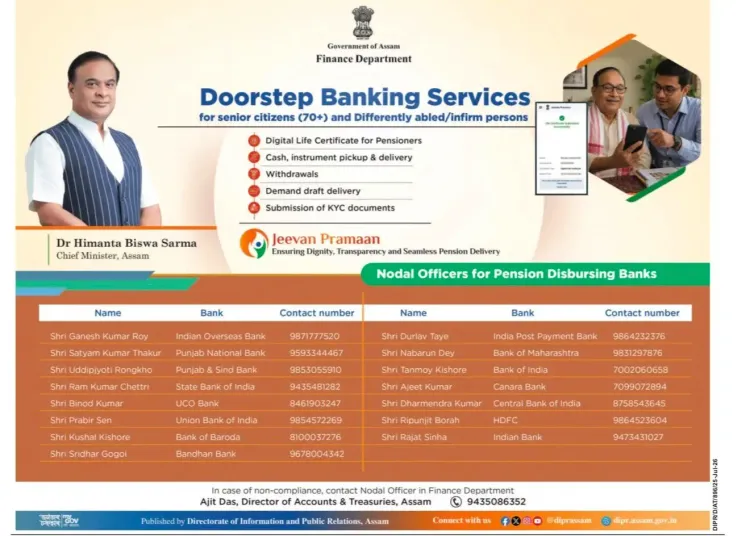
The Chief Minister's Office of Assam has announced that senior citizens aged 70 and above and persons with disabilities or serious illnesses can now access essential banking services — including Digital Life Certificates, cash withdrawals, KYC collection, and Demand Draft delivery — at their doorstep under CM Himanta Biswa Sarma's leadership.
Key Takeaways
Doorstep banking is now available for senior citizens aged 70 and above and persons with disabilities or serious illnesses in Assam .
Services covered include Digital Life Certificates , cash withdrawals , KYC document collection , and Demand Draft delivery .
The initiative was announced by the Chief Minister's Office of Assam on July 27, 2026 .
The scheme is being implemented under the leadership of Chief Minister Dr.
Himanta Biswa Sarma , who has governed Assam since May 2021 .
The move builds on national infrastructure including the Aadhaar-linked Jeevan Pramaan platform and the Pradhan Mantri Jan Dhan Yojana .
Operational details such as launch date, coverage statistics, and participating banks have not yet been officially disclosed.
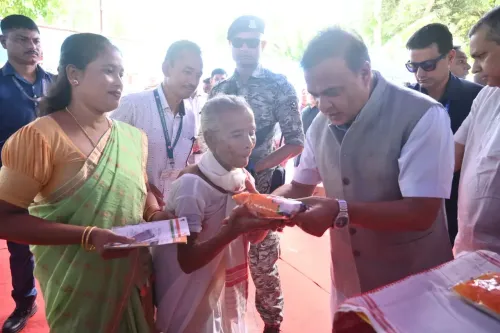
The Chief Minister's Office of Assam announced on Sunday, July 27, 2026, that the state government is extending doorstep banking services to senior citizens aged 70 and above and persons with disabilities or serious illnesses, under the leadership of Chief Minister Dr. Himanta Biswa Sarma.
Context
The initiative covers a range of critical banking functions that previously required beneficiaries to visit bank branches in person. Services now delivered at home include Digital Life Certificates, cash withdrawals, KYC document collection, and Demand Draft delivery. For elderly and disabled residents, the physical barrier of reaching a bank branch has long been a significant obstacle to accessing their own finances and pension entitlements.
The CMO stated the move is aimed at 'ensuring greater convenience and citizen-centric service delivery,' framing it as part of a broader push to make government and financial systems more responsive to vulnerable populations.
Policy Backdrop
The doorstep banking push builds on the national digital infrastructure established over the past decade. The Pradhan Mantri Jan Dhan Yojana, launched in 2014, expanded banking access to previously unbanked populations across India. The Digital Life Certificate — delivered through the Aadhaar-linked Jeevan Pramaan platform — was introduced nationally to allow pensioners to submit annual life certificates without visiting a bank or post office.
Assam's doorstep model extends this logic further by bringing the bank official to the citizen rather than requiring the citizen to navigate digital platforms independently. Indian states have progressively adopted such last-mile delivery models, particularly for welfare beneficiaries who face mobility or connectivity constraints.
Chief Minister Dr. Himanta Biswa Sarma, who has led the state since May 2021, has positioned welfare modernisation and technology-enabled governance as central planks of his administration. This banking initiative fits within that broader pattern of proactive service delivery reform in Assam.
Stakeholders and Impact
The primary beneficiaries are senior citizens aged 70 and above and residents living with disabilities or serious illnesses — groups that face disproportionate difficulty in accessing physical banking infrastructure. For pensioners, the ability to submit a Digital Life Certificate at home removes what has historically been a stressful annual requirement, failure to complete which can result in pension disbursement being paused.
KYC document collection at the doorstep also addresses a recurring pain point: banks often require periodic re-verification of identity documents, a process that is burdensome for those with limited mobility. The inclusion of Demand Draft delivery signals that the scheme is designed to cover a meaningful breadth of routine banking needs, not just a single service.
What's Next
The announcement does not specify an operational rollout timeline or the financial institutions involved in delivering these services, and those details remain to be disclosed by the state government. Analysts watching Assam's welfare agenda will look for whether the scheme is extended to additional vulnerable categories — such as widows or rural residents without bank branches nearby — in forthcoming state budget announcements or welfare policy reviews. Integration with central government platforms such as Direct Benefit Transfer infrastructure could further strengthen the scheme's reach and accountability.
Point of View
The optics are straightforward: welfare delivery that is visible, personal, and measurable. The scheme's long-term credibility, however, will hinge on implementation depth — specifically whether banking correspondents and branch staff can sustain reliable doorstep visits at scale across a geographically diverse state like Assam. If it achieves consistent coverage, it could become a replicable model for other northeastern states grappling with similar demographic and infrastructure challenges.
NationPress
24 Oct 2026
Frequently Asked Questions
What banking services are available at doorstep in Assam for senior citizens?
In Assam, senior citizens aged 70 and above can now receive Digital Life Certificates, cash withdrawals, KYC document collection, and Demand Draft delivery at their doorstep under a new government initiative.
Who is eligible for doorstep banking in Assam?
The doorstep banking scheme in Assam is available to senior citizens aged 70 and above and persons with disabilities or serious illnesses who find it difficult to visit bank branches.
What is a Digital Life Certificate and why does it matter for pensioners?
A Digital Life Certificate, issued through the Aadhaar-linked Jeevan Pramaan platform, is an annual proof-of-life submission required by pensioners. Failure to submit it can result in pension payments being stopped, making doorstep delivery especially important for immobile seniors.
Which government launched doorstep banking for elderly in Assam?
The Government of Assam, led by Chief Minister Dr. Himanta Biswa Sarma, announced the doorstep banking initiative for elderly and disabled residents through the Chief Minister's Office.
Is doorstep banking available across all of Assam?
The Assam government has announced the doorstep banking initiative statewide, but specific coverage details, participating banks, and operational timelines have not yet been officially disclosed.