Assam CM Office Calls State Budget 'Revenue Neutral'
Synopsis
The Chief Minister's Office of Assam announced on 11 July 2026 that the state budget is revenue-neutral — meaning no new taxes — consistent with the Sarma government's post-2021 fiscal consolidation approach and FRBM Act obligations.
Key Takeaways
The Chief Minister's Office of Assam declared the state budget 'revenue-neutral' on 11 July 2026 .
A revenue-neutral budget means no new taxes are imposed on citizens or businesses beyond existing rates.
Chief Minister Himanta Biswa Sarma has overseen Assam's budgets since taking office in 2021 .
The announcement aligns with FRBM Act fiscal discipline requirements applicable to all Indian states.
The full budget document is yet to be tabled and debated in the Assam Legislative Assembly .
State taxpayers and government departments are the primary stakeholders affected by this fiscal stance.
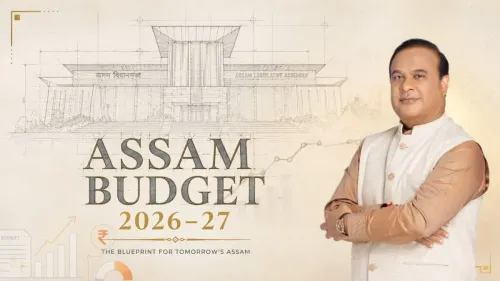
The Chief Minister's Office of Assam declared on Saturday, 11 July 2026 that the state's latest budget is a revenue-neutral exercise, signalling that the government has chosen not to impose new taxes while balancing its fiscal accounts. The announcement was made via an official post on X, accompanied by an image, and was written in Assamese — the vernacular language of the state.
Context
The post, in Assamese, reads: 'এইখন ৰাজহ নিৰপেক্ষ বাজেট' — translated as 'This is a revenue-neutral budget.' The brevity of the statement is deliberate, framing the budget's central character for the public in a single line. A revenue-neutral budget means the government does not raise additional tax revenue beyond what existing rates and bases would generate.
The declaration comes from the office of Chief Minister Himanta Biswa Sarma, who has headed the Government of Assam since 2021 and has overseen multiple annual budgets during his tenure. The post was shared alongside an image, suggesting the budget document or a key summary graphic was published simultaneously.
Policy Backdrop
Assam's budgets since 2021 have consistently sought to balance revenue mobilisation with expenditure discipline, in line with the Fiscal Responsibility and Budget Management (FRBM) Act obligations that govern all Indian states. A revenue-neutral stance is a deliberate policy choice — it avoids fresh tax burdens on citizens and businesses while demonstrating that the government can fund its programmes from existing revenue streams.
Across BJP-governed states in the post-pandemic period, fiscal consolidation has been a recurring theme, with administrations seeking to contain deficits without resorting to new levies. Assam's characterisation of its budget as revenue-neutral fits within this broader pattern of balancing political optics with fiscal prudence.
Stakeholders and Impact
The primary beneficiaries of a revenue-neutral budget are state taxpayers — individuals and businesses who face no additional tax incidence from this round of budgeting. Government departments, meanwhile, must work within existing allocations, placing a premium on efficient expenditure planning.
For ordinary Assamese households, the signal is that the state government does not intend to raise rates on goods, services, or property taxes under its jurisdiction for this budget cycle. However, the full impact will become clear only when the detailed budget document — including allocation figures for key sectors such as agriculture, infrastructure, and social welfare — is tabled and debated in the Assam Legislative Assembly.
What's Next
The tabling of the complete budget document in the Assam Legislative Assembly will be the next critical milestone, where legislators from both the ruling coalition and the opposition will scrutinise revenue projections, expenditure heads, and deficit targets. Any mid-year revisions or supplementary demands will further test whether the revenue-neutral commitment holds through the financial year.
Analysts and state taxpayers will watch closely to see whether the government can sustain its spending on flagship schemes without widening the fiscal deficit — the true measure of whether a revenue-neutral budget remains financially sustainable over the months ahead.
Point of View
Which faces the dual pressure of maintaining welfare commitments and controlling the deficit, this framing positions the budget as responsible stewardship. The move mirrors a trend among BJP-governed states to project fiscal conservatism ahead of electoral cycles. Whether the revenue-neutral tag survives scrutiny of the detailed numbers will determine its credibility.
NationPress
10 Oct 2026
Frequently Asked Questions
What does a revenue-neutral budget mean in Assam?
A revenue-neutral budget means the Assam government will not introduce new taxes or raise existing tax rates, funding its expenditure from current revenue streams without adding to the tax burden on citizens or businesses.
Who presented the Assam budget in 2026?
The budget is presented by the Government of Assam under Chief Minister Himanta Biswa Sarma , who has led the state administration since 2021 .
What is the FRBM Act and how does it apply to Assam?
The Fiscal Responsibility and Budget Management (FRBM) Act sets legally binding targets for fiscal deficit and debt levels for Indian states. Assam, like all states, must frame its budget within these limits, making revenue-neutral budgeting a way to comply without imposing fresh taxes.
What happens after Assam's budget is announced?
After the announcement, the full budget document is tabled in the Assam Legislative Assembly , where it is debated by ruling and opposition legislators before being passed. Mid-year supplementary demands may follow if spending needs change.
Does a revenue-neutral budget mean no changes to spending in Assam?
Not necessarily. Revenue-neutral refers only to the tax side — the government may still reallocate spending across departments. The detailed expenditure allocations will be clear once the full budget document is tabled in the Assembly.