CM Majhi Highlights Odisha's Industrial Rise, 6-Lakh Jobs Push
Synopsis
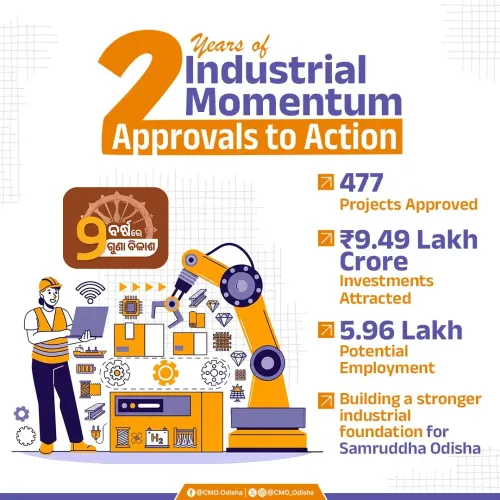
Odisha Chief Minister Mohan Charan Majhi has declared that his government's industrial push has moved from promises to production, citing progress toward 6 lakh jobs and large-scale investment approvals within two years, while asserting that Odia youth are returning home as industrial zones expand across the state.
Key Takeaways
CM Mohan Charan Majhi posted on 11 July 2026 claiming Odisha's industrial development has taken concrete shape under his government.
The state is working toward creating nearly 6 lakh employment opportunities within two years of the BJP government taking office in June 2024.
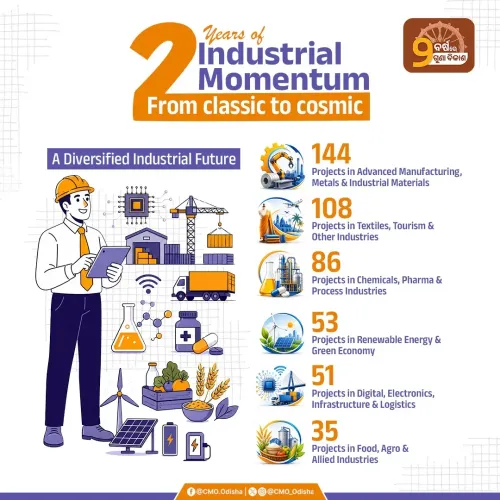
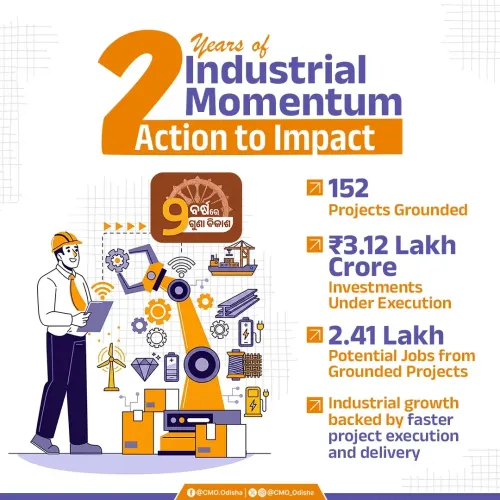
Investment approvals worth lakhs of crores of rupees and new industrial zones have been cited as markers of progress.
Rapid decision-making, transparent policy, and an industry-friendly environment are credited with boosting investor confidence in Odisha .
The Chief Minister highlighted the return of Odia youth to the home state as a key human outcome of the industrial strategy.
Independent verification of investment and employment figures through official surveys remains the next critical benchmark.
Odisha Chief Minister Mohan Charan Majhi on Saturday, 11 July 2026, claimed that the state's industrial development has moved from promises to ground-level reality, citing large-scale investment approvals, new industrial zones, and progress toward creating nearly 6 lakh employment opportunities within two years of his government taking office.
Context
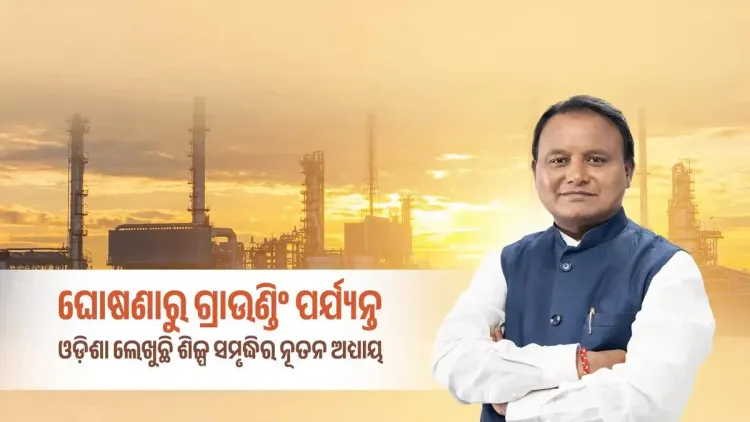
Writing in Odia on X, CM Majhi stated: 'କେବଳ ପ୍ରତିଶ୍ରୁତି ନୁହେଁ, ବରଂ ଭୂମିପୂଜନରୁ ଉତ୍ପାଦନ' — 'Not just promises, but from groundbreaking to production' — framing his government's industrial record as one of tangible delivery. He added that rapid decision-making, transparent policy, and an industry-friendly environment have strengthened investor confidence in Odisha. The post also noted that Odia youth are now returning to their home state as industrial growth picks up, a pointed reference to the long-standing problem of out-migration for work.
Policy Backdrop
Odisha has historically anchored its economy in mining, steel, and metals, leveraging its rich mineral reserves. The state's Industrial Policy Resolution of 2015 introduced single-window clearance and a structured incentive framework to attract manufacturing capital. The central government's Production Linked Incentive (PLI) scheme, launched in 2020, further extended support to key sectors with a footprint in Odisha, including steel, electronics, and pharmaceuticals. CM Majhi's BJP government, which took office in June 2024, has sought to build on this foundation while diversifying into value-added industries beyond raw material extraction.
The broader national push under Atmanirbhar Bharat has intensified competition among Indian states to improve ease-of-doing-business rankings and secure large investment proposals. Odisha's Make in Odisha summit series has been a central vehicle for attracting both domestic and foreign capital into manufacturing and infrastructure projects.
Stakeholders and Impact
The primary beneficiaries cited by CM Majhi are Odia youth, for whom local industrial employment is positioned as an alternative to migrating to other states. Private investors are the other key stakeholder group, with the Chief Minister's messaging aimed at reinforcing the state's reputation as a preferred investment destination. The development of new industrial zones is expected to create supply-chain ecosystems that support ancillary businesses alongside anchor industries.
The claim of progress toward 6 lakh jobs and investment approvals worth lakhs of crores of rupees within two years, if substantiated, would represent a significant shift in the state's economic trajectory. Independent verification of these figures through official state economic surveys and project commissioning data remains the benchmark for assessing actual delivery against stated targets.
What's Next
Attention will now turn to the release of Odisha's next state economic survey and any forthcoming industrial policy updates, which will provide auditable data on how many announced investments have been commissioned and how many jobs have been formally created. Any new investment summit or major project inauguration by the Majhi government will be closely watched as a measure of whether momentum translates into verified on-ground outcomes. The return of Odia youth to the state labour market, if confirmed by migration data, would serve as the most concrete human indicator of the industrial strategy's success.
Point of View
Setting up a narrative ahead of any mid-term accountability test. The real test, however, will come when audited project-commissioning and employment data are placed in the public domain.
NationPress
11 Jul 2026
Frequently Asked Questions
How many jobs has the Odisha government claimed to create under CM Majhi?
CM Mohan Charan Majhi has stated that his government is working toward creating nearly 6 lakh employment opportunities, citing progress made within two years of taking office in June 2024. These figures are government claims and are pending independent verification through official economic surveys.
What is the Make in Odisha initiative?
Make in Odisha is a state-level investment summit series launched to attract domestic and foreign capital into manufacturing, infrastructure, and value-added industries. It has been a central platform for the state government to showcase investment proposals and industrial policy reforms.
When did Mohan Charan Majhi become Chief Minister of Odisha?
Mohan Charan Majhi was sworn in as Chief Minister of Odisha in June 2024 after the BJP won the state assembly elections, ending over two decades of Biju Janata Dal rule in the state.
What industrial policies support Odisha's investment push?
Odisha's Industrial Policy Resolution of 2015 provides incentives and single-window clearance for manufacturers. The central government's Production Linked Incentive scheme, launched in 2020, also supports key sectors present in Odisha such as steel, electronics, and pharmaceuticals.
Why is youth out-migration a concern in Odisha?
Odisha has historically seen large numbers of young workers migrate to other states for employment due to limited local industrial opportunities. CM Majhi's government has positioned the expansion of industrial zones and investment inflows as a strategy to reverse this trend and retain skilled youth within the state.