Assam Cabinet Clears Admin Reforms, Land Allotments, Youth Schemes

Synopsis
The Assam Cabinet approved a multi-domain package on 19 August 2026 covering administrative reforms, land allotments, and youth empowerment initiatives, with implementation details to follow via official gazette notifications.
Key Takeaways
The Assam Cabinet approved decisions across three domains: administrative reforms, land allotments, and youth empowerment initiatives on 19 August 2026 .
The approvals were announced by the Chief Minister's Office of Assam via its official X account.
Specific details of individual decisions are pending official gazette notifications and implementation guidelines.
Land management and youth employment schemes are recurring priorities in Assam 's state governance calendar.
The cabinet holds constitutional authority under India's federal structure to clear such measures without immediate legislative approval.
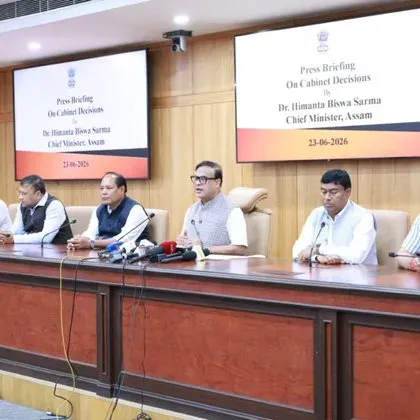
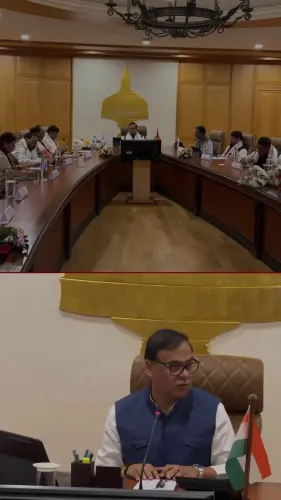
The Assam Cabinet convened and approved a sweeping package of decisions spanning administrative reforms, land allotments, and youth empowerment initiatives, the Chief Minister's Office of Assam announced on Wednesday, 19 August 2026. The approvals signal a broad governance push across multiple fronts simultaneously — a pattern that has defined the state cabinet's working style in recent years.
What the Cabinet Cleared
The decisions, as announced by the CMO Assam, cover three distinct domains: administrative restructuring aimed at improving efficiency in public services, land allotments that direct state resources to intended beneficiaries, and youth-focused initiatives designed to expand employment and opportunity within the state. The cabinet, which functions as the chief executive decision-making body of the Assam state government, holds constitutional authority under India's federal structure to approve such measures without legislative clearance at the initial stage.
Specific details of the individual reforms — including which departments face restructuring, the quantum and location of land allotments, and the precise contours of the youth schemes — are expected to be formalised through official gazette notifications and implementation guidelines in the coming days.
A Familiar Governance Playbook in Assam
Bundling administrative, land, and youth decisions into a single cabinet sitting is not unusual for Assam. State governments have periodically packaged these three categories together, using cabinet meetings to clear a backlog of pending proposals across departments in one session. Land management decisions in particular carry political and social weight in Assam, where questions of settlement, encroachment, and entitlement have long intersected with demographic and ethnic fault lines. Youth empowerment schemes, meanwhile, have become a near-constant feature of state governance as the administration seeks to address unemployment among a young population.
The approvals now move toward the implementation phase — the harder half of any governance commitment. Watch for gazette notifications that will spell out the fine print.
Point of View
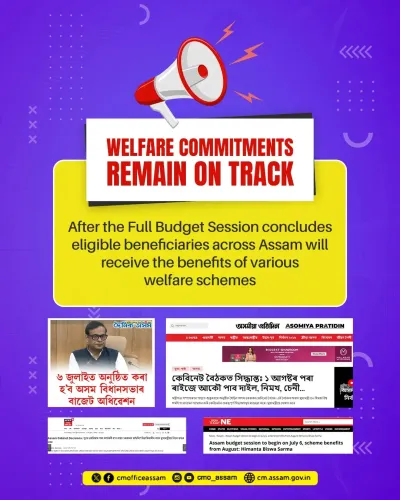
Land, and youth decisions in a single announcement is a deliberate optics choice — it projects comprehensive governance rather than piecemeal action. For Assam, land allotments are never purely administrative; they carry layered significance in a state where land rights intersect with ethnic identity and settlement politics. The youth empowerment angle fits a wider pattern among BJP-governed states of framing welfare delivery as economic empowerment. The real test, as always, lies in gazette notifications — the gap between cabinet approval and on-ground implementation has historically been where Assam's ambitious reform packages lose momentum.
NationPress
19 Aug 2026
Frequently Asked Questions
What did the Assam Cabinet approve on 19 August 2026?
The Assam Cabinet approved a package of decisions covering administrative reforms, land allotments, and youth empowerment initiatives, as announced by the Chief Minister's Office of Assam.
What are the youth empowerment initiatives approved by the Assam Cabinet?
Specific details of the youth empowerment initiatives have not yet been made public; official gazette notifications and implementation guidelines are expected to spell out the exact schemes.
Who announced the Assam Cabinet decisions?
The decisions were announced by the Chief Minister's Office of Assam through its official social media account on 19 August 2026.
What is the significance of land allotments approved by the Assam Cabinet?
Land allotments in Assam carry particular social and political weight given the state's history of land rights disputes intersecting with demographic and ethnic questions; cabinet-level approval directs state resources to intended beneficiaries.
When will the Assam Cabinet reforms be implemented?
Implementation timelines will be confirmed through official gazette notifications; the cabinet approval is the first formal step before departments issue detailed guidelines.