Assam Cabinet Clears Reforms for Industry, Education, Tourism
Synopsis
The Assam Cabinet on June 24, 2026 greenlit a package of reforms targeting industry, education and tourism, continuing Chief Minister Himanta Biswa Sarma's push to diversify the northeastern state's economy and attract investment.
Key Takeaways
The Assam Cabinet approved reforms spanning industry, education and tourism on June 24, 2026 .
Chief Minister Himanta Biswa Sarma has led a series of cabinet-level reform packages since taking office in May 2021 .
Assam has been implementing elements of the National Education Policy at the state level since 2020-21 .
The reforms target three key stakeholder groups: industry investors, educational institutions and tourism operators .
Detailed government orders and budgetary allocations are expected to follow, with potential legislative amendments in the Assam Assembly .
Northeast India remains a priority region for investment incentives and connectivity under both central and state government policy frameworks.
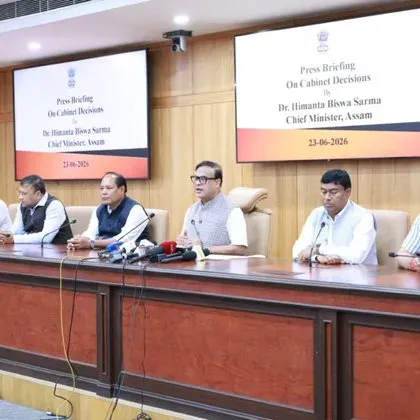
The Chief Minister's Office of Assam announced on Wednesday, June 24, 2026, that the Assam Cabinet has approved a fresh set of policy reforms spanning industry, education and tourism, signalling the state government's continued push to diversify its economy and strengthen human capital development.
Context
The cabinet clearance comes as Assam deepens its focus on economic transformation beyond its traditional pillars of tea, oil and agriculture. The state government, led by Chief Minister Himanta Biswa Sarma, has pursued a series of reform packages since 2021 aimed at improving the investment climate, upgrading educational institutions and expanding the state's tourism footprint. The latest round of approvals reflects that broader policy direction.
Policy Backdrop
On the industry front, Assam has progressively worked to improve its ease-of-doing-business rankings, offering incentives to attract investment into the Northeast — a region that successive central and state governments have prioritised for connectivity and economic integration. Cabinet-level decisions have been the primary vehicle for rolling out such incentives, covering land allotment, single-window clearances and sector-specific packages.
In education, Assam began implementing elements of the National Education Policy framework from 2020-21, with state-level measures targeting curriculum upgrades and institutional strengthening. The latest cabinet approvals are expected to build on that foundation, though the specific provisions will be detailed in follow-up government orders. On tourism, the state has sought to leverage its natural assets — from the Brahmaputra river basin to wildlife sanctuaries — to grow visitor numbers and generate local employment.
Stakeholders and Impact
The reforms touch three distinct constituencies: industry investors looking for a stable and incentive-rich environment in the Northeast; educational institutions and students who stand to benefit from upgraded infrastructure and policy support; and tourism operators — from hospitality businesses to local guides — who depend on state-level facilitation to attract domestic and international visitors.
For Assam's broader economy, the convergence of reforms across these three sectors in a single cabinet sitting suggests a coordinated effort to present the state as a multi-sector destination for investment and development. Stakeholders in each segment will watch closely for the implementing rules and budgetary allocations that give the decisions practical effect.
What's Next
The immediate next steps involve the issuance of detailed government orders spelling out the specific provisions approved by the cabinet. Analysts and investors will track whether the industry measures include fresh fiscal incentives or regulatory easements, what institutional changes the education reforms entail, and which tourism circuits or infrastructure projects receive priority funding.
Any follow-up legislative amendments required to give statutory backing to the decisions would come before the Assam Legislative Assembly. The investor and operator response to the announcements — particularly from sectors already active in the Northeast — will serve as an early indicator of the reforms' practical traction.
Point of View
Education and tourism signals an effort to present a composite reform narrative ahead of any future electoral cycle — demonstrating governance momentum on multiple fronts at once. For Chief Minister Himanta Biswa Sarma, cabinet-level approvals serve a dual function: they advance policy and generate political optics of decisive administration. The Northeast's growing salience in national economic planning gives these state-level decisions added weight, as they align with central government priorities around connectivity and investment in the region. Whether the reforms translate into measurable outcomes will depend heavily on implementation fidelity and the speed of budgetary follow-through.
NationPress
22 Sept 2026
Frequently Asked Questions
What did the Assam Cabinet approve on June 24 2026?
The Assam Cabinet approved a set of key reforms covering industry, education and tourism on June 24, 2026, as announced by the Chief Minister's Office of Assam.
Who is the Chief Minister of Assam in 2026?
Himanta Biswa Sarma is the Chief Minister of Assam, a position he has held since May 2021 after leading the BJP to victory in the state assembly elections.
How has Assam been reforming its education sector?
Assam began implementing elements of the National Education Policy framework from 2020-21, with state-level measures targeting curriculum upgrades and institutional strengthening, a process the latest cabinet decisions are expected to advance.
What sectors is Assam targeting for economic growth?
Beyond its traditional base of tea, oil and agriculture, Assam has been targeting industry investment, education infrastructure and tourism as key pillars of economic diversification.
What happens after the Assam Cabinet approves reforms?
After cabinet approval, the government issues detailed orders specifying provisions and allocations; where statutory backing is needed, amendments may be introduced in the Assam Legislative Assembly.