Assam Cabinet Clears Budget for Guwahati Satellite City
Synopsis
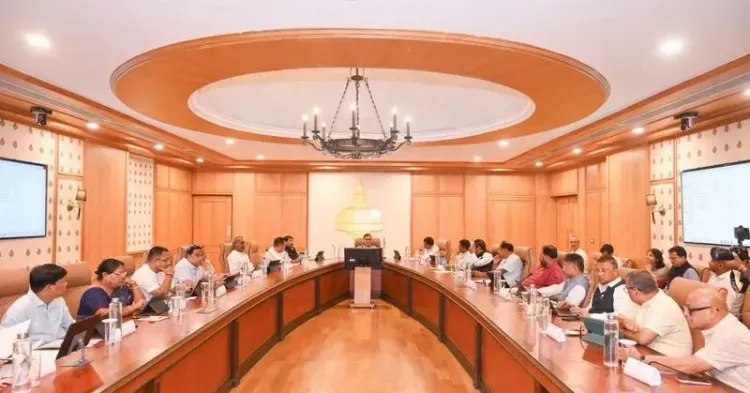
The Assam Cabinet approved the budget for the Guwahati Satellite City Project on August 12, 2026, marking a decisive step toward decongesting the Northeast's largest city through planned, sustainable urban development.
Key Takeaways
The Assam Cabinet approved the budget for the Guwahati Satellite City Project on August 12, 2026 .
Guwahati is Assam's largest city and faces severe urban congestion, unplanned sprawl, and infrastructure strain.
The project aims at 'planned and sustainable urban development,' aligning with national urban policy frameworks.
Budget clearance enables the next stages: land acquisition, tendering, and phased construction.
Specific project phases and funding details are expected in subsequent government announcements.
The initiative mirrors satellite city models adopted by other Indian states to decompress primary urban centres.
Guwahati is bursting at its seams — and the Assam Cabinet just moved to do something about it. On Wednesday, August 12, 2026, the Chief Minister's Office of Assam announced that the Cabinet has approved the budget for the Guwahati Satellite City Project, a landmark decision aimed at channelling the city's explosive growth into planned, sustainable corridors.
The approval signals that Assam is ready to move from intent to execution on one of its most ambitious urban infrastructure bets. The Cabinet cleared the financial outlay for the project, framing it as a major step toward 'planned and sustainable urban development' — language that echoes the pressures building up in a city that has long outgrown its original boundaries.
Why Guwahati Needs a Satellite City Now
Guwahati, the largest city in Assam and the commercial gateway to the entire Northeast, has been absorbing migration and economic activity at a pace its infrastructure was never designed to handle. Unplanned sprawl, traffic gridlock, strained civic utilities, and shrinking green cover have become defining features of the city's recent growth story. A satellite city — a planned urban node developed at a deliberate distance from the main city — is the classic policy response to exactly this kind of pressure. India has seen this playbook before. States from Andhra Pradesh (Amaravati) to Maharashtra (Navi Mumbai) have pursued satellite townships to decompress their primary urban centres. Assam's move fits squarely within national urban policy frameworks that push for decongestion and structured expansion rather than reactive patchwork.What the Cabinet Approval Sets in Motion
Budget approval is the critical unlock. Without a cleared financial outlay, even the best-designed urban project stays on paper. With the Cabinet's green light, the project can now move into execution phases — land acquisition, tendering, infrastructure design, and phased construction. The specific budget figure approved by the Cabinet represents a significant state-level commitment to reshaping how Guwahati's growth is managed over the coming decades. The finer architecture of the project — phasing timelines, land parcels earmarked, funding mix between state resources and central schemes — is expected to emerge in subsequent government announcements and assembly sessions. Urban developers and Guwahati residents will be watching those details closely; the gap between a Cabinet approval and a liveable city is filled entirely by execution quality. If the satellite city delivers on its promise, it could become the template for how the Northeast manages urbanisation in the decades ahead. The Cabinet has placed its bet — now the ground has to follow.Point of View
But by building parallel nodes with deliberate planning. For the ruling dispensation in Assam, this is a high-visibility infrastructure wager with electoral and developmental stakes — delivering a functional satellite city would cement a legacy of transformative governance in the Northeast. The real test, as with all such projects in India, will be in land acquisition timelines, displacement management, and whether private investment follows state capital.
NationPress
12 Aug 2026
Frequently Asked Questions
What is the Guwahati Satellite City Project?
The Guwahati Satellite City Project is a planned urban development initiative approved by the Assam Cabinet to create a new, organised city node near Guwahati, aimed at decongesting the main city and channelling future growth sustainably.
Why does Guwahati need a satellite city?
Guwahati, Assam's largest city, has faced rapid and largely unplanned population growth, leading to traffic congestion, strained infrastructure, and urban sprawl. A satellite city is designed to absorb future growth in a structured manner.
When did the Assam Cabinet approve the Guwahati Satellite City budget?
The Assam Cabinet approved the budget for the Guwahati Satellite City Project on Wednesday, August 12, 2026 , as announced by the Chief Minister's Office of Assam.
What happens after the Cabinet approves the budget?
With the budget cleared, the project can advance to execution stages including land acquisition, infrastructure design, tendering, and phased construction. Detailed timelines and funding breakdowns are expected in subsequent government announcements.
Are other Indian states building satellite cities?
Yes. States like Andhra Pradesh and Maharashtra have pursued satellite townships — such as Amaravati and Navi Mumbai — to decompress their primary urban centres. Assam's Guwahati project follows a similar national urban policy approach.