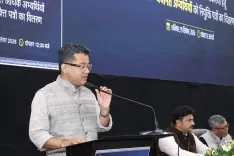
CM Assam Backs Europe & Japan as Act East Partners

Synopsis
The Chief Minister's Office of Assam has amplified the case for Europe and Japan as India's next Act East partners, broadening a policy traditionally focused on ASEAN. Assam, a key connectivity node, stands to benefit from expanded Japanese infrastructure investment and emerging European trade and technology cooperation under the Act East framework.
Key Takeaways
The Chief Minister's Office of Assam on 18 June 2026 backed Europe and Japan as India's next Act East Policy partners.
India's Act East Policy was launched in 2014 by PM Narendra Modi , upgrading the Look East Policy of 1991 .
The India-Japan Act East Forum , established in 2017 , already coordinates infrastructure projects across India's Northeastern states.
The India-EU Strategic Partnership was upgraded in 2020 , covering trade, digital, and green energy cooperation.
Assam is positioned as a gateway for Act East initiatives, including the India-Myanmar-Thailand Trilateral Highway .
Expanding Act East to include Europe and Japan reflects India's broader supply-chain resilience and Indo-Pacific outreach strategy.
The Chief Minister's Office of Assam on Thursday, 18 June 2026 shared commentary advocating for Europe and Japan as India's next partners under the Act East Policy, signalling a broadening of the country's eastern engagement strategy beyond its traditional ASEAN-centric focus.
Context
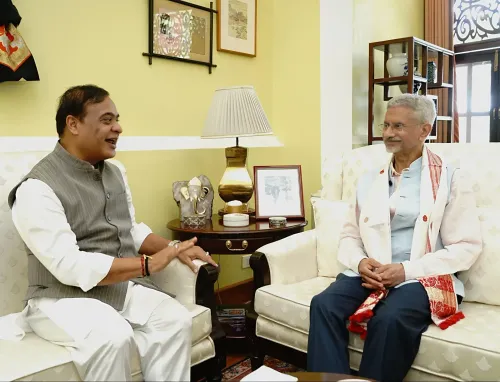
The post, captioned 'Europe and Japan: India's Next Act East Partners', amplifies a policy argument that India's outreach to its east need not be confined to Southeast Asian neighbours. Assam Chief Minister Himanta Biswa Sarma has consistently positioned his state as a frontline stakeholder in India's Act East agenda, given its geographic proximity to Myanmar, Bangladesh, and the broader Indo-Pacific corridor.
The Act East Policy was formally launched by Prime Minister Narendra Modi in 2014, upgrading the earlier Look East Policy of 1991 with sharper strategic and connectivity dimensions. Its core premise is that India's Northeastern states serve as the natural land bridge to East and Southeast Asia.
Policy Backdrop
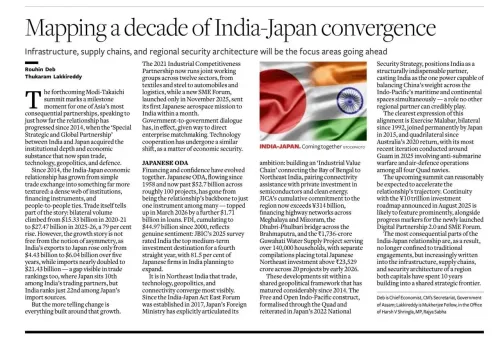
Japan has been a foundational partner in this architecture. The India-Japan Act East Forum, established in 2017, coordinates infrastructure development across Northeastern states, covering roads, bridges, and industrial corridors. Japanese investment has flowed into projects aligned with the India-Myanmar-Thailand Trilateral Highway, a flagship connectivity initiative in which Assam is a critical node.
Europe's inclusion as a proposed Act East partner reflects a newer strand of thinking. The India-EU Strategic Partnership was upgraded in 2020, with renewed emphasis on trade, digital infrastructure, and green energy cooperation. Bringing the European Union into the Act East framework would expand the policy's geographic and thematic scope well beyond its original mandate.
Stakeholders and Impact
Northeastern states, particularly Assam, stand to gain most directly from any expansion of Act East partnerships. Increased Japanese and European engagement could translate into fresh infrastructure funding, technology transfers, and market access for the region's agricultural and industrial output.
Japanese investors already active in the Northeast would benefit from a more formalised multilateral framework, while European businesses — especially in clean energy, logistics, and manufacturing — could find new entry points into India's supply-chain corridors. The argument also dovetails with India's broader supply-chain resilience strategy, which seeks to reduce dependence on any single trade partner.
What's Next
Analysts will watch outcomes from India-Japan annual summit discussions on Northeast connectivity and the progress of ongoing EU-India trade and investment agreement negotiations for concrete signals. If both partnerships deepen simultaneously, the Act East Policy could evolve from a bilateral-and-ASEAN framework into a genuinely multilateral Indo-Pacific engagement strategy.
For Assam and the wider Northeast, the stakes are high: a broader Act East umbrella means more diplomatic bandwidth, more infrastructure investment, and a stronger case for the region as India's eastern economic gateway rather than its periphery.
Point of View
Not merely a recipient of connectivity funds. By linking Assam's gateway status to both Japanese infrastructure capital and European trade ambitions, the messaging attempts to elevate the state's profile in national foreign-policy conversations. This fits a broader pattern in which Chief Minister Himanta Biswa Sarma has used foreign-policy adjacency — investment summits, diplomatic visits, and now policy commentary — to attract investment and signal administrative ambition. The timing, amid active EU-India trade negotiations and ongoing Japan-India summit cycles, gives the argument practical policy hooks rather than leaving it as rhetorical positioning.
NationPress
19 Sept 2026
Frequently Asked Questions
What is India's Act East Policy?
India's Act East Policy is a strategic initiative launched in 2014 by Prime Minister Narendra Modi to deepen economic, cultural, and security ties with East and Southeast Asia. It upgraded the earlier Look East Policy of 1991 and places special emphasis on developing India's Northeastern states as connectivity gateways.
Why is Japan a partner in India's Act East Policy?
Japan has been a core Act East partner since the India-Japan Act East Forum was established in 2017. Japan funds and supports infrastructure projects in India's Northeastern states, including roads, bridges, and industrial corridors that connect India to Southeast Asia.
How is Europe connected to India's Act East Policy?
Europe is an emerging focus area for Act East expansion. The India-EU Strategic Partnership was upgraded in 2020 with cooperation in trade, digital infrastructure, and green energy. Bringing the EU into the Act East framework would extend the policy's reach well beyond its traditional ASEAN focus.
What is Assam's role in India's Act East Policy?
Assam is a key domestic stakeholder in Act East due to its geographic position bordering Myanmar and Bangladesh. It serves as a node for major connectivity initiatives like the India-Myanmar-Thailand Trilateral Highway and has been actively promoted by Chief Minister Himanta Biswa Sarma as India's eastern gateway.
What is the India-Japan Act East Forum?
The India-Japan Act East Forum was established in 2017 to coordinate Japanese-funded development projects in India's Northeastern states. It covers infrastructure such as roads, bridges, and industrial corridors aimed at boosting connectivity with Southeast Asia.