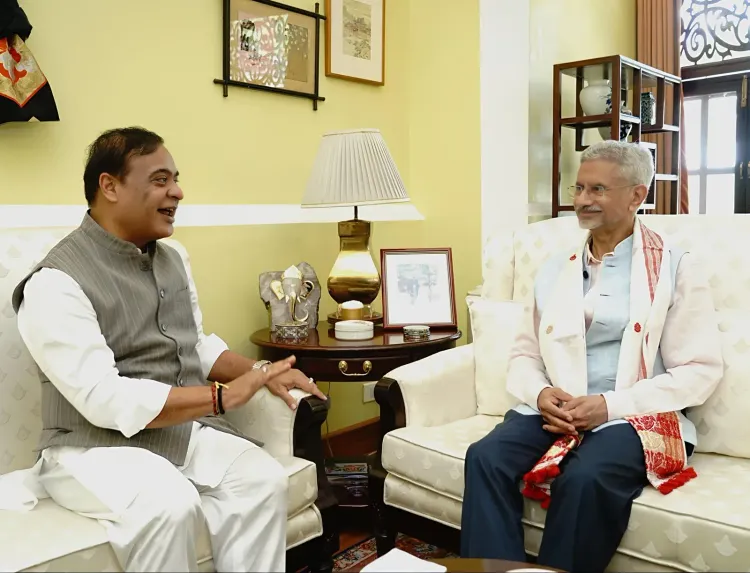
CM Himanta calls on EAM Jaishankar, seeks Assam's role in Act East Policy
Synopsis
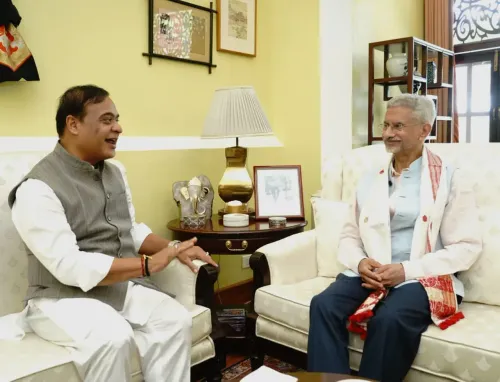
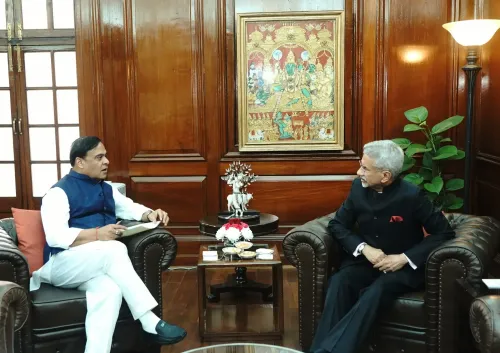
Assam Chief Minister Himanta Biswa Sarma called on External Affairs Minister Dr. S. Jaishankar on 31 May 2026, seeking the Minister's guidance on how Assam can strengthen trade and tourism ties with neighbouring countries under India's Act East Policy framework.
Key Takeaways
CM Himanta Biswa Sarma met EAM Dr.
Jaishankar on 31 May 2026 to discuss India's geopolitical positioning and the Act East Policy .
Sarma thanked Jaishankar for insights on 'further strengthening Bharat's Act East Policy' and sought guidance on Assam's role in trade and tourism with neighbouring countries.
Assam shares borders with Bangladesh and Bhutan and lies in proximity to Myanmar , making it a strategic gateway under Act East connectivity projects.
India's Act East Policy , launched at the 2014 India-ASEAN Summit , upgraded the 1991 Look East Policy with a focus on infrastructure, trade, and people-to-people links with ASEAN nations.
Key connectivity projects relevant to Assam include the India-Myanmar-Thailand Trilateral Highway and the Kaladan Multi-Modal Transit Transport Project .
Follow-up announcements on Assam-specific trade corridors or tourism MoUs are expected ahead of the next India-ASEAN Summit or BIMSTEC meetings.
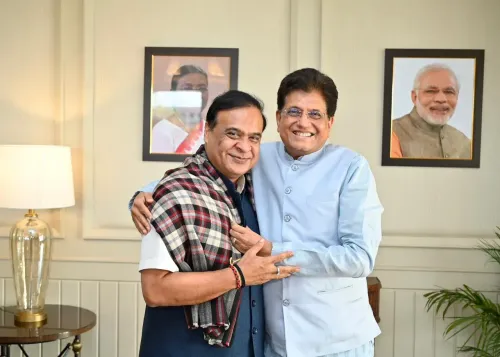
Assam Chief Minister Himanta Biswa Sarma on Sunday, 31 May 2026, called on External Affairs Minister Dr. S. Jaishankar in what the Chief Minister described as an enlightening exchange on India's geopolitical positioning and the country's Act East Policy. Sarma said he thanked the Minister for sharing insights on strengthening Bharat's Act East Policy and expressed Assam's interest in deepening trade and tourism ties with neighbouring countries.
Context
In a post on 31 May 2026, CM Sarma wrote that Dr. Jaishankar's 'perspective on global affairs and how India is navigating current geopolitical headwinds is always enlightening.' He added that Assam looks forward to the Minister's guidance on how the state 'can play a role in strengthening trade and tourism ties with neighbouring countries.' The meeting signals a deliberate push by the Assam government to position the state as an active participant in India's foreign-policy outreach toward Southeast Asia and its immediate neighbourhood.
Policy Backdrop
India's Act East Policy was formally announced by Prime Minister Narendra Modi at the 2014 India-ASEAN Summit in Myanmar, upgrading the 1991 Look East Policy to place sharper emphasis on infrastructure investment, trade connectivity, and people-to-people links with ASEAN and East Asian nations. Assam, sharing borders with Bangladesh and Bhutan and in proximity to Myanmar, occupies a strategically significant position within this framework. Major connectivity initiatives such as the India-Myanmar-Thailand Trilateral Highway and the Kaladan Multi-Modal Transit Transport Project are designed, in part, to channel trade through the northeastern corridor where Assam serves as a logistical hub.
Dr. S. Jaishankar has served as India's External Affairs Minister since May 2019 and has been a principal architect of the country's neighbourhood-first and Act East diplomatic outreach. State-level engagement with the External Affairs Ministry has become an established pattern for northeastern Chief Ministers seeking to align local economic priorities with national foreign-policy goals.
Stakeholders and Impact
The immediate beneficiaries of any Assam-specific trade or tourism initiative under the Act East Policy framework would be the state's trading community, border-area businesses, and the tourism sector, which has been expanding its outreach to visitors from Bangladesh, Bhutan, and beyond. Strengthened connectivity and bilateral arrangements could open new corridors for agricultural produce, handicrafts, and services exports from the state. Broader regional stakeholders include ASEAN member states, particularly those engaged with India through BIMSTEC and bilateral trade agreements, as well as communities in border districts that stand to gain from improved cross-border infrastructure.
What's Next
Observers will watch for follow-up announcements on Assam-specific trade corridors, tourism memoranda of understanding, or investment facilitation frameworks ahead of the next India-ASEAN Summit or BIMSTEC ministerial meetings. The meeting between CM Sarma and EAM Jaishankar could lay the groundwork for a more structured role for Assam in India's eastern neighbourhood diplomacy, particularly as New Delhi deepens its engagement with Southeast Asia amid shifting Indo-Pacific dynamics. Whether the conversation translates into concrete policy instruments — dedicated trade facilitation desks, tourism visa linkages, or corridor development commitments — will determine its long-term significance for the state.
Point of View
Who also convenes the North-East Democratic Alliance, positioning Assam as a proactive Act East stakeholder carries both economic and political dividends, reinforcing the BJP-governed Northeast's alignment with New Delhi's Indo-Pacific ambitions. The outreach also signals that as geopolitical headwinds reshape supply chains and trade routes, northeastern states are competing to be designated as preferred connectivity hubs. Whether this engagement produces concrete instruments — trade corridors, tourism facilitation, or investment frameworks — will be the real test of its policy weight.
NationPress
14 Oct 2026
Frequently Asked Questions
What did Assam CM Himanta Biswa Sarma discuss with EAM Jaishankar?
CM Sarma discussed India's geopolitical positioning, the Act East Policy, and how Assam can play a role in strengthening trade and tourism ties with neighbouring countries.
What is India's Act East Policy?
India's Act East Policy is a strategic framework to deepen economic, trade, and people-to-people links with ASEAN and East Asian nations. It was formally launched by PM Modi at the 2014 India-ASEAN Summit in Myanmar, upgrading the earlier 1991 Look East Policy.
Why is Assam important for India's Act East Policy?
Assam shares borders with Bangladesh and Bhutan and is in proximity to Myanmar, making it a natural gateway for trade and connectivity projects linking India with Southeast Asia, including the India-Myanmar-Thailand Trilateral Highway and the Kaladan project.
Who is Dr. S. Jaishankar?
Dr. S. Jaishankar is India's External Affairs Minister, serving since May 2019. He has been a key figure in shaping India's neighbourhood-first diplomacy and the Act East Policy outreach toward ASEAN nations.
What can we expect after Himanta Sarma's meeting with Jaishankar?
Observers are watching for follow-up announcements on Assam-specific trade corridors, tourism memoranda of understanding, or investment facilitation frameworks ahead of upcoming India-ASEAN Summit or BIMSTEC ministerial meetings.