CM Himanta meets EAM Jaishankar to boost Assam's cross-border ties
Synopsis
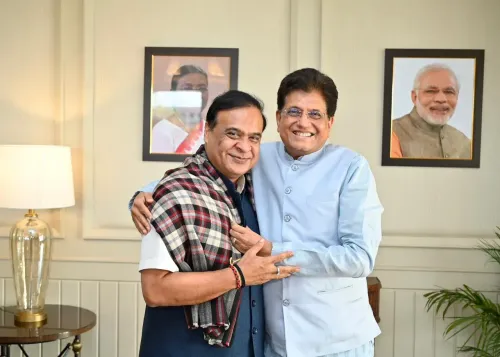
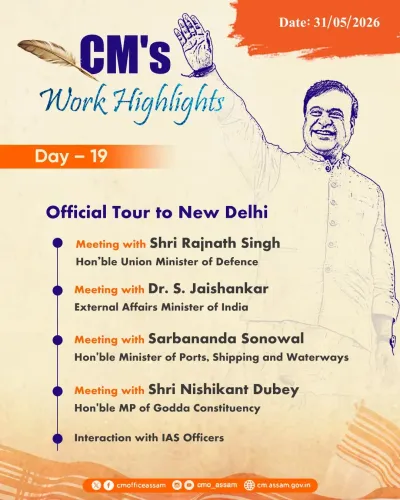
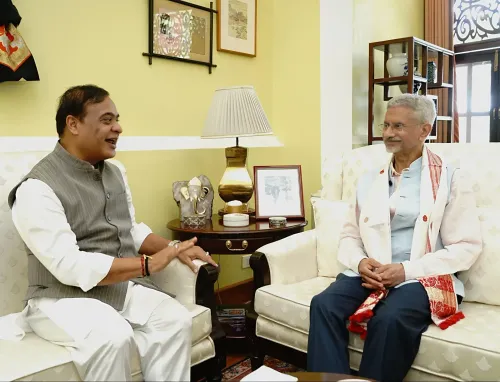
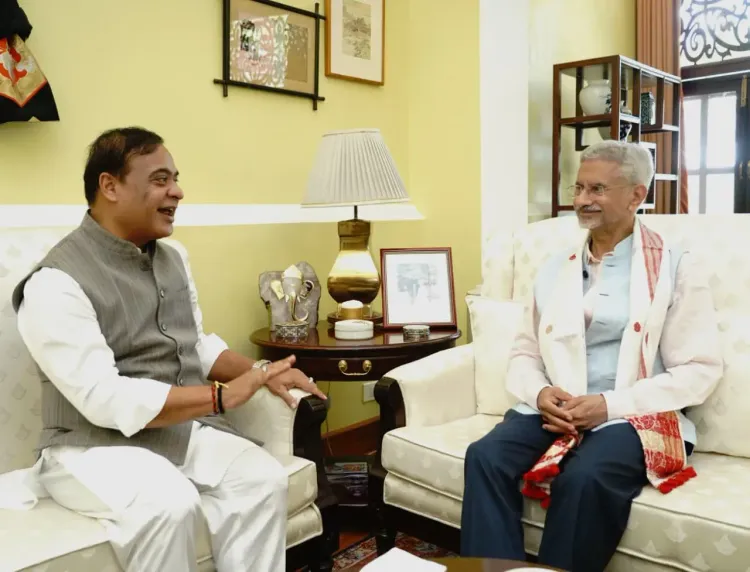
Assam Chief Minister Himanta Biswa Sarma met External Affairs Minister S. Jaishankar in New Delhi on 31 May 2026. The talks focused on strengthening Assam's trade and tourism linkages with neighbouring countries, reinforcing India's Act East and Neighbourhood First policy frameworks through direct state-level diplomatic engagement.
Key Takeaways
CM Himanta Biswa Sarma called upon EAM Dr.
Jaishankar in New Delhi on 31 May 2026 .
Discussions centred on strengthening Assam 's trade and tourism ties with neighbouring countries.
Assam borders Bangladesh , Bhutan , and has proximity to Myanmar , making it central to India's Act East Policy .
The engagement aligns with India's Neighbourhood First doctrine, championed by Dr.
Jaishankar since 2019 .
The BBIN Motor Vehicles Agreement (2015) and BIMSTEC frameworks form the policy architecture underpinning the discussion.
Assam's trading community and Northeast tourism operators are the primary stakeholders who stand to benefit from any follow-up measures.
The Chief Minister's Office of Assam announced on 31 May 2026 that Chief Minister Dr. Himanta Biswa Sarma called upon External Affairs Minister Dr. S. Jaishankar in New Delhi, with discussions centred on strengthening Assam's trade and tourism ties with neighbouring countries.
Context
The meeting between CM Himanta Biswa Sarma and EAM Dr. S. Jaishankar marks a direct state-level engagement with India's foreign policy establishment. Assam shares international borders with Bangladesh, Bhutan, and has proximity to Myanmar, placing it at the intersection of multiple active diplomatic corridors. The Chief Minister's Office stated the discussion focused on 'ways Assam can strengthen trade and tourism ties with neighboring countries.'
Policy Backdrop
The meeting sits squarely within India's Act East Policy, formally launched in 2014, which upgraded the earlier Look East framework to prioritise economic and people-to-people linkages with ASEAN nations and immediate neighbours, with Northeastern states designated as the geographic fulcrum of this outreach. Complementing this, the BBIN Motor Vehicles Agreement of 2015 — covering Bangladesh, Bhutan, India, and Nepal — was designed to ease road-based trade and transit, with Assam's border infrastructure central to its implementation.
Dr. Jaishankar, who has been India's External Affairs Minister since 2019, has been the principal architect of the Neighbourhood First doctrine, which seeks incremental economic integration with immediate neighbours through sustained diplomatic engagement. His portfolio directly governs the bilateral frameworks that determine the terms of cross-border trade and tourism circuits relevant to Assam.
Stakeholders and Impact
Assam's trading community, particularly businesses engaged in cross-border commerce through land customs stations, stands to benefit from any policy facilitation emerging from this engagement. Tourism operators in the Northeast have long sought better connectivity and visa-on-arrival or e-visa arrangements for travellers from Bangladesh, Bhutan, and Myanmar to access the region's natural and cultural heritage sites.
The state's role within the BIMSTEC framework — a regional grouping linking South and Southeast Asia — also amplifies the significance of direct outreach by a state government to the External Affairs Ministry. Such engagements signal that Assam is positioning itself as an active participant in sub-regional economic diplomacy, not merely a passive beneficiary of central policy.
What's Next
Concrete outcomes from the meeting, such as new trade facilitation measures, dedicated tourism circuits, or enhanced border-infrastructure commitments, are expected to be formalised through follow-up channels between the Government of Assam and the Ministry of External Affairs. Regional summits, including future BIMSTEC gatherings, could serve as platforms for announcing any bilateral deliverables that emerge from today's discussion.
As Assam continues to leverage its geographic position as a gateway between South Asia and Southeast Asia, the frequency and depth of such state-centre foreign policy consultations is likely to grow, setting a precedent for other Northeastern states to pursue similar diplomatic outreach.
Point of View
Where a Chief Minister bypasses purely administrative channels to directly shape the bilateral agenda affecting his state. It signals that Assam is no longer content to receive the dividends of central diplomacy passively, but is actively lobbying to be written into trade and tourism frameworks with Bangladesh, Bhutan, and Myanmar. This fits a broader pattern under the Act East Policy where Northeastern states are encouraged to serve as engines of sub-regional integration. If the meeting yields concrete deliverables, it could elevate Assam's template as a model for other border states seeking a direct voice in India's neighbourhood diplomacy.
NationPress
15 Oct 2026
Frequently Asked Questions
Why did Assam CM Himanta Biswa Sarma meet EAM Jaishankar?
CM Himanta Biswa Sarma met EAM Dr. S. Jaishankar in New Delhi on 31 May 2026 to discuss ways Assam can strengthen trade and tourism ties with neighbouring countries, including Bangladesh , Bhutan , and Myanmar .
What is India's Act East Policy and how does it relate to Assam?
India's Act East Policy , launched in 2014 , prioritises economic and people-to-people links with ASEAN nations and immediate neighbours, with Assam and other Northeastern states serving as the geographic gateway for this outreach.
What is the BBIN Motor Vehicles Agreement?
The BBIN Motor Vehicles Agreement , signed in 2015 , aims to facilitate road-based trade and transit among Bangladesh , Bhutan , India , and Nepal , with Assam 's border infrastructure playing a key role in its implementation.
Which countries border Assam and are relevant to this trade discussion?
Assam shares international borders with Bangladesh and Bhutan , and has close proximity to Myanmar , making it a critical node for India's cross-border trade and tourism initiatives in the region.
What could come out of the Himanta-Jaishankar meeting on Assam trade?
Possible outcomes include new trade facilitation measures at land customs stations, dedicated tourism circuits for visitors from neighbouring countries, and enhanced commitments on border infrastructure, which may be formalised at future BIMSTEC summits or bilateral meetings.