CM Himanta: Ending Child Marriage is Assam's Top Priority
Synopsis
Chief Minister Himanta Biswa Sarma has reaffirmed that eradicating child marriage is Assam's top government priority, anchored by the Mukhya Mantrir Nijut Moina Aasoni for girls. A companion scheme for boys carries lower benefits, justified by the gendered nature of the problem.
Key Takeaways
Himanta Biswa Sarma has stated that eradicating child marriage is the Government of Assam's foremost priority .
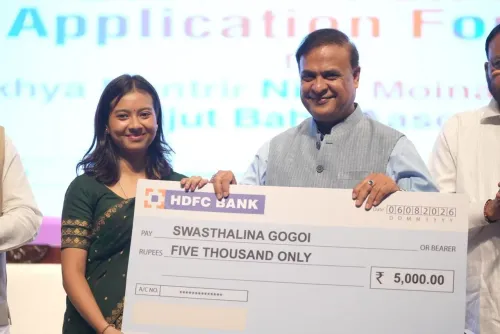
The Mukhya Mantrir Nijut Moina Aasoni is a financial assistance scheme targeted specifically at girls to prevent child marriage.
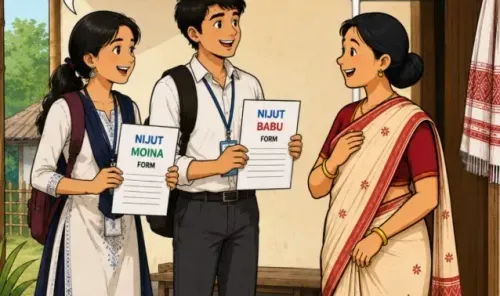
A companion scheme, Mukhya Mantrir Nijut Babu Aasoni , provides comparatively lower assistance to boys, reflecting the gendered burden of child marriage.
Assam has recorded child marriage rates in several districts above national averages, making targeted intervention a policy imperative.
The dual-scheme model pairs incentive-based welfare with legal enforcement under the Prohibition of Child Marriage Act .
Exact benefit amounts and eligibility criteria for both schemes have not yet been fully disclosed publicly.
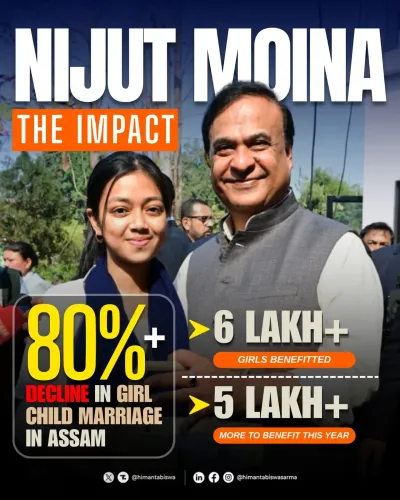
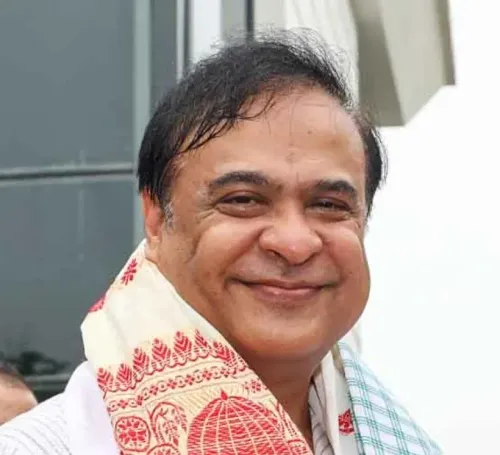
Child marriage — not a statistic, but a life derailed before it begins. Chief Minister Dr. Himanta Biswa Sarma has made clear that dismantling this practice sits at the very top of the Government of Assam's agenda, anchoring that commitment to the state's flagship girl-welfare scheme, the Mukhya Mantrir Nijut Moina Aasoni.
Why girls, why now
Speaking through the Chief Minister's Office, Dr. Sarma stated that the 'primary objective' of the Mukhya Mantrir Nijut Moina Aasoni is to 'eradicate child marriage' — and that this remains the government's 'foremost priority.' The scheme is designed specifically for girls because, as the Chief Minister acknowledged, child marriage does not affect boys in the same way. That is not an oversight. It is the design.
A companion scheme, the Mukhya Mantrir Nijut Babu Aasoni, extends financial assistance to boys — but at a comparatively lower level, a differential the Chief Minister explicitly defended on the same grounds: the burden of child marriage falls disproportionately on girls.
Assam's child marriage problem in focus
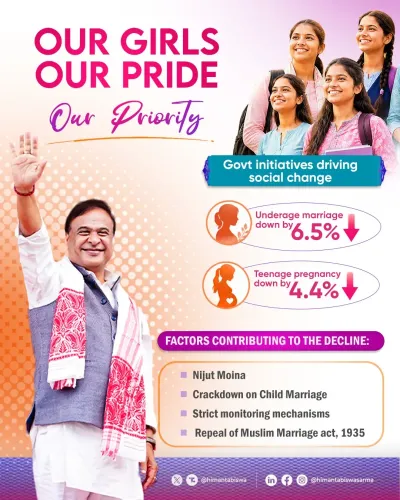
Assam has recorded child marriage rates in several districts that run above national averages, making it one of the more acutely affected states in India. Successive administrations have paired legal enforcement under the Prohibition of Child Marriage Act with incentive-based welfare schemes — the current twin-scheme model being the most structured articulation of that dual approach yet. The logic is straightforward: give a family a financial reason to keep a daughter in school, and the calculus that once pushed early marriage shifts.
A gender-differentiated bet on outcomes
What makes this policy moment notable is the government's willingness to openly justify unequal benefit levels by citing unequal vulnerability. That is a departure from one-size-fits-all welfare design. Whether the benefit amounts are calibrated correctly — and whether they move the needle on official child marriage incidence figures — will be the real test. Those implementation details, including exact amounts and eligibility criteria, are yet to be fully in the public domain.
For now, the Chief Minister has drawn the line clearly: Nijut Moina is not a routine welfare transfer. It is, in his framing, an anti-child-marriage instrument first — and Assam intends to treat it that way.
Point of View
Lower for boys — marks a meaningful policy evolution: the state is treating child marriage as a structural gender problem, not a generic poverty one. For Chief Minister Sarma, who has made social reform a signature of his tenure since 2021, this framing also insulates the scheme from equity challenges by grounding the disparity in documented demographic reality. The broader question is whether financial incentives alone can shift entrenched community norms, or whether they must be paired with sustained enforcement and awareness to produce durable change in official statistics.
NationPress
20 Sept 2026
Frequently Asked Questions
What is the Mukhya Mantrir Nijut Moina Aasoni scheme in Assam?
The Mukhya Mantrir Nijut Moina Aasoni is an Assam government financial assistance scheme targeted specifically at girls, with the primary objective of preventing and eradicating child marriage in the state.
Why does the Nijut Babu Aasoni give boys lower benefits than the Nijut Moina Aasoni gives girls?
Chief Minister Dr. Himanta Biswa Sarma explained that child marriage does not affect boys in the same way it affects girls, so the assistance under the boys' scheme is kept comparatively lower to reflect that difference in vulnerability.
Is child marriage a major problem in Assam?
Assam has recorded child marriage rates in several districts that are above national averages, making it one of the more acutely affected states in India and a focus of targeted government intervention.
What law covers child marriage in India?
Child marriage in India is governed by the Prohibition of Child Marriage Act , which state governments including Assam enforce alongside incentive-based welfare schemes.
Who is Himanta Biswa Sarma?
Dr. Himanta Biswa Sarma is the Chief Minister of Assam, in office since 2021 , who has made social reform — including combating child marriage — a central theme of his administration.