Assam CM Himanta Biswa Sarma hails Constitution Day values
Synopsis
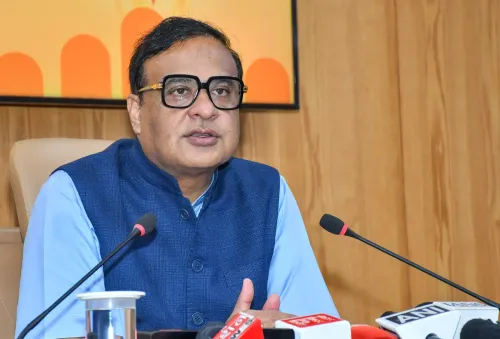
Assam Chief Minister Himanta Biswa Sarma marked Constitution Day by saluting the Constituent Assembly and calling the Constitution a living sacred document. He linked justice, liberty, equality and fraternity to fundamental duties and asked citizens to uphold those values through Amrit Kaal, the run-up to 2047.
Key Takeaways
Assam Chief Minister Himanta Biswa Sarma issued a Constitution Day message on 26 November 2026 saluting the Constituent Assembly.
He called the Constitution a living sacred document that safeguards justice, liberty, equality and fraternity.
The Constituent Assembly adopted the Constitution on 26 November 1949; it came into force on 26 January 1950.
Constitution Day has been officially observed since 2015.
He linked the day's pledge to Amrit Kaal, the period from 2022 to 2047.
The message stressed both fundamental rights and fundamental duties toward nation-building.
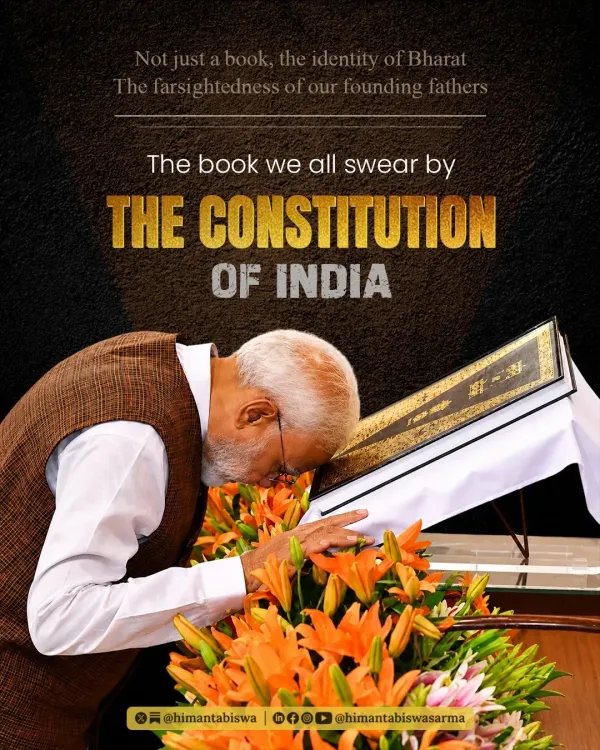
India's Constitution is not a museum piece. On Constitution Day, Assam Chief Minister Himanta Biswa Sarma called it a living sacred document and asked every citizen to renew the pledge of justice, liberty, equality and fraternity. In a message on 26 November 2026, the convenor of the North-East Democratic Alliance saluted the Constituent Assembly that wrote the Republic's charter and bound that inheritance to nation-building in the Amrit Kaal.
The Assembly that adopted the charter in 1949
The Constituent Assembly was formed in 1946. After nearly three years of debate it adopted the Constitution of India on 26 November 1949. The text came into force on 26 January 1950, the date still marked as Republic Day. Constitution Day became an official national observance only in 2015, turning the adoption anniversary into an annual civic ritual.
Sarma wrote that the Constitution is 'not merely a legal framework, but a living sacred document that safeguards justice, liberty, equality and fraternity for every citizen.' Those four words sit in the Preamble. Courts interpret them. Schools recite them. On this day, leaders across parties return to them.
Rights, duties and the institutions they hold up
The Assam Chief Minister said the charter 'empowers our institutions, guarantees fundamental rights, and reminds us of our sacred fundamental duties toward nation-building.' Part III of the Constitution lists enforceable fundamental rights. Part IVA lists fundamental duties. Annual messages from state and Union leaders have, since 2015, treated both as one civic compact.
Dr B.R. Ambedkar, chairman of the Drafting Committee, remains the architect most closely associated with those rights provisions. Sarma's tribute to the 'visionary members of the Constituent Assembly' names that generation of framers, the cohort that argued articles into existence clause by clause.
Amrit Kaal and a pledge through 2047
'As we march forward in this Amrit Kaal,' he wrote, 'let us reaffirm our collective commitment to upholding constitutional values, strengthening the nation's unity and serving the motherland with an unwavering dedication.' Amrit Kaal is the 25-year stretch from 2022 to 2047 that the Union government has framed as India's run to developed-nation status by the centenary of independence. Since 2022, Constitution Day statements from BJP-led governments have routinely joined founding principles to that long horizon.
State-level Constitution Day programmes, and any echo of this language in the winter sittings of Parliament and the assemblies, will show how far the day's script travels beyond a single post. The Assam Chief Minister's message is a civic call, not a new statute: keep the document living, keep the institutions it empowers, and treat duties as seriously as rights.
In the Amrit Kaal, Constitution Day is tested not by a wreath at dawn, but by whether those four Preamble words still organise the working day of the Republic.
Point of View
When leaders restate founding principles and hitch them to present goals. Himanta Biswa Sarma's message follows a pattern visible since 2015 and sharpened after 2022: the Constitution as a living compact, duties paired with rights, and Amrit Kaal as the long runway to 2047. The post does not announce a scheme or a legal change. It places Assam's BJP leadership inside a national civic script that treats constitutional values as the language of unity and development, not only of the courts.
NationPress
26 Nov 2026
Frequently Asked Questions
When is Constitution Day observed in India?
Constitution Day is observed every year on 26 November, the date the Constituent Assembly adopted the Constitution of India in 1949. It became an official national observance in 2015 and is distinct from Republic Day on 26 January, when the Constitution came into force in 1950.
What did Assam CM Himanta Biswa Sarma say on Constitution Day 2026?
He recalled the Constituent Assembly's work, described the Constitution as a living sacred document that safeguards justice, liberty, equality and fraternity, and asked citizens to uphold constitutional values and serve the nation in the Amrit Kaal.
Who drafted the Constitution of India?
The Constituent Assembly, formed in 1946, debated and adopted the Constitution on 26 November 1949. Dr B.R. Ambedkar chaired the Drafting Committee and is widely regarded as a principal architect of its fundamental rights provisions.
What are fundamental duties in the Indian Constitution?
Fundamental duties are listed in Part IVA of the Constitution and remind citizens of civic obligations toward the nation. In his Constitution Day message, Assam Chief Minister Himanta Biswa Sarma paired those duties with fundamental rights and the work of public institutions.