Assam CM Office asks citizens: what is your vision for 2047?

Synopsis
The Chief Minister's Office of Assam has launched a public survey at jonomotaxom2047.assam.gov.in, inviting residents to share their vision for a developed, prosperous and self-reliant Assam by 2047, aligned with India's national Viksit Bharat framework.
Key Takeaways
The Chief Minister's Office of Assam launched a public vision survey on 14 October 2026 for Assam @2047 .
Citizens can participate at jonomotaxom2047.assam.gov.in .
The survey focuses on three stated pillars: empowered families, social harmony and a strong economy .
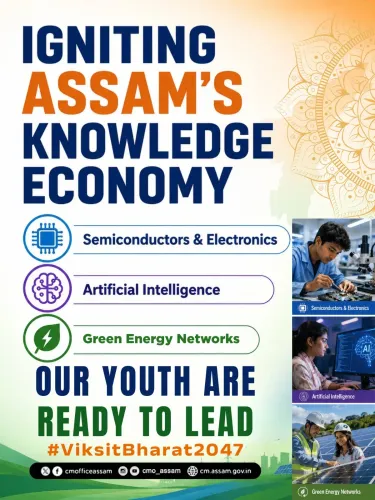
The initiative aligns with the national Viksit Bharat @2047 framework introduced by the Government of India in 2023 .
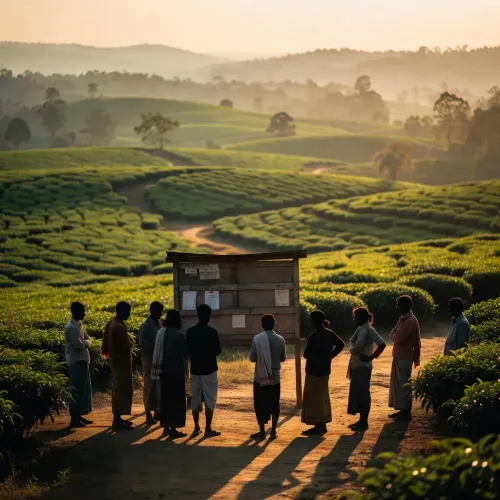
Assam's economy is rooted in tea, oil, agriculture and tourism , sectors facing significant long-term challenges the survey aims to address.
The next milestone to watch is the publication of survey findings and any resulting Assam Vision 2047 policy document or budget allocations.
A state is asking its people to do something rare in Indian governance — to dream out loud, on the record, about what they want their home to look like a generation from now. The Chief Minister's Office of Assam on Wednesday, 14 October 2026 launched a public survey inviting residents to share ideas, aspirations and suggestions for a 'developed, prosperous and self-reliant Assam' by 2047.
What the survey is asking — and why it matters now
The survey, accessible at jonomotaxom2047.assam.gov.in, centres on three pillars the CMO has explicitly named: empowered families, social harmony and a strong economy. The phrasing is deliberate — it maps almost exactly onto the national Viksit Bharat @2047 framework that the Government of India introduced in 2023 to guide the country's development planning through the centenary of independence. Assam is, in effect, building its regional chapter of that larger national story.
The post asks: 'What is your vision for Assam in 2047?' — a question directed not at planners or technocrats, but at every resident of the state. That framing signals an intent to ground the eventual vision document in bottom-up input rather than top-down prescription alone.
Assam's 2047 starting point: tea, oil, and a region in transition
The stakes of such a consultation are concrete. Assam, a northeastern state bordering Bhutan, Bangladesh and Myanmar, has an economy historically anchored in tea, oil, agriculture and tourism — sectors that face serious headwinds from climate variability, shifting global commodity markets, and persistent infrastructure gaps. The distance between where the state stands today and what 'developed and prosperous' would look like by 2047 is real and large.
Multiple Indian states have run similar parallel consultations to align regional priorities with the national 2047 target, each stressing citizen input on economy, social cohesion and governance. Assam's exercise follows that pattern — but the northeastern geography gives it a distinct edge: connectivity, border-trade potential and ecological sensitivity are variables that no national template can fully capture without local voices.
From survey responses to policy — the next step to watch
The real test, as with any public consultation of this kind, comes after the form is submitted. What happens to the responses — whether they feed a credible Assam Vision 2047 policy document, inform budget allocations, or shape a legislative roadmap — will determine whether this exercise becomes a genuine planning input or a well-designed engagement event. That publication, when it comes, is the moment to hold the government to its own framing.
For now, the portal is open. Assam has asked the question. The answer is over to its people.
Point of View
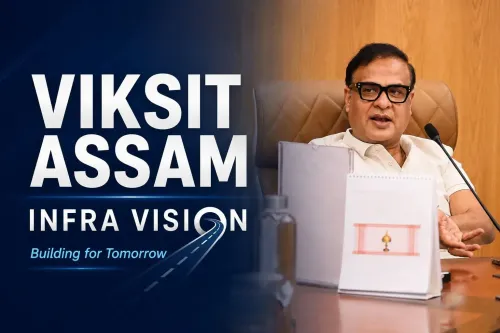
Or they can be substantive bottom-up exercises; the difference lies entirely in how transparently the findings are published and acted upon. For a northeastern state with distinctive geographic, economic and demographic realities, the risk of a generic national template overriding local priorities is real — which makes the quality of survey design and response analysis as consequential as the outreach itself. Chief Minister Himanta Biswa Sarma's administration will be judged less on the scale of participation it generates and more on whether the resulting vision document reflects Assam's specific aspirations rather than Delhi's.
NationPress
14 Oct 2026
Frequently Asked Questions
What is the Assam 2047 vision survey?
It is a public consultation launched by the Chief Minister's Office of Assam on 14 October 2026, inviting citizens to submit their ideas and aspirations for a developed, prosperous and self-reliant Assam by the year 2047.
How can I participate in the Assam 2047 survey?
You can participate by visiting the official portal at jonomotaxom2047.assam.gov.in and submitting your suggestions on economy, social harmony and family empowerment.
What is Viksit Bharat @2047 and how does it relate to Assam?
Viksit Bharat @2047 is a national development framework introduced by the Government of India in 2023 to guide India's growth through the centenary of independence. Assam's survey is a state-level initiative designed to align regional priorities with that broader national goal.
What are the three pillars of Assam's 2047 vision consultation?
The Chief Minister's Office of Assam has framed the consultation around three pillars: empowered families, social harmony and a strong economy.
What happens after the Assam 2047 survey closes?
The key next step to watch is the publication of survey findings and whether they feed into a formal Assam Vision 2047 policy document or inform future state budget allocations.