Assam CM Office backs PM Surya Ghar, eyes 3,500 MW solar by 2030
Synopsis
The Chief Minister's Office of Assam on November 2, 2026, championed the PM Surya Ghar rooftop solar scheme as the driver of reduced household electricity bills and Assam's ambition to reach 3,500 MW of solar capacity by 2030, aligning state goals with India's national Panchamrit climate commitments.
Key Takeaways
The Chief Minister's Office of Assam posted on November 2, 2026 backing the PM Surya Ghar rooftop solar scheme.
PM Surya Ghar Muft Bijli Yojana is a central government programme targeting subsidised rooftop solar installation in one crore households across India.
Assam has set a goal of 3,500 MW solar capacity by 2030 , though this specific figure is a recent state claim not yet verified from established public records.
The scheme is framed as a household welfare measure — cutting power bills — as much as a climate initiative.
India's overarching target of 500 GW non-fossil fuel capacity by 2030 was pledged at COP26 in 2021 under PM Modi's Panchamrit commitments.
Assam's rooftop solar push reflects a national pattern of states localising Union-level renewable energy targets.
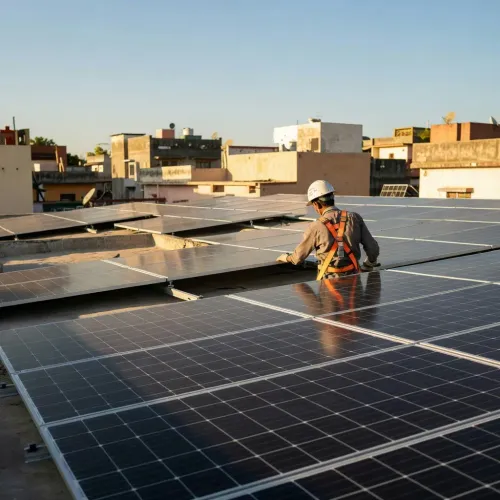
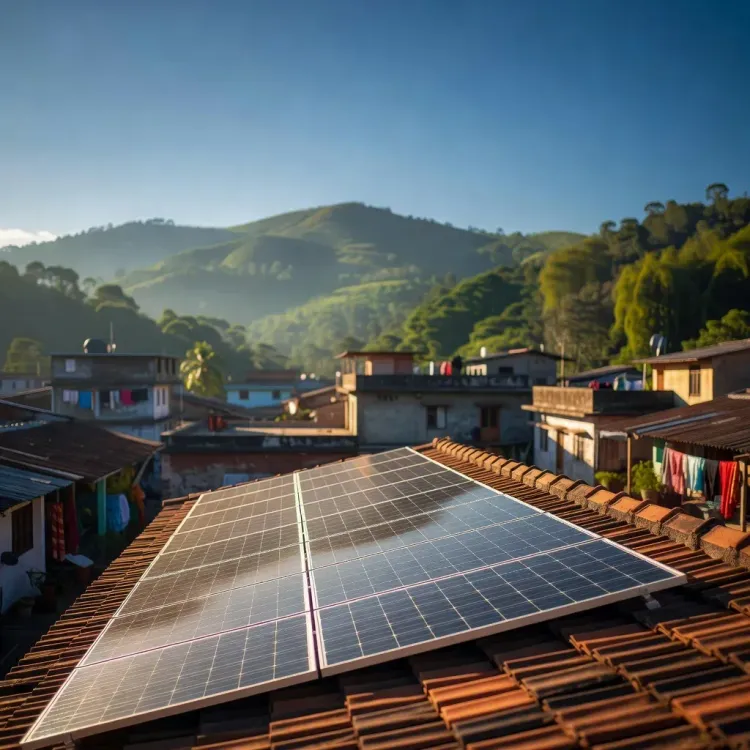
Rooftop solar panels are appearing on homes across Assam — and the Chief Minister's Office wants the world to know why. On Monday, November 2, 2026, the Chief Minister's Office of Assam posted on X, framing the PM Surya Ghar scheme as the ground-level engine of India's larger green-energy ambition, and pointing to a state target of 3,500 MW solar capacity by 2030.
What PM Surya Ghar actually does for an Assam household
Launched by the Government of India, the PM Surya Ghar Muft Bijli Yojana is a centrally subsidised rooftop solar programme designed to put generation capacity directly on one crore homes nationwide. The scheme covers a portion of installation costs and promises a measurable cut in monthly electricity bills — making distributed solar viable for middle- and lower-income families who could not otherwise afford the upfront investment.
In Assam, a state that has historically depended on conventional grid supply, the programme represents a structural shift: generation moves from large centralised plants to individual rooftops, reducing transmission losses and giving households a degree of energy independence.
Assam's 3,500 MW goal inside India's 500 GW national picture
The state-level ambition sits within a much larger frame. At COP26 in Glasgow in 2021, Prime Minister Narendra Modi announced India's 'Panchamrit' climate commitments — the most headline-grabbing of which is 500 GW of non-fossil fuel capacity by 2030. India has also anchored its net-zero pledge to 2070, one of the longer timelines among major economies, but the 2030 intermediate targets demand urgent state-level execution.
Each state absorbing a slice of the renewable buildout — whether through utility-scale plants or distributed rooftop programmes — is what turns a COP pledge into megawatts on the grid. Assam's stated 3,500 MW ambition, if realised, would mark a significant leap for a northeastern state that has not historically been a solar powerhouse.
Green energy as a welfare argument, not just a climate one
The framing from the Chief Minister's Office is deliberate: the post does not lead with emissions or climate targets. It leads with 'people's homes' and 'power bills.' That is a politically conscious move — positioning green energy not as an elite environmental concern but as a cost-of-living fix for ordinary Assam residents. It also reflects a broader national communication pattern where the BJP-led government has tied renewable expansion directly to household welfare messaging.
PM Modi, who co-founded the International Solar Alliance alongside France and has consistently championed India's solar story on the global stage, provides the overarching political and policy authority the post invokes. The Chief Minister's Office is, in effect, localising a Union-level narrative for an Assam audience.
Point of View
The communication signals that the state sees distributed rooftop solar as both a policy and an electoral asset. The 3,500 MW target by 2030, if backed by verifiable installation data, would position Assam as a northeastern outlier in India's solar story — a region not typically associated with large renewable buildouts. Watch whether the state publishes quarterly installation tallies; without that transparency, the target risks remaining a headline rather than a milestone.
NationPress
2 Nov 2026
Frequently Asked Questions
What is the PM Surya Ghar Muft Bijli Yojana?
PM Surya Ghar Muft Bijli Yojana is a central government scheme that subsidises the installation of rooftop solar panels on homes, targeting one crore households across India, with the goal of reducing household electricity bills and expanding distributed solar generation.
What is Assam's solar energy target for 2030?
The Chief Minister's Office of Assam has stated a goal of achieving 3,500 MW of solar capacity by 2030, aligning with India's broader national renewable energy commitments, though this specific figure is a recent state claim.
How does PM Surya Ghar reduce electricity bills?
By installing rooftop solar panels with central government subsidies, households generate a portion of their own electricity, reducing their dependence on the grid and lowering monthly power bills.
What are India's Panchamrit climate commitments?
At COP26 in Glasgow in 2021, Prime Minister Narendra Modi announced India's Panchamrit targets, which include reaching 500 GW of non-fossil fuel energy capacity by 2030 and achieving net-zero emissions by 2070.
Is Assam a significant solar energy producer in India?
Assam has not historically been a major solar energy producer, making its stated 3,500 MW target by 2030 an ambitious leap for the northeastern region, contingent on accelerated rooftop and utility-scale project rollouts.