Assam CM Office: Child safety built into flood relief
Synopsis
The Chief Minister's Office of Assam has declared child protection a core component of its flood relief operations, announcing coordination with UNICEF India and district administrations to ensure safe, caring environments for children displaced into relief camps during the monsoon season.
Key Takeaways
The Chief Minister's Office of Assam announced on August 5, 2026 that child protection is an integral part of its flood relief operations.
The state is coordinating with UNICEF India and district administrations to create safe environments for children in relief camps.
Assam faces recurrent Brahmaputra river flooding each monsoon, displacing large numbers of families into temporary shelters.
Children in relief camps face heightened risks including trafficking, abuse, and psychosocial distress — the stated focus of this initiative.
The Integrated Child Protection Scheme (2009) provides the national policy backbone for child safeguarding in disaster scenarios.
The public tagging of @UNICEFIndia signals institutional accountability in the state-UN coordination framework.
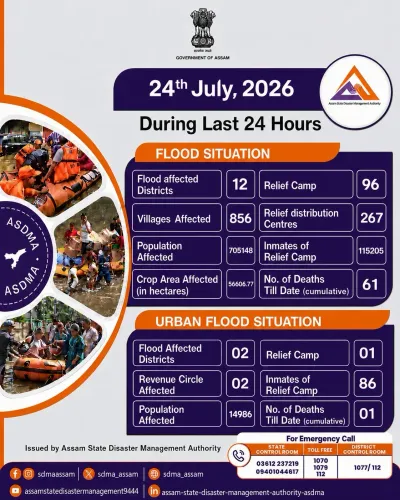
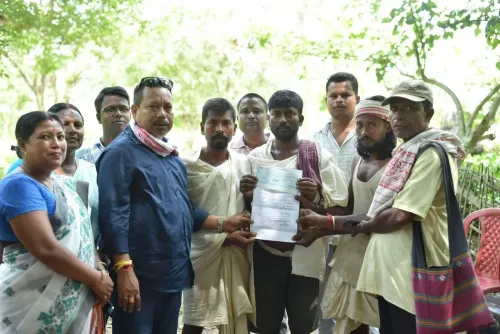
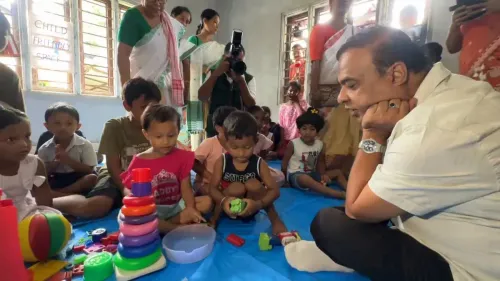
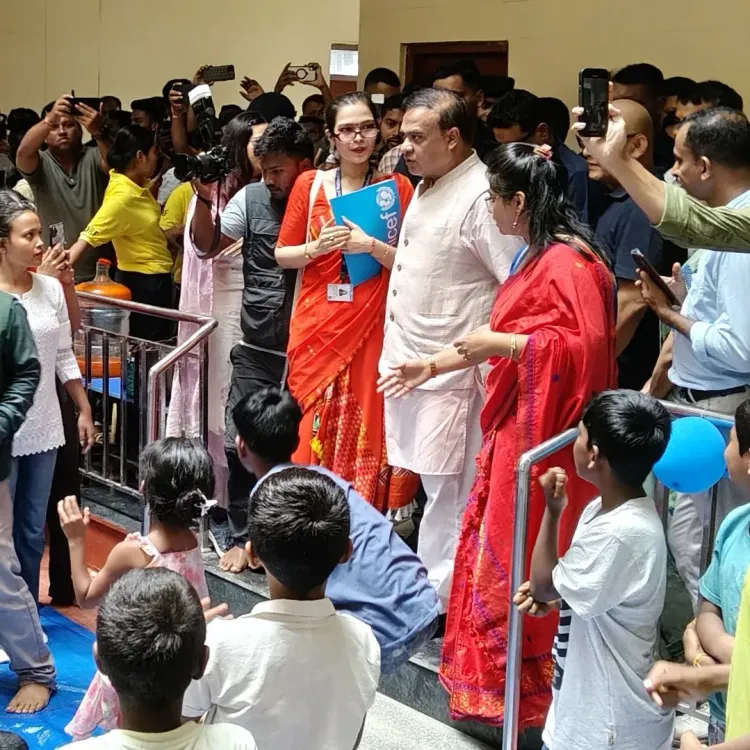
In the middle of Assam's monsoon displacement crisis, the state government is making one thing explicit: children in relief camps are not an afterthought. The Chief Minister's Office of Assam announced on Wednesday, August 5, 2026 that child protection has been woven into the core of flood relief operations, with the government working alongside UNICEF India and district administrations across the state.
The post stated: 'Child protection is an integral part of flood relief efforts. The Government of Assam is working closely with UNICEF India and district administrations to ensure every child in relief camps has a safe, secure and caring environment.'
Why relief camps demand child-specific safeguards
Assam's relationship with the Brahmaputra river is one of annual reckoning. Every monsoon season, swelling waters displace tens of thousands of families into temporary shelters — crowded, under-resourced, and far from the familiar rhythms of home. For children, that disruption carries compounded risks: trafficking, abuse, psychosocial distress, and the collapse of routine care. State responses have increasingly moved beyond food and shelter to address these child-specific vulnerabilities. The shift reflects a broader national framework — the Integrated Child Protection Scheme, rolled out by the central government in 2009, which established mechanisms to safeguard children in difficult circumstances, including disaster settings.Assam and UNICEF: a coordinated front on the ground
UNICEF India has long partnered with state governments on child protection, health, and education during emergencies across the country, with northeastern and eastern India among its most active operational zones. In Assam, that partnership extends to on-ground coordination through district administrations — the agencies responsible for actually setting up and managing relief camps. The triangular structure — state government, UN agency, and district machinery — is designed to move child welfare protocols from policy paper to camp floor. Safe spaces, psychosocial support, and protection from exploitation are the markers of what a 'safe, secure and caring environment' means in practice.What this signals for disaster management in the northeast
The public acknowledgment of child protection as a parallel track within flood relief — not a follow-up measure — marks a meaningful articulation of intent. Recurrent flooding in Assam has historically tested the state's administrative bandwidth, and the explicit tagging of @UNICEFIndia in the official communication signals accountability and coordination at an institutional level. Joint assessments of relief camp conditions and updates on child protection protocols will be the real measure of how this commitment translates on the ground.Point of View
Not just internal directives. This aligns with a broader national push to operationalise the Integrated Child Protection Scheme in emergency settings, where implementation has historically lagged behind intent. The announcement's timing and public nature also suggest the government is signalling to civil society and international partners that northeastern India's disaster response is evolving beyond the basics.
NationPress
5 Aug 2026
Frequently Asked Questions
What is the Assam government doing for children in flood relief camps?
The Government of Assam is working with UNICEF India and district administrations to ensure children in relief camps have a safe, secure and caring environment, treating child protection as a core part of flood relief operations.
Why is child protection important in Assam flood relief camps?
Children in temporary relief camps face elevated risks including trafficking, abuse and psychosocial distress. Dedicated child protection measures aim to mitigate these risks during displacement caused by Brahmaputra river flooding.
What is UNICEF India's role in Assam flood relief?
UNICEF India is collaborating with the Assam government and district administrations to implement child protection protocols in relief camps, drawing on its long-standing partnerships with state governments during disasters across India.
What is the Integrated Child Protection Scheme?
The Integrated Child Protection Scheme is a central government programme launched in 2009 to strengthen safeguards for children in difficult circumstances, including those affected by natural disasters.
How often does Assam experience flooding?
Assam experiences recurrent flooding every monsoon season due to the Brahmaputra river, leading to large-scale displacement and the establishment of relief camps across the state each year.