Assam CM Office flags 15,535+ solar LEDs, two big grid projects

Synopsis
Assam's Chief Minister's Office reports 15,535+ solar LED street lights deployed across the state and grid-connected solar projects of 70 MWp in Dhubri and 50 MWp in Sonitpur underway, advancing the northeastern state's clean energy and rural electrification goals.
Key Takeaways
Assam has deployed more than 15,535 solar LED street lights as part of its clean energy infrastructure expansion.
A 70 MWp grid-connected solar project is underway in Dhubri , western Assam.
A 50 MWp grid-connected solar project is underway in Sonitpur , on Assam's north bank.
The two projects represent a combined planned solar capacity of 120 MWp .
The push aligns with India's national goal of 500 GW non-fossil fuel capacity by 2030 .
Commissioning timelines and capacity utilisation data for both sites remain the key milestones to watch.
A northeastern state long dependent on hydro and fossil-fuel imports is now counting solar streetlights by the thousands — and planning utility-scale grid capacity to match. The Chief Minister's Office of Assam announced on Friday, 23 October 2026 that the state has deployed more than 15,535 solar LED street lights and has major grid-connected solar projects underway in Dhubri (70 MWp) and Sonitpur (50 MWp).
15,535 lights — and counting
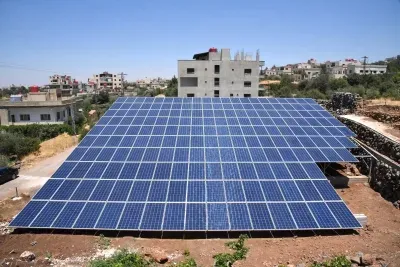
Street lighting is often the first visible proof of an energy transition at the community level. Crossing the 15,535-unit mark in solar LED street lights signals that Assam's clean-energy push has moved well beyond pilot schemes into routine infrastructure deployment. The rollout is also directly tied to rural electrification goals — many of the state's remote villages have historically struggled with grid reliability, making off-grid solar a practical first step rather than a symbolic one.
Dhubri's 70 MWp and Sonitpur's 50 MWp: what the numbers mean
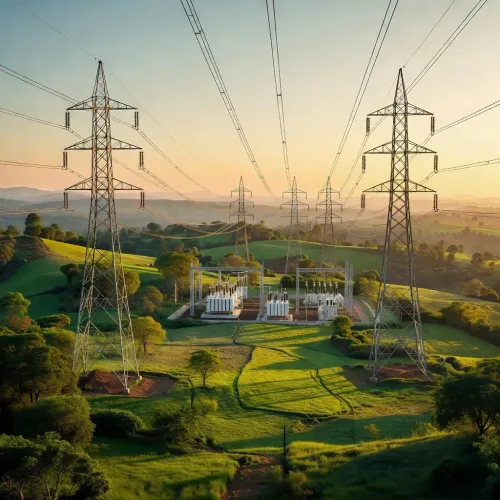
The two grid-connected projects represent a combined planned capacity of 120 MWp. Dhubri, a western Assam district along the Bangladesh border, and Sonitpur, on the state's north bank, were identified for large-scale solar development under Assam's state solar policy frameworks. Together, the projects would meaningfully add to Assam's renewable purchase obligations — the mandatory proportion of electricity that state utilities must source from clean energy. Commissioning timelines and capacity utilisation data will be the next metrics to watch.
Where this fits India's 500 GW ambition
India's National Solar Mission, launched in 2010, set a long arc toward grid-connected solar capacity across every state. The country's overarching target — 500 GW of non-fossil fuel capacity by 2030 — demands that even the smaller northeastern states pull their weight. Assam has historically lagged behind solar-rich states like Rajasthan and Gujarat, but announcements like these suggest the northeast is accelerating to close that gap. For a state where power outages and rural electrification gaps remain everyday realities, utility-scale solar isn't just a climate policy — it's a quality-of-life intervention.
The real test will come when Dhubri and Sonitpur move from 'underway' to 'commissioned' — and when the megawatts actually flow into the grid.
Point of View
And the CMO's specificity — naming districts, citing MWp figures, counting street lights — reflects a government keen to demonstrate measurable progress. The 70 MWp Dhubri project is geopolitically notable too, given the district's proximity to the Bangladesh border and its dense rural population. If the commissioning timelines hold, Assam could emerge as a model for how smaller, hydro-dependent states integrate utility-scale solar without disrupting existing grid architecture. The gap between announcement and energisation, however, remains the chronic weak link in India's state-level solar story.
NationPress
23 Oct 2026
Frequently Asked Questions
How many solar LED street lights has Assam installed?
Assam has deployed more than 15,535 solar LED street lights, according to the Chief Minister's Office announcement on 23 October 2026.
What is the Dhubri solar project in Assam?
The Dhubri solar project is a planned 70 MWp grid-connected solar installation in the western Assam district of Dhubri, currently underway as part of the state's clean energy expansion.
What solar project is being built in Sonitpur, Assam?
A 50 MWp grid-connected solar power project is underway in Sonitpur, a district on the north bank of Assam.
How does Assam's solar push relate to India's national renewable energy target?
India has set a target of 500 GW non-fossil fuel capacity by 2030, and northeastern states like Assam are accelerating solar deployment to meet their share of renewable purchase obligations under that national goal.
When was India's National Solar Mission launched?
India's National Solar Mission was launched in 2010, setting long-term targets for grid-connected solar capacity across all states including Assam.