Assam CM Office spotlights Nalbari family's Ayushman Card story
Synopsis
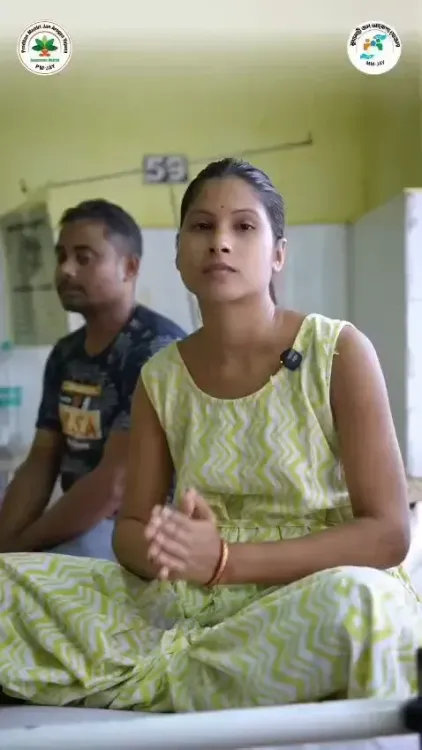
The Chief Minister's Office of Assam shared a video on September 24, 2026, of a Nalbari family that received cashless hospital treatment through the Ayushman Card under the combined PMJAY and MMJAY health insurance framework.
Key Takeaways
The Chief Minister's Office of Assam spotlighted a Nalbari district family that used the Ayushman Card for cashless hospital treatment.
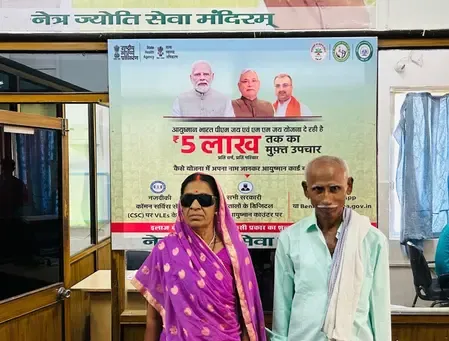
PMJAY provides up to ₹5 lakh per family per year for secondary and tertiary care at empanelled hospitals across India.
Assam's state-level MMJAY supplements PMJAY to offer enhanced cashless coverage to state residents.
PMJAY was launched in September 2018 as part of the Ayushman Bharat programme.
The beneficiary video strategy aims to raise enrolment awareness at the district level, beyond urban centres.
Reducing out-of-pocket health expenditure for low-income families is the central goal of the layered PMJAY–MMJAY framework in Assam.
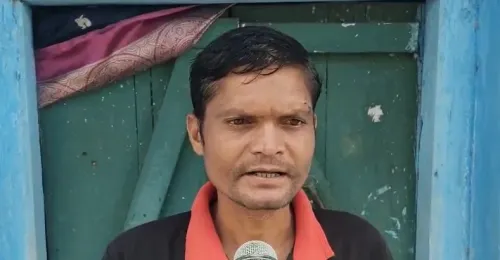
A family from Nalbari district in western Assam needed hospital care — and walked out without paying a rupee. The Chief Minister's Office of Assam shared their story on Thursday, September 24, 2026, highlighting how the Ayushman Card is turning a government promise into lived reality for ordinary households.
One card, two safety nets
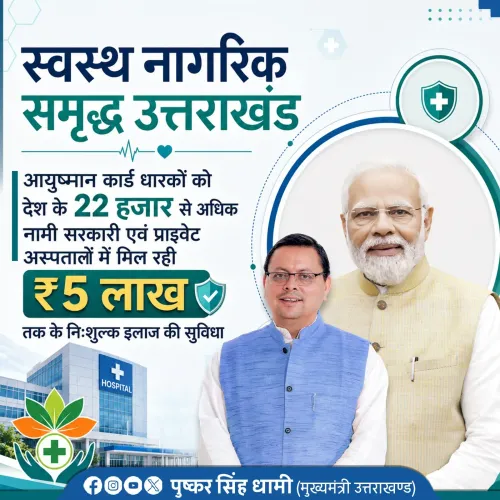
The family's experience sits at the intersection of two complementary programmes. Pradhan Mantri Jan Arogya Yojana (PMJAY), the central scheme launched in September 2018 under the Ayushman Bharat umbrella, provides cashless coverage of up to ₹5 lakh per family per year for secondary and tertiary hospitalisation at empanelled hospitals across India. Assam layers its own Mukhya Mantri Jan Arogya Yojana (MMJAY) on top, extending additional coverage specifically for state residents — so an Assam beneficiary holds, in effect, a double shield.
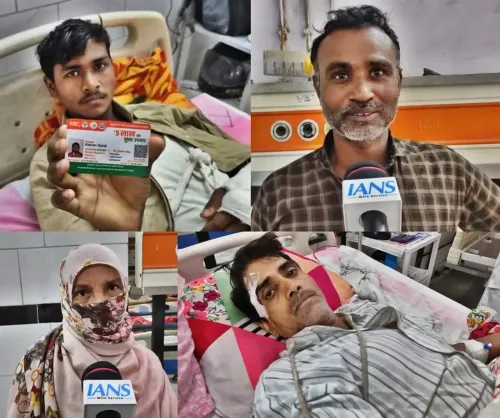
The Ayushman Card is the physical key: a smart card enabling cashless, paperless admission at any empanelled facility. No advance deposit, no scramble for cash at midnight. For low-income families, that distinction can be the difference between seeking treatment and delaying it until a crisis deepens.
Why Nalbari matters in this story
Nalbari is a largely agrarian district in western Assam — not a metro with corporate hospitals on every block. Featuring a beneficiary from there, rather than Guwahati, signals that the empanelled-hospital network is reaching beyond the state's urban core. The CMO's choice to amplify a district-level family's account is a deliberate ground-level communication strategy: real faces, real relief, real stakes.
The post frames the scheme's value simply and directly: 'easing the financial burden on lakhs of families.' Out-of-pocket health spending remains one of the leading drivers of household debt in India, and government-funded insurance schemes like PMJAY are the primary policy tool aimed at reversing that pattern. Assam's integration of MMJAY with PMJAY places it among the states that have chosen to amplify — rather than merely replicate — the central framework.
A broader push to showcase scheme impact
State governments across India have increasingly used beneficiary testimonial videos to drive enrolment awareness, recognising that a neighbour's story travels further than a policy brochure. For Assam, spotlighting the Nalbari family also builds political momentum around a welfare programme that cuts across economic strata. Watch for the Assam health department's district-level enrolment and claims data — those numbers, when released, will tell the fuller story of how deep the coverage is actually running.
Point of View
The Assam government signals that the PMJAY–MMJAY network is penetrating beyond the state's cities, a metric that matters enormously for the scheme's credibility. States that stack their own insurance layers atop the central framework, as Assam has done with MMJAY, are effectively running a live experiment in federated health financing — and testimonial videos are how they report results to the electorate. The post also reflects a national pattern in welfare communication: real-beneficiary stories are now the preferred instrument of political outreach, effectively crowdsourcing proof of implementation. How much of Assam's eligible population has actually enrolled and filed claims will ultimately determine whether this storytelling rests on a solid base or a narrow anecdote.
NationPress
24 Sept 2026
Frequently Asked Questions
What is the Ayushman Card and how does it work?
The Ayushman Card is a smart card issued under PMJAY (Pradhan Mantri Jan Arogya Yojana) that enables eligible families to receive cashless, paperless treatment at empanelled hospitals without paying upfront. Coverage goes up to ₹5 lakh per family per year for secondary and tertiary care.
What is MMJAY and how is it different from PMJAY in Assam?
Mukhya Mantri Jan Arogya Yojana (MMJAY) is Assam's state health insurance scheme that supplements the central PMJAY with additional coverage, giving Assam residents a broader safety net than the national scheme alone provides.
Which family from Nalbari was featured in the Assam CMO's post?
The specific identity of the Nalbari family featured in the video has not been publicly disclosed in the post. The Chief Minister's Office shared their story as an illustration of how the Ayushman Card is helping families access cashless treatment under PMJAY and MMJAY .
When was PMJAY launched in India?
PMJAY was launched in September 2018 as the health insurance component of the Ayushman Bharat programme, aimed at providing financial protection to low-income families for hospitalisation costs.
How can I apply for an Ayushman Card in Assam?
Eligible families in Assam can apply for the Ayushman Card through designated government enrolment centres, Common Service Centres, and empanelled hospitals. The card covers treatment under both PMJAY and the state's MMJAY .